Mid-Year Report on the Chemical and Pharmaceutical Industry: No Recovery, Investments Continue to Decline
A Decisive Course of Reform Is Needed to Strengthen the Region as an Industrial Hub
Advertisement


The chemical and pharmaceutical industry in Germany is struggling to emerge from the crisis. Although the first half of 2026 performed slightly better than the second half of 2025, there is no sign of a sustained recovery. Production was about three percent below the previous year’s level, and revenue fell by one percent to 106 billion euros. At the same time, investments continue to decline—for the third consecutive year. For the German chemical industry Association (VCI), this is a warning sign.
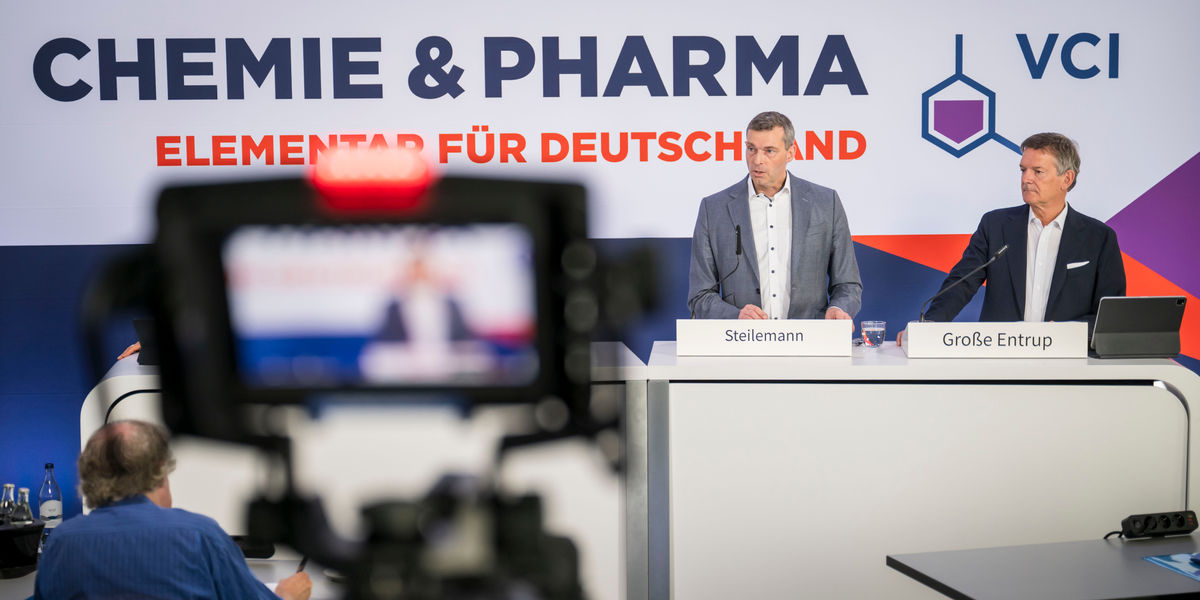
“The half-year results are disappointing,” summarizes VCI President Markus Steilemann. “A slight uptick is no reason to sound the all-clear. This is primarily due to one-time effects resulting from the armed conflicts in the Middle East. We are merely experiencing a lull, not a reversal of the trend. Fundamentally, however, I remain convinced of our industry’s great potential as a driver of the necessary transformation toward sustainability and resilience.”
Due to the war in the Gulf, companies are currently restocking their inventories to prevent potential supply shortages. At the same time, competitive pressure from Asia has temporarily eased due to the blockade of the Strait of Hormuz.
Against this backdrop, domestic business in the chemical and pharmaceutical industry has recently stabilized somewhat over the first six months. Exports, however, remain weak. Many plants are still operating below capacity. Production and sales are significantly below 2021 levels.
Many companies also expect business conditions to remain difficult in the coming months. Rising costs, weak sales volumes, and intense international competition overall continue to put pressure on earnings. For the full year, the VCI therefore expects a 1.5 percent decline in production. Given the volatile geopolitical situation, the association is currently refraining from making further forecasts.
Germany Continues to Fall Behind
From the VCI’s perspective, the decline in investment in property, plant, and equipment is particularly concerning. It is about 15 percent below the 2023 level. This trend fits into an alarming overall picture: According to a study, net productive investment in Germany now stands at only about 0.2 percent of economic output. In Europe, too, production capacity is being reduced without sufficient investment in new facilities and future technologies. For companies, high energy and production costs, as well as other adverse conditions in Germany, are among the biggest barriers to investment.
Reform Package Is a First Step
Against this backdrop, the VCI believes it is now crucial that the federal government’s individual measures to date lead to a comprehensive structural reform. “The reform package from the CDU/SPD coalition is the first serious attempt in years to break the regulatory shackles holding back Germany as a business location. This course must be consistently pursued. Additional burdens would further exacerbate the situation,” Steilemann emphasizes.
There remains a great need for action. This is also evident from the latest VCI member survey: More than 80 percent of companies believe that the risks of deindustrialization are not being adequately addressed at the political level. The association is therefore calling above all for competitive corporate taxes, lower labor costs, faster approvals, and less bureaucracy.
Despite the ongoing crisis, the VCI continues to see great potential for Germany as an industrial hub. Steilemann emphasizes: “Germany has the industrial foundation and the innovative strength. Now is the time to let these strengths flourish once again. To do this, we also need a shift in mindset toward greater openness, a willingness to change, and personal responsibility. It is crucial to recognize that the costs of inaction will exceed the costs of joint reforms.”
Note: This article has been translated using a computer system without human intervention. LUMITOS offers these automatic translations to present a wider range of current news. Since this article has been translated with automatic translation, it is possible that it contains errors in vocabulary, syntax or grammar. The original article in German can be found here.


Other news from the department business & finance





Most read news











More news from our other portals



























Last viewed contents
Scharlau Chemie S.A. and distribution company Scharlab S.L. have been merged

Sentiment Among Professionals and Executives in the Chemical and Pharmaceutical Industries Remains Stable - LyondellBasell Defends Top Spot in VAA Survey Rankings; Henkel Is Gaining Ground
China and Russia to Lead Global Polypropylene Capacity Additions by 2018, says GlobalData - Global polypropylene capacity to increase from 65 million tons per year (mmty) in 2013 to 86 mmty by 2018
Syngenta receives full registration for BRAVO® to combat resistant disease in Germany