3D-printable material can heal the body, build better robots and recover critical minerals
A network of billions of tiny water droplets can form large, tissue-like materials in minutes, creating new opportunities in a variety of fields
Advertisement


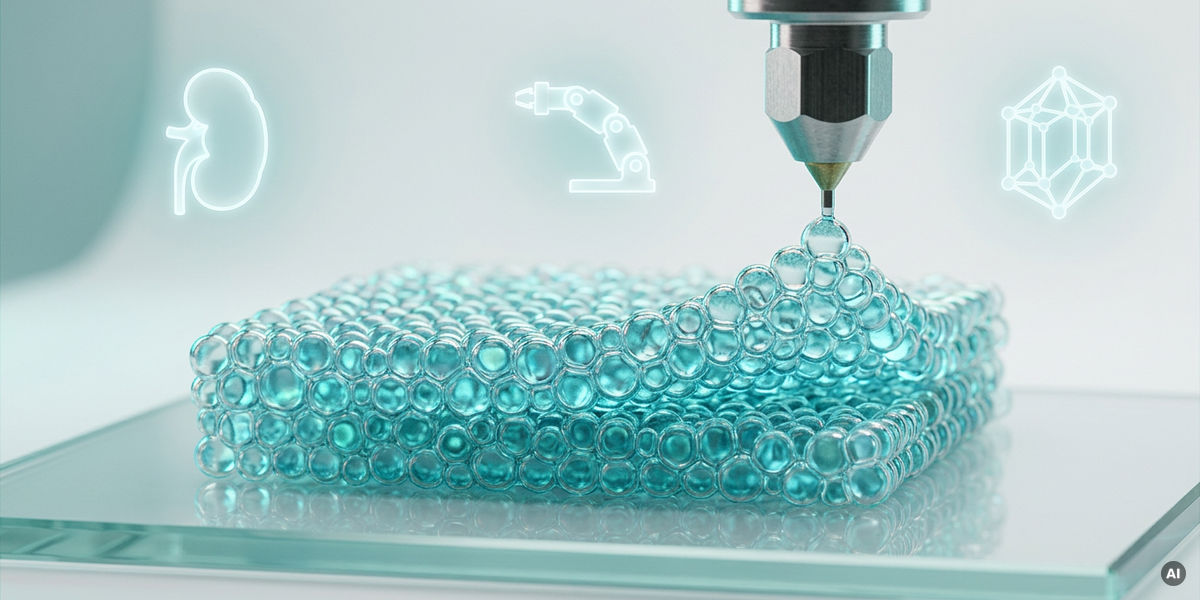
A new type of 3D-printable material developed by researchers at The University of Texas at Austin mimics human tissue's ability to sort and filter, allowing certain molecules to pass through while keeping others out. This broad function means the material can be used in a variety of applications across medicine, water and robotics.
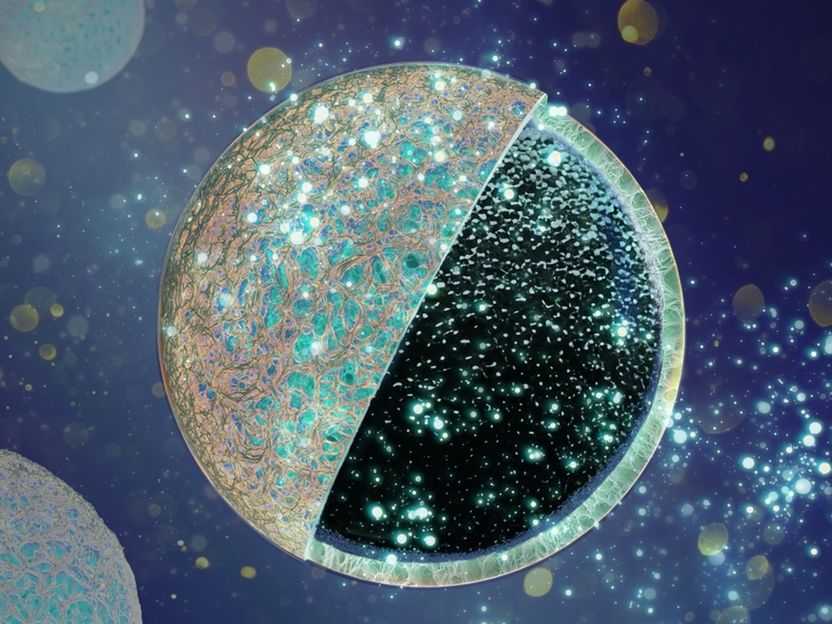
Current methods for building small tissue-like materials don't scale to sizes that can make applications possible, the researchers say. The team overcame these issues of speed and scalability by jamming billions of tiny water droplets tightly together using simple mixing and centrifuge techniques to form large, tissue-like materials in just a few minutes. Each droplet is separated by a thin membrane, allowing the membranes to link up, similar to cell organization in human tissue.
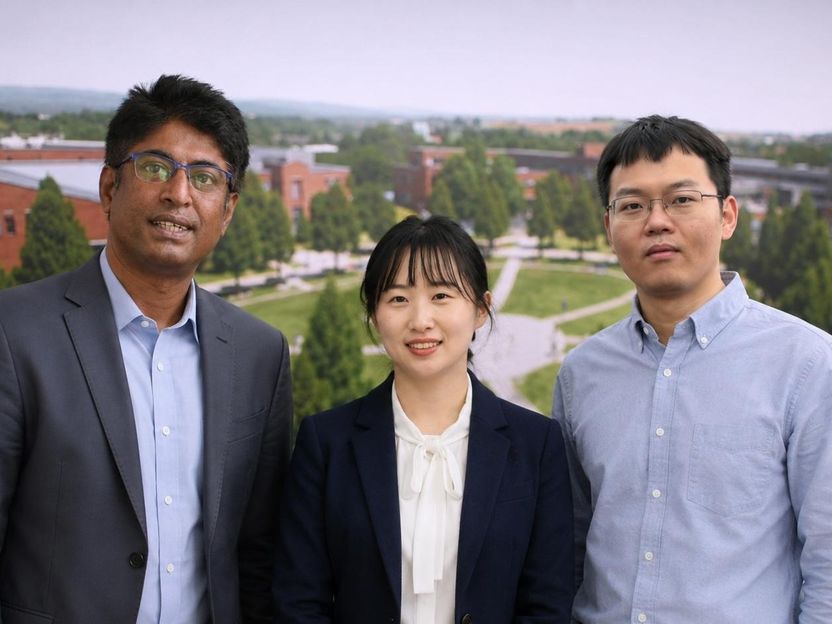
"Tissues can separate and transport ions and molecules; that's how our kidneys or intestines work, taking only what they need and leaving the rest behind," said Manish Kumar, professor in the Cockrell School of Engineering's Fariborz Maseeh Department of Civil, Architectural and Environmental Engineering and the McKetta Department of Chemical Engineering.

The flexible material can be customized to act like different kinds of tissue. Because the structure closely mimics real tissue and can be 3D printed from biocompatible materials, it can serve as a scaffold for the growth of new tissues or organs. The flexibility and responsiveness make it an ideal base for soft robots — machines that move and adapt like living creatures — that could be used in surgery, search-and-rescue, or hazardous environments where traditional machines cannot go.
By adding certain proteins, researchers enabled the material the ability to conduct ion currents, much like nerve tissue. This holds promise for building computing systems modeled after the human brain.
In another instance, researchers added a protein that allowed the tissue to tell ammonium apart from other ions in wastewaters. This includes water produced by oil and gas extraction and municipal wastewater, an area Kumar has focused on in recent years. The ability to filter out unwanted ions using membranes is a promising approach for recycling and reusing critical mineral ions and nutrients from wastewater.
This new research is part of an effort that spans more than a decade. But it was one of his students, Aida Fica, who put it all together.
After years of experiencing the same challenges of slow formation and instability, Fica heard something at a conference that gave her a new idea. She and the team unlocked the technology through emulsification, bringing together two oils with different solubilities to form droplets, then jamming them together with a centrifuge.
"This technology now offers a simple, scalable process with endless applications that could be implemented in any laboratory since it only requires basic equipment," Fica said. "We encourage interested researchers to try this out, and we will heartily support anybody who would like to work in this field through visits and discussions," Kumar added.
The researchers are now working to adapt the technology to extract lithium and other rare-earth elements through a project with the U.S. Department of Energy's Advanced Research Projects Agency‑Energy. Fica and Kumar have patented the technology as well as several downstream applications through UT's Discovery to Impact office.
Original publication


Other news from the department science




















These products might interest you

Most read news











More news from our other portals



























Last viewed contents
Breakthrough in ultra-thin lithium metal anodes opens the era of longer-lasting batteries - Commercialization of lithium metal batteries draws closer

GET H2 Nukleus Gains Momentum: First Hydrogen from Lingen Arrives in Marl - Germany's first integrated industrial-scale hydrogen project is underway
A new route to safe and sustainable synthetic chemistry - CO₂ as a source of oxygen: University of Bayreuth revolutionises oxidation chemistry
Velaris acquires Markes International to expand its automated sample preparation capabilities - The company joins the Velaris family of existing brands – Skalar Analytical, LCTech, PromoChrom, EST Analytical, GERSTEL and TE Instruments
Using individual atoms to achieve fossil-free chemistry - Chemists have achieved a breakthrough in catalysis research on multiple levels

Research guides future of plastic waste chemical recycling

The competitiveness of low-carbon fuels depends on location - New infrastructure could boost European production
Deep tech startup Reduciner introduces novel technology to turn captured carbon into sustainable fuels - Raising 3.6 million euros in its initial funding round, the Finnish startup plans to build its first industrial-scale pilot
Bruker announces strategic collaboration with Atinary Technologies to advance self-driving laboratories

FUST Lab Receives Investment from Asia2G Capital - The Korean deep-tech company plans to use the capital to expand into the U.S., European, and Japanese markets

ACHEMA Middle East: Debut in Saudi Arabia not until 2027 - Messe Frankfurt Saudi Arabia and DECHEMA are responding to regional uncertainties and are also changing the venue