Nature’s original bioplastic is food for animals
A new study provides unexpected insights into how biodegradable PHA plastics are broken down in nature
Advertisement


Long before humans discovered biodegradable plastics, microorganisms had already invented their own. Many bacteria and archaea produce natural bioplastics called polyhydroxyalkanoates (PHAs), storing them inside their cells as reserves of carbon and energy.
Until now, scientists thought that only microorganisms themselves could break down these substances. Researchers at the Max Planck Institute for Marine Microbiology in Bremen, Germany, have now overturned that long-standing assumption. In a study published in Nature Ecology & Evolution, they show that animals ranging from marine worms and starfish to terrestrial species including earthworms have enzymes capable of degrading microbial PHAs. The findings reveal a previously overlooked way in which microbial carbon can enter animal food webs.
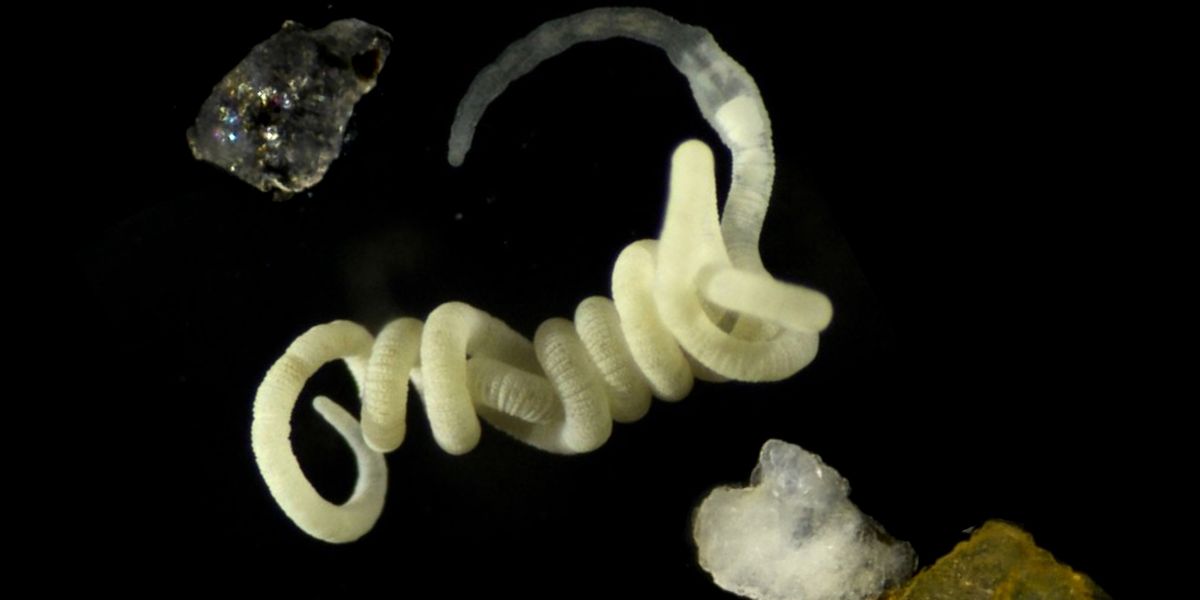
The story began with an unusual marine worm called Olavius algarvensis. It has neither a mouth nor a gut. Instead, it farms symbiotic bacteria beneath its skin and digests them for food.“One of the worm’s bacterial symbionts stores enormous amounts of carbon as PHA,” says corresponding author Nicole Dubilier, Director at the Max Planck Institute for Marine Microbiology. “We wondered whether the worm had evolved a way to access this rich energy reserve.”
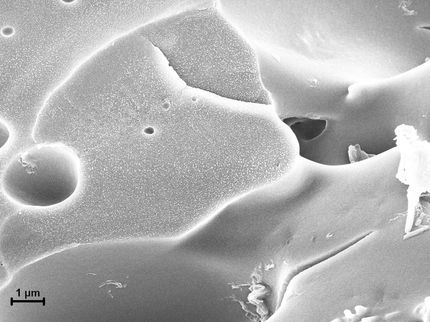
The answer was: Yes. The researchers discovered an enzyme in the worm that breaks down microbial PHAs into small molecules animals can use. High resolution images further showed that the enzyme is produced exactly where the worm digests its symbionts. This suggests that the worm can access the PHA stored by its bacterial partners.
The team then searched genomes across the animal kingdom and found related enzymes surprisingly often – in more than 66 animal species representing nine different phyla. Laboratory experiments confirmed that enzymes from phylogenetically distant animals –including a sponge, an earthworm and a springtail – also degrade microbial PHAs. “This was the real surprise,” says first author Caroline Zeidler from the Max Planck Institute for Marine Microbiology. “What started as a discovery in a single marine worm turned out to be a widespread capability shared by animals from very different branches of the tree of life.”
Microbial PHAs occur naturally in soils, sediments and aquatic environments worldwide. They are produced whenever microorganisms store excess carbon for later use and are among the few naturally occurring plastics that are completely biodegradable. Because PHAs are increasingly manufactured as sustainable alternatives to conventional plastics, understanding how they are degraded in nature has become an important area of research.
The new findings by Dubilier and her team suggest that animals, together with microorganisms, may contribute to the breakdown of these natural bioplastics. More fundamentally, they reveal that animals can exploit a microbial carbon reserve that had previously been thought to be inaccessible to them.
“Our study changes our understanding of who can use these microbial carbon stores,” says co-corresponding author Maggie Sogin, who carried out much of the work at the Max Planck Institute for Marine Microbiology and is now Assistant Professor at the University of California, Merced. “Animals have probably been feeding on nature’s original bioplastic for hundreds of millions of years – we’re only discovering it now.”
The researchers emphasize that much remains to be learned about how widespread this process is in nature and how much it contributes to carbon cycling. Nevertheless, the discovery opens a new perspective on interactions between microorganisms and animals and highlights how studies of unusual organisms can reveal entirely unexpected biological processes.
Original publication


Other news from the department science





















Most read news











More news from our other portals



























Last viewed contents

How Magnetic Nanoparticles Remove "Eternity Chemicals" from Water

From toxic to valuable: Cleaning wastewater, finding treasure - Researchers develop a 2-in-1 approach to clean heavy metals and recover valuable rare-earth elements from water

Study Reveals Hidden Climate Impact of Digital Industries - Digital emissions are often hidden in the footprints of other sectors
Turning waste into the future: scientists produce base materials for nylon from polystyrene - They have made bacteria break down polystyrene and convert it into useful chemicals
New paths for quantum technologies: Optical control of nuclear spins in molecules - Molecular systems can be chemically tailored and could thus enable atomically precise qubits

How Carbon Accounting Rules Shape Incentives for Hydrogen Production

How Chemicals End Up in the Mountains - Permanent chemicals harm insects—even in near-natural habitats
Quasiparticle solves mystery of vanishing conductivity - CAU team detects polarons in rare earth compound for the first time
Cryo-electron microscopy – Reaction cycle of an enzyme for CO2 fixation decoded - A promising enzyme candidate for biofuel production from carbon dioxide

Protein Content in Foods — New Conversion Factors Enable More Precise Assessment - Max Rubner Institute Releases New Database for Nitrogen-to-Protein Conversion

AI-driven microorganism mix has the potential for groundbreaking innovation - Federal Ministry for the Environment Launches First Joint SPRIND Challenge for a Biotech Breakthrough in the Circular Economy