Potential material for safer Li-ion batteries achieves record-high conductivity
New conductivity mechanism in oxyfluorides overturns the sulphide dogma

Advertisement


There is a good reason why every time you check in for a flight, you are asked to confirm that there are no portable chargers or power banks in your checked luggage. A highly flammable liquid electrolyte shuttles lithium (Li) ions between the electrodes of the Li-ion batteries that power these devices. As a result, if a Li-ion battery is damaged, its liquid electrolyte can cause a catastrophic fire.
Solid electrolytes, which can help reduce this risk, are an active area of research. One of the most important challenges in making solid-state batteries is increasing their ionic conductivity, or how easily positively charged Li ions can move through the solid electrolyte.
There are some solid electrolytes containing sulfide- and chloride-based materials that how high conductivity. This conductivity arises because electron clouds around negatively charged sulfide or chloride ions can easily deform as lithium ions pass through the material. But these electrolytes have their own safety issues: exposure to humidity can release toxic gases such as hydrogen sulfide and hydrogen chloride into the air.
In comparison, oxides and oxyfluorides are much more robust. When used as solid electrolytes, they are also more electrochemically stable, which is important because battery materials experience repeated voltage changes during charging and discharging. But on the flip side, they have generally exhibited low conductivity.
“At this stage, safety and ionic conductivity are a trade-off,” said Takeshi Yajima, an associate professor at the Department of Materials Design Innovation Engineering at Nagoya University. “Oxyfluorides are safer but have low conductivity, while sulfides have high conductivity but can be dangerous.”
A surprisingly good conductor…
In 2024, a new oxyfluoride crystal with a chemical formula Li2–xLa(1+x)/3Nb2O6F, shortened as “LLNOF”, was discovered to have an unusually large conductivity of seven millisiemens per centimeter (mS/cm), which is comparable to liquid electrolytes. But why it showed this conductivity remained a mystery: the electron cloud around the central fluoride ion does not deform as easily as in sulfides or chlorides to explain LLNOF’s behavior through the previously known mechanism.
Soon after this discovery, Yajima and his lab decided to grow their own, high-quality LLNOF single crystals to pin down the mechanism. This, Yajima says, was the hardest part, taking over a year to achieve. “We had to make sure that the crystals were of sufficiently high quality for structural analysis,” he said.
But the researchers’ efforts bore fruit as they were able to grow millimeter-sized LLNOF single crystals using the Bridgman method. Using single crystal diffraction, they were able to peek into the local arrangement and rearrangement of atoms within each crystal unit.
…reveals its secret
What they found was a dynamic interplay among four atomic sites that form a tetrahedron around LLNOF’s fluoride ion. Each of these sites can either contain a lithium ion, a lanthanum atom, or remain vacant. The researchers found that every time a Li ion makes a jump onto the next vacant spot, the central fluoride ion migrates slightly towards the lithium’s original site. Fluoride ions effectively “get out of the way,” lowering the energy barrier for Li ions to hop around.
That is why compared to other oxyfluorides where the atoms stay rigid, LLNOF shows higher Li ion conductivity.
The researchers then tweaked the composition of this crystal by changing the relative amounts of lithium, lanthanum, and vacant sites in LLNOF (the “x” in its chemical formula). They found that conductivity improved by lowering x, reaching a maximum value of 16.3 mS/cm. This result, representing the highest reported bulk Li-ion conductivity among oxide-related solid electrolytes, has been published in the Journal of the American Chemical Society.
Yajima believes this mechanism, which does not rely on highly polarizable ions, can be used to develop even more efficient solid oxide-based solid electrolytes. “The general understanding has been that sulfide-based materials are better conductors because of their anion character, but this mechanism challenges that understanding,” he adds. This research marks an important step towards realizing practical solid-state Li ion batteries.
Original publication


Other news from the department science





















Most read news











More news from our other portals



























See the theme worlds for related content
Topic World Battery Technology
The topic world Battery Technology combines relevant knowledge in a unique way. Here you will find everything about suppliers and their products, webinars, white papers, catalogs and brochures.

Topic World Battery Technology
The topic world Battery Technology combines relevant knowledge in a unique way. Here you will find everything about suppliers and their products, webinars, white papers, catalogs and brochures.
Last viewed contents
Hydrogen from Waste Materials for Stationary and Mobile Engines - Lower purity requirements open up the use of fermentation residues and sewage sludge as sources of hydrogen
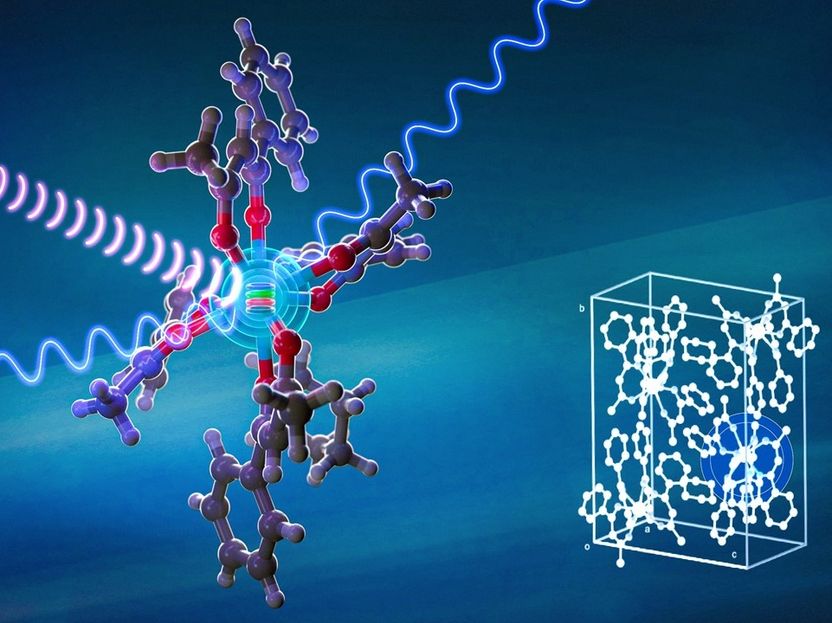
New paths for quantum technologies: Optical control of nuclear spins in molecules - Molecular systems can be chemically tailored and could thus enable atomically precise qubits

How Carbon Accounting Rules Shape Incentives for Hydrogen Production

How Chemicals End Up in the Mountains - Permanent chemicals harm insects—even in near-natural habitats
Quasiparticle solves mystery of vanishing conductivity - CAU team detects polarons in rare earth compound for the first time
Cryo-electron microscopy – Reaction cycle of an enzyme for CO2 fixation decoded - A promising enzyme candidate for biofuel production from carbon dioxide

Protein Content in Foods — New Conversion Factors Enable More Precise Assessment - Max Rubner Institute Releases New Database for Nitrogen-to-Protein Conversion

AI-driven microorganism mix has the potential for groundbreaking innovation - Federal Ministry for the Environment Launches First Joint SPRIND Challenge for a Biotech Breakthrough in the Circular Economy
Researchers develop cleaner, scalable process to recycle lithium-ion batteries - "We’ve shown that it’s possible to create high-performance batteries from recycled materials at scale"
30 Million Euros for Catalyst Research Using AI-Controlled Laboratories - ASCEND is leveraging automated learning loops and 3D thin-film catalysts to develop industrially viable drop-in substitutes.
