When the Sensor Calibrates Itself: Automated Calibration Ensures the Accuracy of Compact Magnetic Field Sensors
Advertisement


Researchers at INNOVENT e.V. in Jena have developed a method for upgrading inexpensive, compact Hall sensors into precise, temperature-compensated magnetic field sensors. The methodology can be applied to various sensor types.
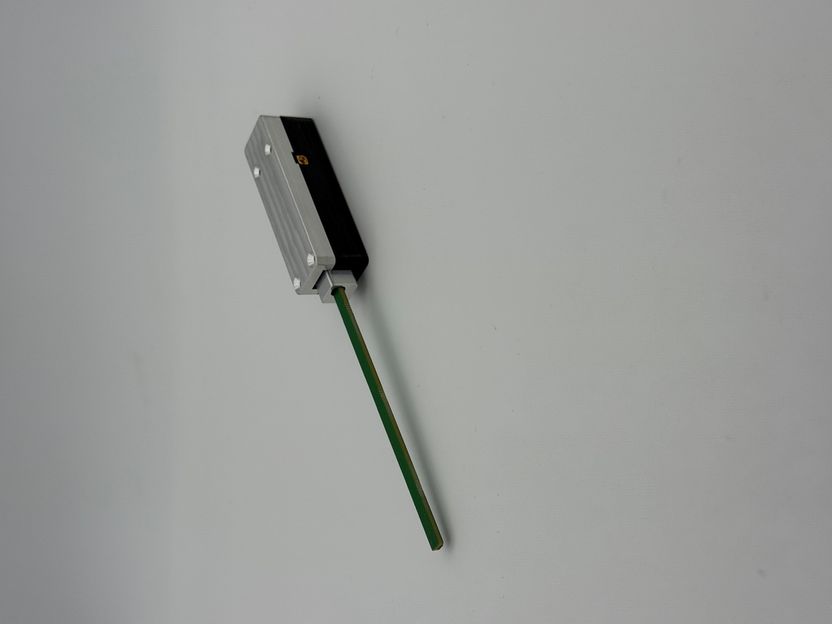
Researchers at INNOVENT e.V. in Jena have developed a method for upgrading inexpensive, compact Hall sensors into precise, temperature-compensated magnetic field sensors.
Copyright: INNOVENT e.V.
Three-axis Hall sensors are small, robust, and inexpensive—but they are considered challenging for reliable absolute measurements of magnetic flux density: Their signal drifts with temperature, their three measurement axes are not exactly perpendicular to one another due to manufacturing tolerances, and their sensitivity is not linear. In the “M-Gauss” research project, INNOVENT e.V. has developed a characterization and calibration methodology that systematically identifies these sources of error and corrects them mathematically.
Characterization Instead of Estimation The core of the work is the comprehensive metrological characterization of sensor behavior: In a three-axis Helmholtz configuration with a temperature-controlled measurement chamber, as well as in an electromagnet with feedback-controlled reference probes, the sensor signal was recorded as a function of field strength and temperature (10–40 °C). From this data, the researchers derived several correction steps: 3×3 transformation matrices that orthogonalize the actual spatial orientation of the sensor axes, as well as a compensation model that describes the sensitivity variation using third-degree polynomials. Because such calibration is hardly feasible by hand, it was converted into an automated process: A state machine controls the calibration setup and measurement technology and determines the necessary compensation constants independently. During validation, the method achieved an accuracy of less than 0.5 percent of the full-scale range value across all three axes.
Transferable Beyond the Specific Case The methodology developed is not limited to a specific sensor but is fundamentally transferable to other three-axis Hall sensors—such as the HallinOne sensors from the Fraunhofer Institute. As a further result, the researchers were able to demonstrate metrologically where the limits of Hall sensor technology lie: It is only of limited suitability for determining magnetic moments; in this regard, an alternative, AMR-based approach was characterized. The findings are already being incorporated into the institution’s ongoing research projects. The methodology will be presented, among other venues, at the Magsense Conference in Jena. Funding Information
The “M-Gauss” project was carried out as a collaborative project (collaborating partner: Matesy GmbH, Jena) under the FTI-Thuringia TECHNOLOGIE program and was co-financed by the European Regional Development Fund (ERDF) and the Free State of Thuringia.
Note: This article has been translated using a computer system without human intervention. LUMITOS offers these automatic translations to present a wider range of current news. Since this article has been translated with automatic translation, it is possible that it contains errors in vocabulary, syntax or grammar. The original article in German can be found here.


Other news from the department science




















These products might interest you

Most read news











More news from our other portals



























See the theme worlds for related content
Topic world Sensor technology
Sensor technology has revolutionized the chemical industry by providing accurate, timely and reliable data across a wide range of processes. From monitoring critical parameters in production lines to early detection of potential malfunctions or hazards, sensors are the silent sentinels that ensure quality, efficiency and safety.

Topic world Sensor technology
Sensor technology has revolutionized the chemical industry by providing accurate, timely and reliable data across a wide range of processes. From monitoring critical parameters in production lines to early detection of potential malfunctions or hazards, sensors are the silent sentinels that ensure quality, efficiency and safety.
Last viewed contents

Biotech start-up scales green chemistry with new investment - ICOS Capital invests in Mevaldi
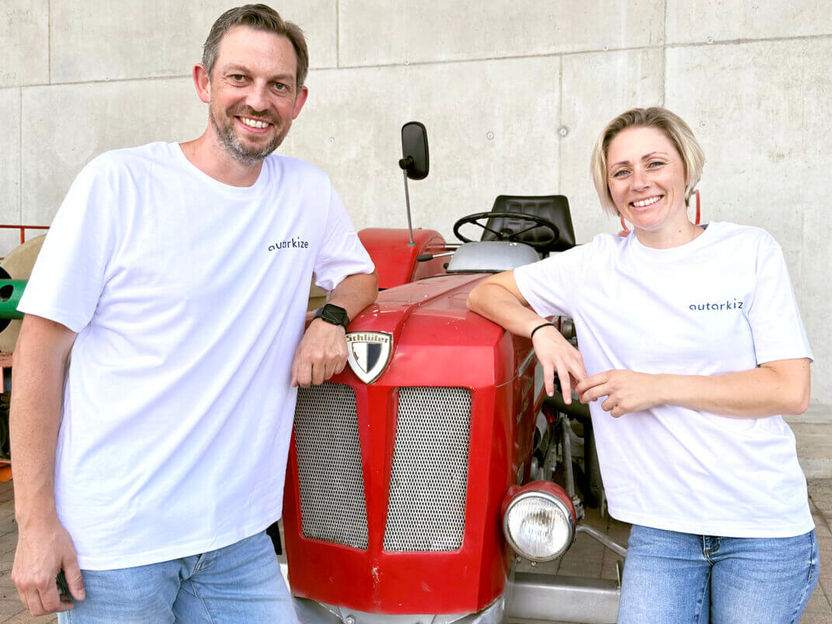
Autarkize raises €2.3 million in seed funding to drive sustainable energy transition

1.7 trillion euros of high-tech potential lies untapped in Germany - Germany is at risk of falling behind in the technology competition - but six key technologies could change that

2026 KlarText Prize for Science Communication: Klaus Tschira Foundation Honors Seven Researchers - Articles such as “Good News for Those Who Hate Brussels Sprouts,” “The Stamp-Sized Lab,” and “Faster Drug Development Through Math” won over the jury

AkzoNobel and Axalta announce three directors to finalize the combined company Board

Innovation paves way to make ‘clean’ chemicals, plastics and food using solar energy - Integrated solar reactor uses sunlight, water, CO2 and engineered bacteria to grow biomass in a single beaker
Chemicals and energy sectors move away from fossil raw materials - Fraunhofer and an Estonian deep-tech start-up are testing a modular biomass platform on an industrial scale
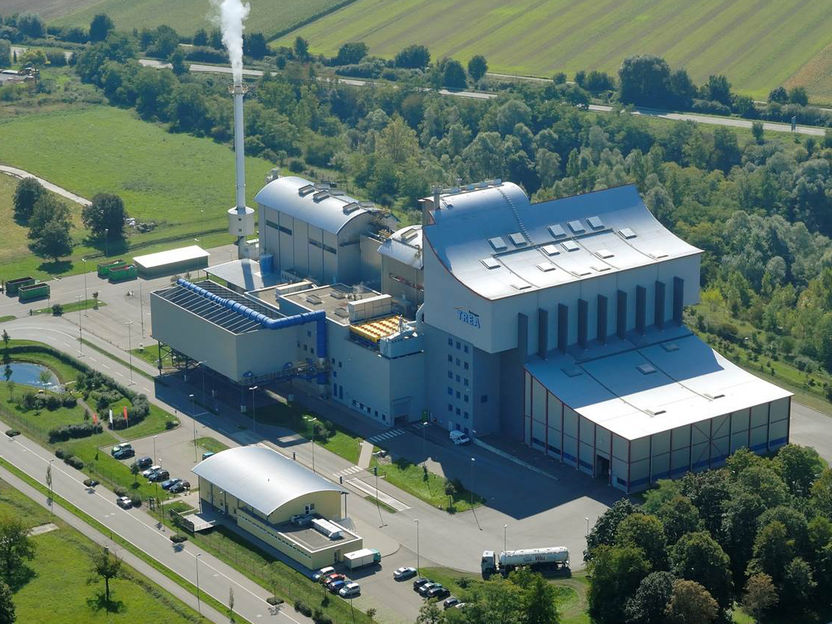
From Flue Gas to Raw Material: Extracting Carbon from CO₂ Produced by Waste Incineration - KIT and EEW Energy from Waste (EEW) plan to use CO₂ from flue gases in the NECOC process

KAIST identifies a route to faster-charging, longer-lasting EV batteries - Research team uses a 3D digital twin to reveal localized degradation mechanisms during fast charging

Matthews Engineering and start-up hs-tumbler partner on dry battery electrode manufacturing - Companies aim to enable dry electrode manufacturing through trajectory mixing

Winter-ready lithium batteries: scientists use "polarity-contras" electrolyte strategy to outsmart extreme cold - Lithium metal batteries retain 80% capacity after 150 cycles at -40 °C