Fibers from old tires can improve fire resistance of concrete
Advertisement


A new way of protecting concrete from fire damage using materials recycled from old tyres has been successfully tested by researchers at the University of Sheffield.
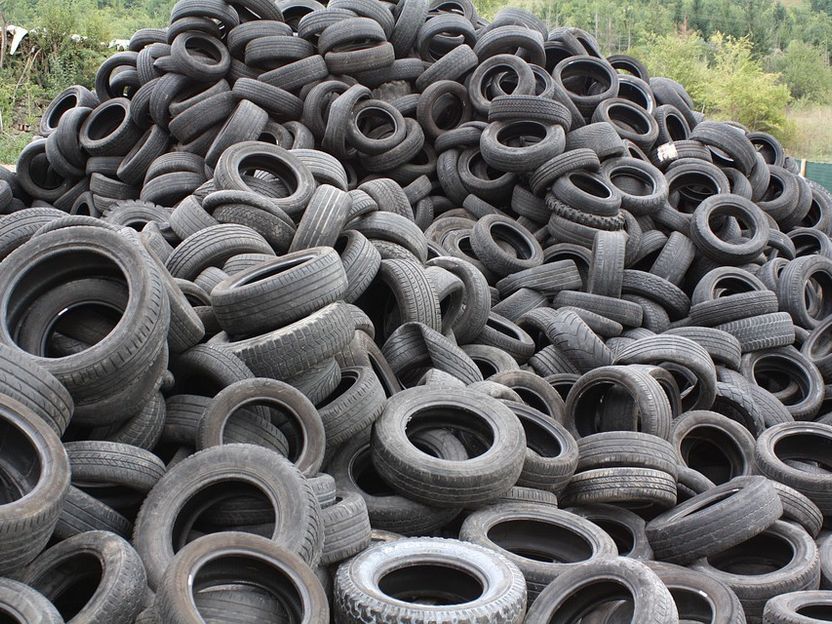
Pile of old tires, symbolic picture
recyclind; pixabay.com; CC0
The team used fibres extracted from the textile reinforcement commonly embedded into tyres to guarantee their performance. Adding these fibres to the concrete mix was shown to reduce the concrete's tendency to spall - where surface layers of concrete break off - explosively under the intense heat from a fire.
Using man-made polypropylene (PP) fibres to protect concrete structures from damage or collapse if a fire breaks out is a relatively well-known technique. Many modern structures, including large scale engineering projects such as Crossrail, have used concrete that includes PP fibres for protection against fire spalling.

The Sheffield study is the first to show that these fibres do not have to be made from raw materials, but can instead be reclaimed from used tyres.
"We've shown that these recycled fibres do an equivalent job to 'virgin' PP fibres which require lots of energy and resources to produce," explains lead author Dr Shan-Shan Huang, in the Department of Civil and Structural Engineering at the University of Sheffield.
"Using waste materials in this way is less expensive, and better for the planet."
The fibres melt under the intense heat from a fire, leaving networks of tiny channels. This means that moisture trapped within the concrete is able to escape, rather than becoming trapped, which causes the concrete to break out explosively.
"Because the fibres are so small, they don't affect the strength or the stiffness of the concrete," says Dr Huang.
"Their only job is to melt when heat becomes intense. Concrete is a brittle material, so will break out relatively easily without having these fibres help reducing the pressure within the concrete."
Protecting the concrete from fire spalling means that steel reinforcements running through the concrete are also protected. When the steel reinforcements are exposed to extreme heat they weaken very quickly, meaning a structure is much more likely to collapse. The Liverpool Waterfront Car Park suffered this kind of damage during a fire in 2017, leading to the entire structure eventually having to be demolished.
Collaborating with Twincon, a Sheffield-based company that develops innovative solutions for the construction industry, the researchers have also developed technologies for reclaiming the fibres from the used tyres.
This involved separating the fibres from the tyre rubber, untangling the fibres into strands, and then distributing them evenly into the concrete mixture.
The team plan to continue testing the material with different ratios of the fibres to concrete, and also using different types of concrete. They also plan to find out more about how the materials react to heat at the microstructure level. By scanning the concrete as it is heated, they will be able to see more precisely the structural changes taking place inside the material.
Original publication


Other news from the department science





















Most read news












More news from our other portals

























Last viewed contents

Consortium develops evolutionary concept for recycling of end-of-life polyurethane mattress foams - Ecomaison, Covestro, Secondly and Federal Eco Foam launch research project
Controversial Mass Products: Ceresana Analyzes the Global Market for Plasticizers
New metal-free, recyclable polypeptide battery that degrades on demand - Breakthrough could lead to battery production moving away from cobalt
Shedding light on mechanisms of electrochemical energy storage - UV-visible spectroscopy gives researchers a tool to study battery materials - a breakthrough that could speed the design of higher performing energy storage devices
Researchers discover new ultra strong material for microchip sensors - A material that doesn't just rival the strength of diamonds and graphene, but boasts a yield strength 10 times greater than Kevlar

Brown chemists report promising advance in fuel-cell technology

Climate pioneers cooperate to produce solar fuels - INERATEC joins forces with Synhelion

Micro- and nanoplastics in the body are passed on during cell division - That plastic may increase metastasis of tumors
Search for new semiconductors heats up with gallium oxide
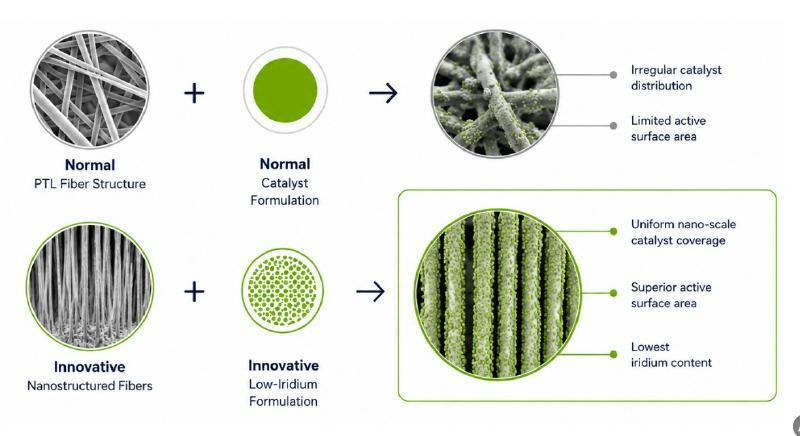
Smoltek Hydrogen and Heraeus Precious Metals advance next-generation ultra-low iridium electrolysis technology

Chemistry without detours: Researchers introduce a two-step process for producing phosphorus-containing chemicals - This promising innovation not only contributes to environmental protection but also saves significant time and costs