Zinc oxide: It's not just for sunscreen and diaper cream!
Advertisement


For many, zinc oxide conjures images of bright stripes down lifeguards' noses. But for researchers in Concordia's Faculty of Arts and Science, ZnO is an exciting compound with important optical and electrical properties.
For a study Concordia physicists Amir Hassanpour and Pablo Bianucci joined chemists Nicoleta Bogdan and John Capobianco to take a closer look at this common material that can be used many different ways.
Through their research, they developed a cost-effective method for growing ZnO using an approach that might one day lead to new solar cell designs.

"Zinc oxide is the main ingredient in many creams that treat diaper rash and is commonly used as an ingredient in sunscreen," says Bianucci, assistant professor in Concordia's Department of Physics and the study's senior author.
"It's also inexpensive, bio-compatible and easy to make."
At the microscopic level, ZnO typically exists as a kind of forest of microscopic "trees" called nanorods that are useful for skin cream applications. But devices like gas sensors can also make use of ZnO when the nanorods are arranged in specific patterns. Traditionally, those patterns have been difficult and expensive to produce. But the Concordia research team has developed a new method.
"It's easy to grow zinc oxide as a forest of randomly positioned nanorods, where each one has a diameter between 100 and 1000 times smaller than a human hair. But it's not easy to tell the nanorods where they are supposed to grow so that we can get the patterns necessary to create complex items like gas sensors," Bianucci explains.
"If we can grow the nanorods how and where we want them, we can create special structures called 'photonic crystals' that trap light. This would lead to the development of efficient ultraviolet lasers, or sensitive optical gas sensors that would change colour when a certain gas is present."
The research team has developed a process to make very small nanorods with a diameter of less than 100 nanometres which can be precisely separated, with approximately 500 nanometres between neighbouring rods.
"Our study proves that the material quality of these nanorods is the same as those grown in dense forests. What's more, we can reproduce this process on inexpensive materials like glass," says Hassanpour, the study's lead author and a PhD candidate in physics.
This shows that nanorods grown in pre-determined positions have the same properties as those that are grown randomly, allowing researchers to fabricate specific patterns for different applications. The process significantly reduces the fabrication cost of some advanced devices, such as small, affordable gas sensors that work more precisely than conventional ones.
Hassanpour hopes that this method could one day, with additional development, be used to make lasers that consume very little power, and perhaps even lead to new solar cell designs.
Original publication
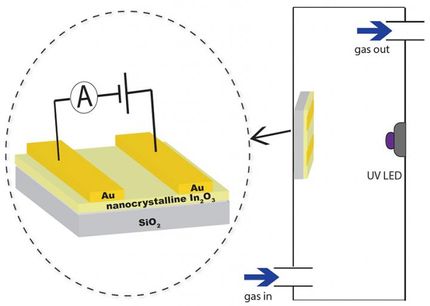


Other news from the department science




















Most read news












More news from our other portals


























See the theme worlds for related content
Topic world Sensor technology
Sensor technology has revolutionized the chemical industry by providing accurate, timely and reliable data across a wide range of processes. From monitoring critical parameters in production lines to early detection of potential malfunctions or hazards, sensors are the silent sentinels that ensure quality, efficiency and safety.

Topic world Sensor technology
Sensor technology has revolutionized the chemical industry by providing accurate, timely and reliable data across a wide range of processes. From monitoring critical parameters in production lines to early detection of potential malfunctions or hazards, sensors are the silent sentinels that ensure quality, efficiency and safety.
Topic world Synthesis
Chemical synthesis is at the heart of modern chemistry and enables the targeted production of molecules with specific properties. By combining starting materials in defined reaction conditions, chemists can create a wide range of compounds, from simple molecules to complex active ingredients.

Topic world Synthesis
Chemical synthesis is at the heart of modern chemistry and enables the targeted production of molecules with specific properties. By combining starting materials in defined reaction conditions, chemists can create a wide range of compounds, from simple molecules to complex active ingredients.
Last viewed contents

Less Plastic Waste in the Takeout Sector - Oldenburg High School Students Win ALTANA Special Prize in Chemistry

On the way to sustainable chemistry? Iron makes it possible - Hydroformylation of olefins using iron catalysis and light
3M to sell pressurized polyurethane foam adhesives business
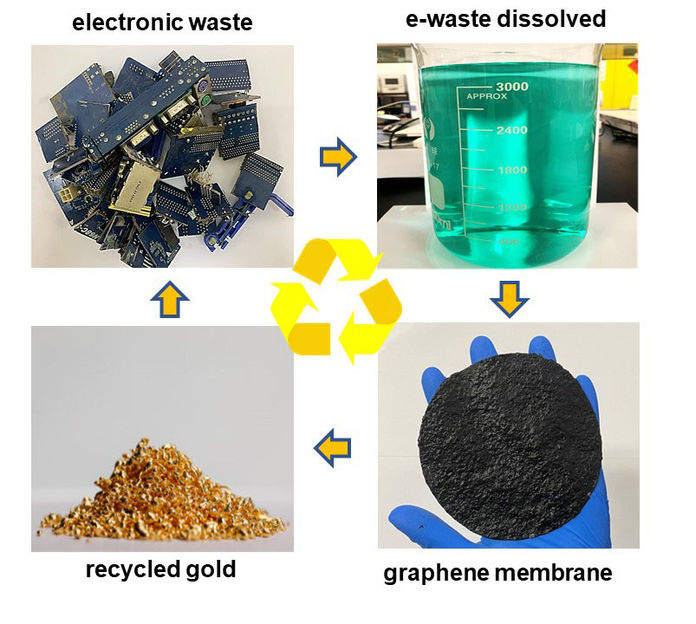
Graphene as 'the philosopher’s stone’: turning waste into gold - "This apparent magic is essentially a simple electrochemical process"

Cleaner air as a result of coronavirus lockdown - Lockdowns in early summer 2020 meant that the amount of soot in the atmosphere, which is harmful to the climate and to health, almost halved
DSM and Chemtrix sign collaboration agreement in Continuous Flow Chemistry
Jülich Neutron Scientists Inaugurate Unique Device in the USA - European researchers obtain access to world’s strongest neutron source
LANXESS strengthens commitment to renewable raw materials with investment in BioAmber - Companies have developed phthalate-free plasticizers from bio-based succinic acid

Plasma acceleration: It’s all in the mix - A pinch of nitrogen and artificial intelligence are moving laser plasma acceleration a big step closer to practical applications

Univar Solutions to be Acquired by Apollo Funds for $8.1 Billion

First experimental evidence of 3-D aromaticity in stacked antiaromatic compounds