2 Max Planck Centers in South Korea planned
Max Planck Society has signed a memorandum of understanding with Pohang University of Science and Technology
The two Max Planck Centers will be devoted to "Attosecond Science" and "Complex Phase Materials". Postech and Max Planck scientists have already been cooperating in both fields and will intensify the exchange of know-how and staff, jointly training junior scientists within the framework of the Centers, which are intended to put the visibility of cooperations on selected ground-breaking research topics with high-performing international partners onto a broad footing.
Partners from Australia, China and Japan are also represented in the Max Planck Center for Attosecond Science; Max Planck Society members of the network include Ferenc Krausz (MPI of Quantum Optics), Joachim Ullrich (MPI for Nuclear Physics), Andrea Cavalleri (Max Planck working group for Structural Dynamics at the CFEL), Jan Rost (MPI for the Physics of Complex Systems) and Martin Wolf (Fritz Haber Institute).
The Max Planck Center for Complex Phase Materials is headed by Liu Hao Tjeng from the MPI for Chemical Physics of Solids, and Postech colleagues Jae-Hoon Park and Sang-Wook Cheong. The Center focuses on the synthesis and investigation of new materials that exhibit phenomena caused by the quantum character of their constituent atoms.
The initiator of the cooperation with South Korea is Professor Peter Fulde, emeritus Director of the Max Planck Institute for the Physics of Complex Systems in Dresden. He took on a Postech professorship in 2007 and became head of the Asia Pacific Center for Theoretical Physics, which is located on the Postech campus. There, he has already initiated the establishment of junior research groups, which receive financial support from the Max Planck Society.
Pohang is a major city on the east coast of South Korea. Pohang University of Science and Technology was founded in 1986, has around 3,000 students and is considered to be one of the top universities in the natural sciences in Asia. With "Vision 2020", POSTECH is striving for a place among the world's best research universities -- an objective which South Korea also supports financially, as in the case of the cooperation with the Max Planck Society.
Other news from the department science














More news from our other portals


















See the theme worlds for related content
Topic world Synthesis
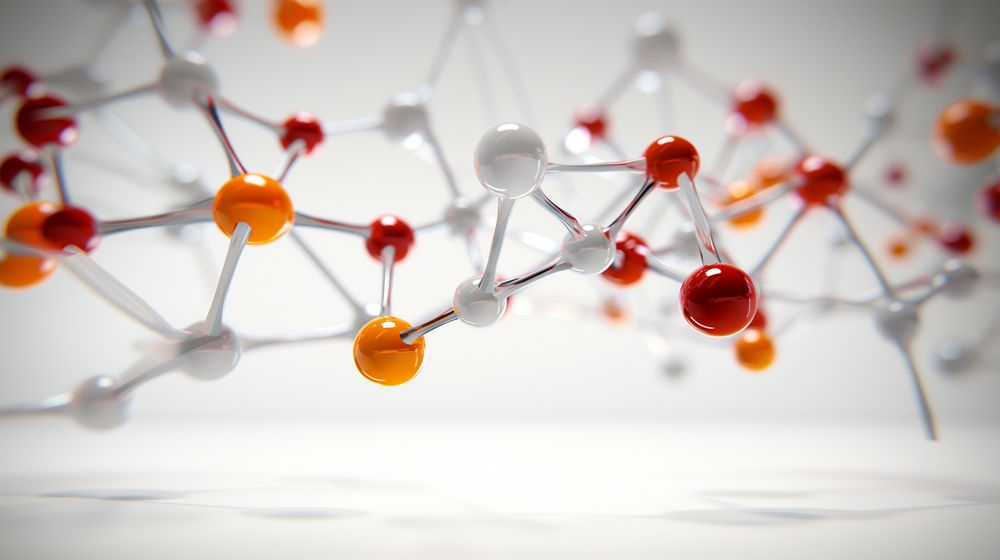
Chemical synthesis is at the heart of modern chemistry and enables the targeted production of molecules with specific properties. By combining starting materials in defined reaction conditions, chemists can create a wide range of compounds, from simple molecules to complex active ingredients.
Topic world Synthesis
Chemical synthesis is at the heart of modern chemistry and enables the targeted production of molecules with specific properties. By combining starting materials in defined reaction conditions, chemists can create a wide range of compounds, from simple molecules to complex active ingredients.