Closure of Chemical Plant Could Cost Saxony-Anhalt Millions More
A safe shutdown requires a technically complex process

Advertisement


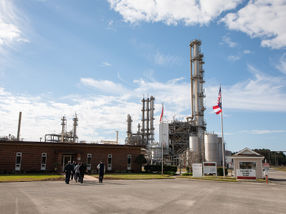
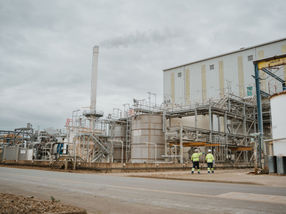
The shutdown of the Leuna Polyamid chemical plant could cost the state of Saxony-Anhalt millions more. According to the State Administrative Office, it has commissioned an expert assessment of the costs associated with safely shutting down and securing the insolvent chemical plant. The result: The estimated costs are projected at 30 million euros. “Such a cost estimate is necessary for hazard mitigation,” the agency told the Mitteldeutsche Zeitung (Tuesday edition).
The insolvent company, which employs 440 people, announced last week that its search for investors had failed. According to Managing Director Martin Naundorf, the decommissioning process has been initiated. According to the administrative office, the facilities at the Leuna site constitute a highly complex combination of substances, including those relevant to major accidents. A safe shutdown therefore cannot be carried out quickly or in a haphazard manner but requires a technically demanding process lasting weeks or months. “Should an operator, for practical reasons, no longer be able to carry out the necessary measures on its own, the competent authority must be able to ensure hazard mitigation by taking over the necessary actions,” the Administrative Office further stated.
Insolvency proceedings will commence on October 1, 2026. The company is in financial distress and is unlikely to be able to spend millions on decommissioning.
The state of Saxony-Anhalt had already secured the plants’ emergency operations with nearly 80 million euros at the beginning of the year. The company Domo filed for bankruptcy at the end of 2025. The state had to step in to mitigate the risks. On April 1, 2026, the rescue company Leuna Polyamid took over operations. However, due to a sharp rise in raw material prices, the company was forced to file for bankruptcy after two and a half months.
Note: This article has been translated using a computer system without human intervention. LUMITOS offers these automatic translations to present a wider range of current news. Since this article has been translated with automatic translation, it is possible that it contains errors in vocabulary, syntax or grammar. The original article in German can be found here.


Other news from the department business & finance