 Verified
P-0
Vibrating Mill for RoHS Analysis and Cryogenic Sample Preparation
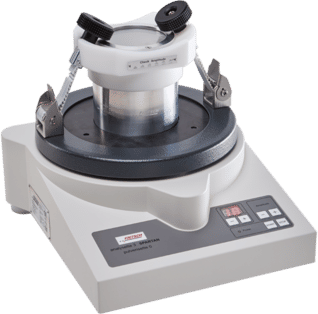
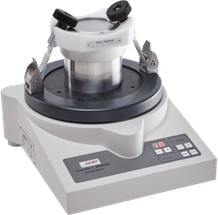
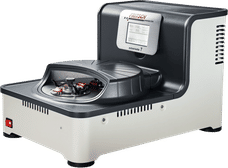
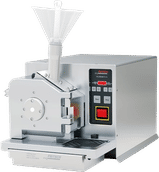
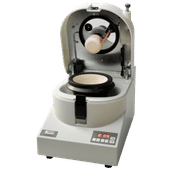
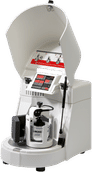
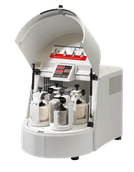
The P-0Vibrating Mill offers laboratories a versatile solution for the fine grinding of medium-hard, brittle, moist, or temperature-sensitive samples in very small quantities ranging from 1 to 10 ml. With an achievable final particle size of up to 5 µm, the device is particularly well-suited for loss-free and agglomeration-free grinding in fields such as chemistry, biology, environmental science, pharmaceuticals, and materials research.
Optimal Sample Preparation for RoHS Testing
The P-0vibratory mill is specifically recommended for sample preparation for RoHS (Restriction of Hazardous Substances) testing. When analyzing electronic components for prohibited substances such as lead, mercury, cadmium, or hexavalent chromium, loss-free and agglomeration-free grinding is crucial for reliable measurement results. The vibratory millenables the precise preparation of printed circuit boards, plastic parts, housings, and cables for subsequent spectroscopic analyses. By selecting different materials for the grinding jars, unwanted contamination can be avoided.
Unique Capabilities for Cryogenic Grinding
The P-0vibrating mill is currently the onlyvibrating mill on the market capable of cryogenically grinding viscoelastic materials in direct contact with nitrogen. The optionally available cryo-box enables the rapid embrittlement of soft, slightly greasy, or moist materials. By simply inserting the filled grinding assembly and filling it with liquid nitrogen, even samples that are extremely difficult to grind can be easily reduced to analytical fineness. The robust insulation ensures particularly economical coolant consumption.
Grinding and Sieving in a Single Unit
The device combines fine grinding and sieving functions: By simply inserting the appropriate sieves, the P-0 Vibrating Millcan be converted into a vibrating sieve machine for quantitative particle size analysis—for both dry and wet sieving. The measurement range is 32–63 µm for solids and 20 µm–10 mm for suspensions.
Precise adaptation to any sample
Grinding is achieved through impact and friction as the mortar is set into vibration by an electromagnetic field. The vibration amplitude is freely adjustable and can be precisely tailored to the specific sample being ground. At 3,000–3,600 vibrations per minute with an amplitude of 1–3 mm, the coarse particles are first broken down by the impact of the grinding ball. The fine fraction is then ground by friction caused by the wobbling motion of the grinding ball as the vibration dies down. This two-stage grinding process prevents agglomeration and ensures reproducible results.
Versatile Material Options and Applications
Five different materials are available for mortars and grinding balls to ensure optimal adaptation to any sample type. All mortars are housed in a robust aluminum casing that protects the mortar itself. In addition to RoHS analysis, the mill is also suitable for the rapid, homogeneous preparation of emulsions and pastes.
With a compact design measuring 37 × 40 × 20 cm, a weight of 21 kg, and low power consumption of 50 watts (100–240 V/1~, 50–60 Hz), the device can be used flexibly in the laboratory. The ergonomically positioned membrane keypad is splash-proof (IP65); a viewing window allows the grinding process to be monitored; and a digital timer ensures reproducible results.
Note: This article has been automatically translated. LUMITOS offers this service to make product information available in more languages. As this article was created automatically, errors and deviations from the original are possible. The original presentation in German can be found here.
Product classification P-0
Product categories
Applications
Manufacturers of similar products


Find more swing mills and related products
Find P-0 and related products in the theme worlds
Topic World Particle Analysis
Particle analysis methods allow us to study tiny particles in various materials and reveal their properties. Whether in environmental monitoring, nanotechnology or the pharmaceutical industry, particle analysis gives us a glimpse into a hidden world where we can decipher the composition, size and shape of particles. Experience the fascinating world of particle analysis!

Topic World Particle Analysis
Particle analysis methods allow us to study tiny particles in various materials and reveal their properties. Whether in environmental monitoring, nanotechnology or the pharmaceutical industry, particle analysis gives us a glimpse into a hidden world where we can decipher the composition, size and shape of particles. Experience the fascinating world of particle analysis!