International consortium to advance decarbonisation of the aviation sector
CARE-O-SENE research project will develop advanced catalysts for sustainable aviation fuels
Advertisement


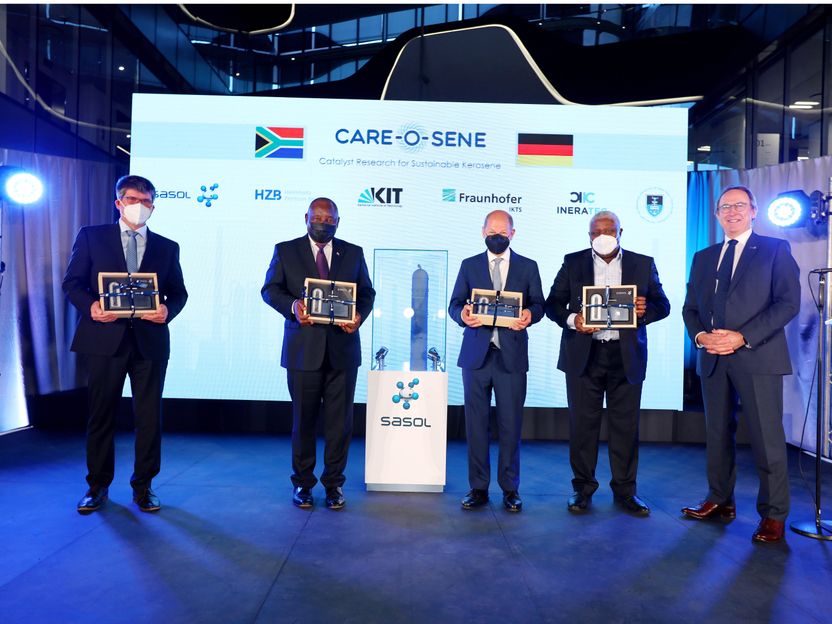
The company Sasol and Helmholtz-Zentrum Berlin (HZB) will lead a consortium to develop and optimise next-generation catalysts that will play a key role in decarbonising the aviation sector through sustainable aviation fuels (SAF).
© Sasol
At a ceremony at Sasol’s global headquarters in Johannesburg, South African President Cyril Ramaphosa and German Chancellor Olaf Scholz attended the launch of CARE-O-SENE (Catalyst Research for Sustainable Kerosene) research project, to be funded by the German Federal Ministry of Education and Research (BMBF) and Sasol.
Sasol joins forces with five other world-leading organisations in Germany and South Africa to accelerate the development of catalysts that are essential to produce green kerosene on a commercial scale through Fischer-Tropsch (FT) technology.
“We are delighted to have been selected to lead this important project,” said Fleetwood Grobler, President and Chief Executive Officer of Sasol Limited. “Our expertise in FT technology and catalysts makes us the ideal partner to help Germany and the world decarbonise the aviation sector and make it sustainable over the long-term.”
Prof. Dr. Bernd Rech, Scientific Managing Director of HZB adds, “CARE-O-SENE will enable us to accelerate innovation in a crucial field of green energy. This can only be achieved in a global partnership by deeply integrating fundamental research and technology development on an industry relevant scale.”
Other CARE-O-SENE project partners include the Fraunhofer Institute for Ceramic Technologies and Systems (IKTS), the Karlsruhe Institute of Technology (KIT), the University of Cape Town, Department of Chemical Engineering (UCT) and INERATEC GmbH. The consortium expresses its sincere gratitude to the German Federal Ministry of Education and Research for supporting these important efforts.
CARE-O-SENE will run for three years and pursues the goal of setting the course for large-scale commercialisation of green kerosene production by 2025 with its research on catalysts. Catalysts are used to speed up chemical reactions, increase the yield and improve the quality of refined products. The new FT catalysts are expected to increase the fuel yield of the process to over 80 percent, thereby optimising use of resources.
Unlike conventional kerosene derived from fossil feedstocks, SAF can be made from green hydrogen and sustainable carbon dioxide sources. Developing SAF is key to a sustainable decarbonisation of the hard-to-abate aviation industry, and the main lever for net zero aviation. The underlying technology to developing SAF at scale from green hydrogen and sustainable carbon sources is FT technology, in which Sasol has been a global leader for more than 70 years.


Other news from the department science





















Most read news












More news from our other portals

























Last viewed contents
EU project SMHYLES develops novel salt- and water-based hybrid energy storage systems (HESS) on an industrial scale - The consortium includes 16 partners from seven countries

Consortium develops evolutionary concept for recycling of end-of-life polyurethane mattress foams - Ecomaison, Covestro, Secondly and Federal Eco Foam launch research project

Controversial Mass Products: Ceresana Analyzes the Global Market for Plasticizers
New metal-free, recyclable polypeptide battery that degrades on demand - Breakthrough could lead to battery production moving away from cobalt
Shedding light on mechanisms of electrochemical energy storage - UV-visible spectroscopy gives researchers a tool to study battery materials - a breakthrough that could speed the design of higher performing energy storage devices

Researchers discover new ultra strong material for microchip sensors - A material that doesn't just rival the strength of diamonds and graphene, but boasts a yield strength 10 times greater than Kevlar

Brown chemists report promising advance in fuel-cell technology

Climate pioneers cooperate to produce solar fuels - INERATEC joins forces with Synhelion

Micro- and nanoplastics in the body are passed on during cell division - That plastic may increase metastasis of tumors

Search for new semiconductors heats up with gallium oxide
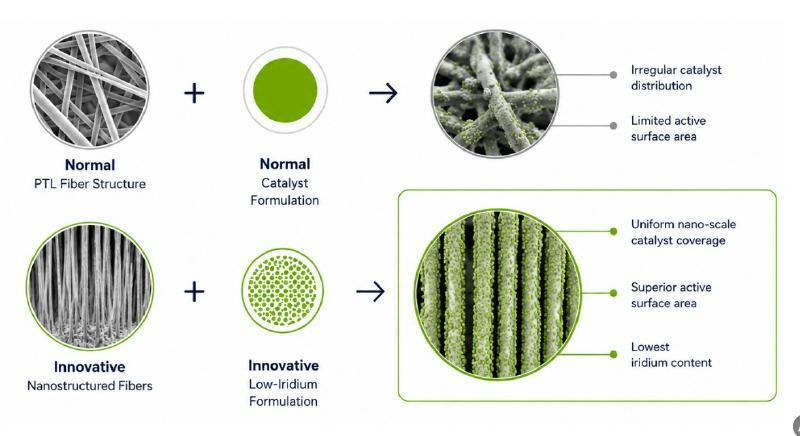
Smoltek Hydrogen and Heraeus Precious Metals advance next-generation ultra-low iridium electrolysis technology