Modified microwave oven cooks up next-gen semiconductors
The breakthrough could change the geometry of transistors used in microchips
Advertisement


A household microwave oven modified by a Cornell engineering professor is helping to cook up the next generation of cellphones, computers and other electronics after the invention was shown to overcome a major challenge faced by the semiconductor industry.

Symbolic image
pixabay.com
The research is detailed in a paper published in Applied Physics Letters. The lead author is James Hwang, a research professor in the department of materials science and engineering.
As microchips continue to shrink, silicon must be doped, or mixed, with higher concentrations of phosphorus to produce the desired current. Semiconductor manufacturers are now approaching a critical limit in which heating the highly doped materials using traditional methods no longer produces consistently functional semiconductors.

The Taiwan Semiconductor Manufacturing Company (TSMC) theorized that microwaves could be used to activate the excess dopants, but just like with household microwave ovens that sometimes heat food unevenly, previous microwave annealers produced “standing waves” that prevented consistent dopant activation.
TSMC partnered with Hwang, who modified a microwave oven to selectively control where the standing waves occur. Such precision allows for the proper activation of the dopants without excessive heating or damage of the silicon crystal.
This discovery could be used to produce semiconductor materials and electronics appearing around the year 2025, said Hwang, who has filed two patents for the prototype.
“A few manufacturers are currently producing semiconductor materials that are 3 nanometers,” Hwang said. “This new microwave approach can potentially enable leading manufacturers such as TSMC and Samsung to scale down to just 2 nanometers.”
The breakthrough could change the geometry of transistors used in microchips. For more than 20 years, transistors have been made to stand up like dorsal fins so that more can be packed on each microchip, but manufacturers have recently begun to experiment with a new architecture in which transistors are stacked horizontally. The excessively doped materials enabled by microwave annealing would be key to the new architecture.
Original publication


Other news from the department science





















Most read news












More news from our other portals

























Last viewed contents
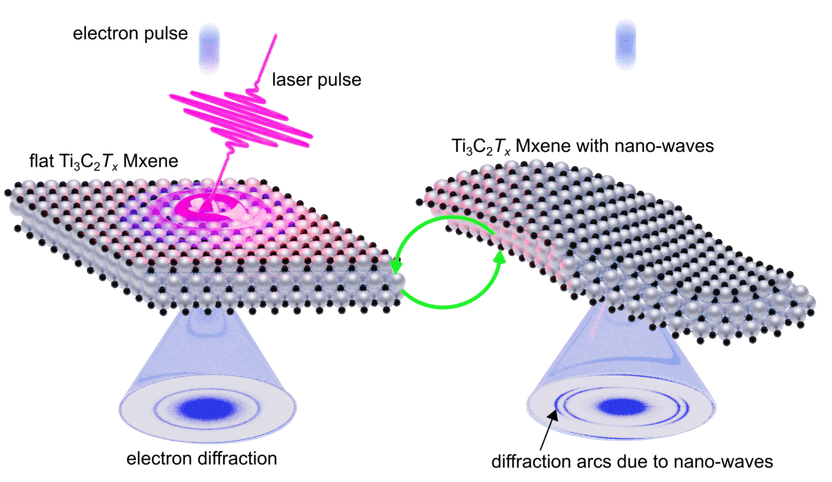
Light-induced shape shifting of MXenes - Femtosecond light creates switchable nano-waves in MXenes and moves the materials’ atoms at a record-breaking speed
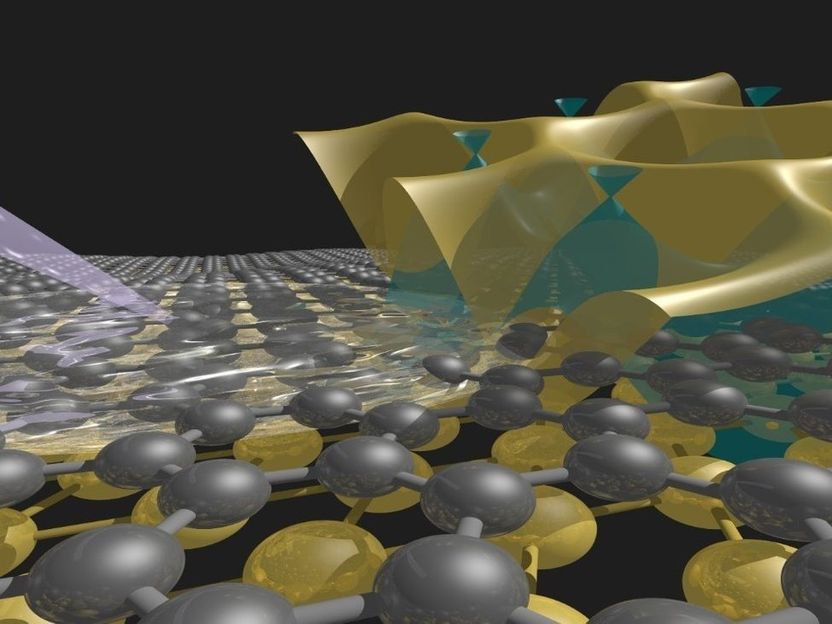
A touch of gold and silver - For the first time, it is possible to produce crystalline layers of precious metals that consist of a single atomic layer and which are semiconducting

Nanoparticle supersoap creates 'bijel' with potential as sculptable fluid

Inspired by nature: Scientists have developed a nanopore-microchip

Reinforcement of structures with Memory Steel
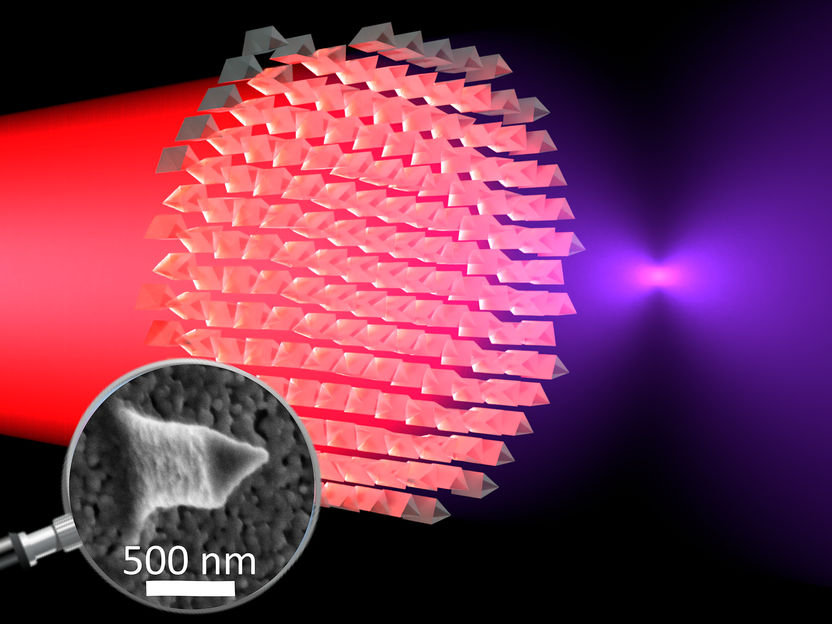
Ultra-thin lenses that make infrared light visible - Researchers have achieved this using a special metal-oxide lens material called lithium niobate and through nanoscale pattern, stamped into the material

Team develops bioprocess for converting plant materials into valuable chemicals

Wonder material graphene claims yet another superlative
Magnets trump metallics - Magnetic fields can block conductivity of carbon nanotubes

Cellphone converts into powerful chemical detector - With only $50 worth of components, an ordinary cellphone transforms into a sophisticated scientific instrument, capable of identifying chemicals, drugs, and pathogens
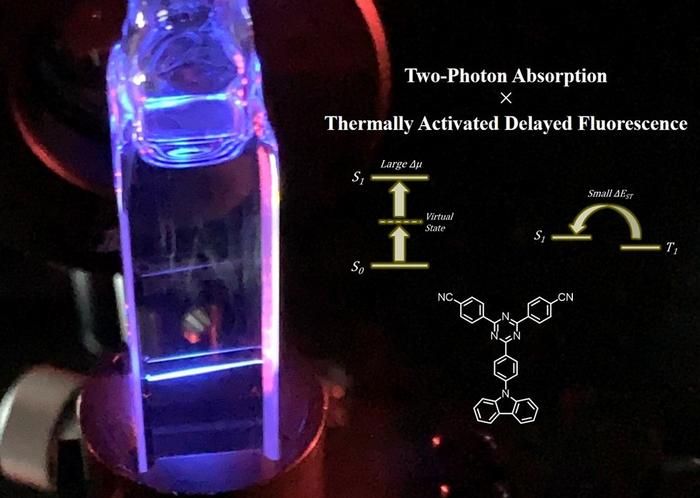
Dual-function organic molecule may advance display technologies and medical imaging - Researchers overcome a long-standing molecular design challenge by realizing efficient light emission and photon absorption in the same compound.