Micro- and nanoplastics in the body are passed on during cell division
That plastic may increase metastasis of tumors

Advertisement


The gastrointestinal tract is already known to researchers as a major storage site for micro- and nanoplastic particles (MNPs) in the human body. A research consortium consisting of the University of Vienna, the Medical University of Vienna and other partners under the leadership of CBmed GmbH in Graz has now investigated the effects of the tiny plastic particles on cancer cells in the human gastrointestinal tract. The study showed that MNPs remain in the cell for much longer than previously assumed, as they are passed on to the newly formed cell during cell division. The first indications were also discovered that the plastic particles could promote the metastasis of tumours. The results of the study were recently published in the scientific journal "Chemospheres".
Besides respiration, ingestion is the most important route for MNPs into the organism. Plastic particles up to the weight of a credit card (approx. five grams) enter the gastrointestinal tract every week. The team led by Verena Pichler (University of Vienna, CBmed) and Lukas Kenner (MedUni Vienna, CBmed, Vetmeduni Vienna) investigated the interactions between MNPs and various colon cancer cells.
In their analyses, they were not only able to show how MNPs enter the cell and where exactly they are deposited, but also observed their direct effects: The MNPs are taken up into lysosomes like other "waste products" in the body. Lysosomes are cell organelles that are also known as the "stomach of the cell" and break down foreign bodies in the cell. However, the researchers observed that, unlike foreign bodies of biological origin, the MNPs are not degraded due to their foreign chemical composition.
Depending on various factors, the MNPs are even passed on to the newly formed cell during cell division and are therefore likely to be more persistent in the human body than originally assumed. In addition, there are initial indications that MNPs increase the migration of cancer cells to other regions of the body and thus possibly promote the metastasis of tumours. This effect is now to be investigated further in a follow-up study.
The smaller, the more harmful
The altered behaviour of colorectal cancer cells in relation to cell migration was primarily observed as a result of interaction with plastic particles that are smaller than one micrometre (1 µm = 0.001 mm). Particles of this size are usually referred to as nanoplastics, which occur 10 to 100 times more frequently than microplastics in a water bottle, for example. It is undisputed that the smaller the plastic particles are, the more harmful they are. "This is once again consistent with the results of our analyses," emphasises Verena Pichler. "Our study also confirms recent findings that indicate that MNPs can influence cell behaviour and possibly contribute to the progression of diseases," adds Lukas Kenner.
"Given the ubiquity of plastics in the environment and the persistent exposure of even humans to the smallest plastic particles, further studies are urgently needed to investigate long-term effects in particular," says Kenner. "It can be assumed that MNP causes chronic toxicity," fears Pichler. The latest results and earlier studies show a high uptake and long retention in tissues and cells. The investigated particles therefore fulfil two of three characteristics in toxicology that are used to classify substances as being of concern under the EU Chemicals Regulation ("REACH").
Original publication
Ekaterina Brynzak-Schreiber, Elisabeth Schögl, Carolin Bapp, Klaudia Cseh, Verena Kopatz, Michael A. Jakupec, Andreas Weber, Tobias Lange, José L. Toca-Herrera, Giorgia del Favero, Wolfgang Wadsak, Lukas Kenner, Verena Pichler; "Microplastics role in cell migration and distribution during cancer cell division"; Chemosphere, Volume 353


Other news from the department science





















Most read news












More news from our other portals

























Last viewed contents

Search for new semiconductors heats up with gallium oxide
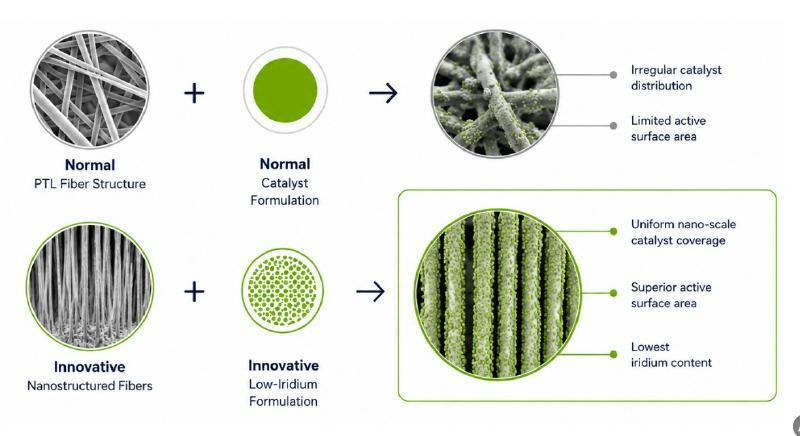
Smoltek Hydrogen and Heraeus Precious Metals advance next-generation ultra-low iridium electrolysis technology
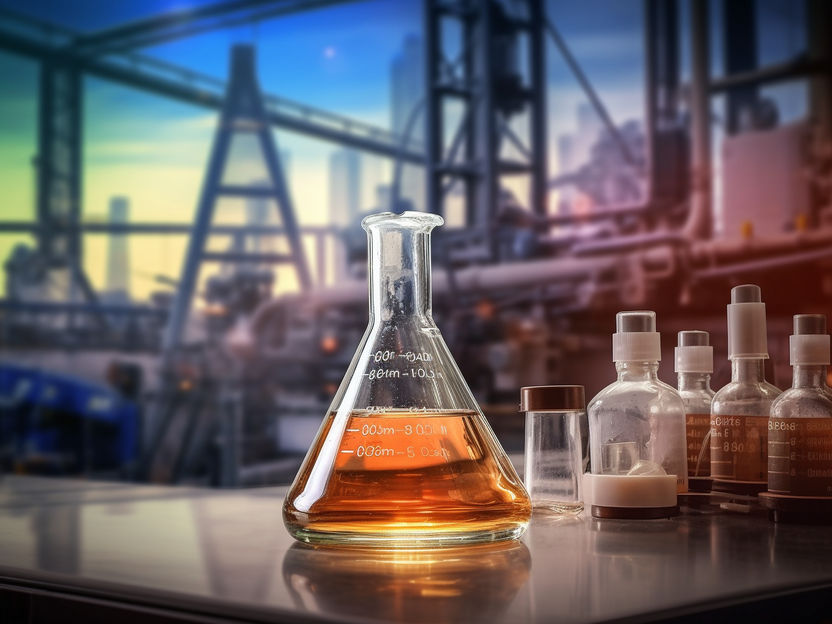
Chemistry without detours: Researchers introduce a two-step process for producing phosphorus-containing chemicals - This promising innovation not only contributes to environmental protection but also saves significant time and costs

Evidence stacks up for poisonous books containing toxic dyes

Adhesives from waste wood, biofuel from straw - EU research project on the potential of agroforestry waste as environmentally friendly raw materials completed

Computational trick enables better understanding of exotic state of matter - New process relevant for fusion and materials research
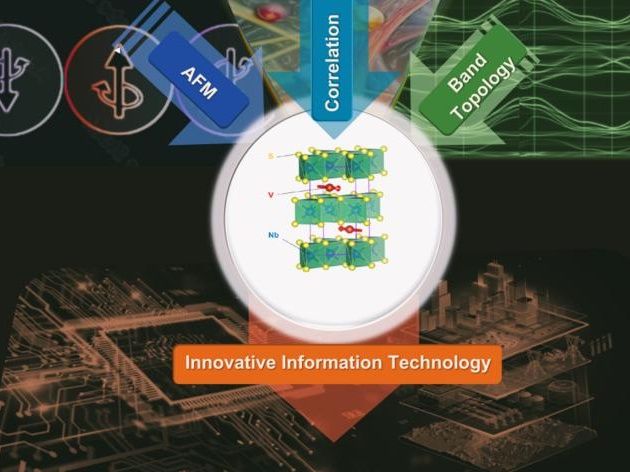
Pushing boundaries: Detecting the anomalous Hall effect without magnetization in a new class of materials - The first experimental evidence for the anomalous Hall effect emerging in a collinear antiferromagnet with non-Fermi liquid behavior
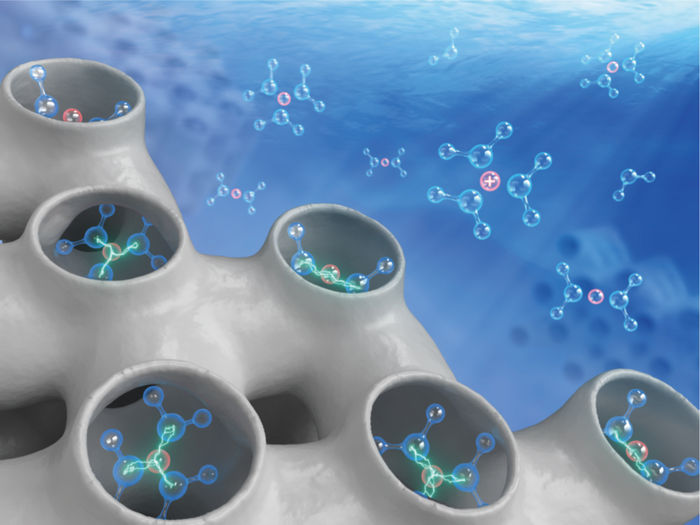
Unveiling how water and ions impact chemical reactivities at solid-aqueous interfaces
Chemistry meets biology: controlling artificial cell membranes through catalysis - Researchers develop an artificial metalloenzyme-based platform that enables programmable control of artificial membrane behavior
'Hot' oxygen atoms on titanium dioxide motivated by more than just temperature - PNNL scientists find unexpected chemical behavior on catalyst surface

New method measures the 3D position of individual atoms - The method developed at the Universities of Bonn and Bristol uses an ingenious physical principle