Nobel Prize in Chemistry for computational protein design and for protein structure prediction
The Nobel Prize in Chemistry 2024 is about proteins, life’s ingenious chemical tools
Advertisement


The Royal Swedish Academy of Sciences has decided to award the Nobel Prize in Chemistry 2024 with one half to David Baker (University of Washington, Seattle, WA, USA) “for computational protein design” and the other half jointly to Demis Hassabis (Google DeepMind, London, UK) John M. Jumper Google DeepMind, London, UK “for protein structure prediction”
They cracked the code for proteins’ amazing structures
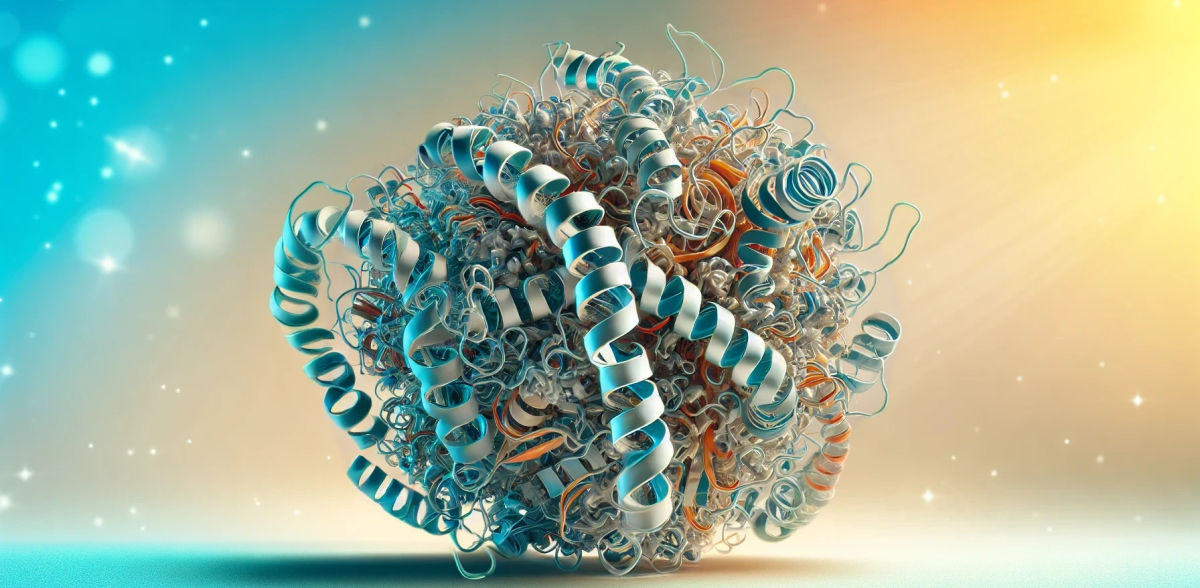
The Nobel Prize in Chemistry 2024 is about proteins, life’s ingenious chemical tools. David Baker has succeeded with the almost impossible feat of building entirely new kinds of proteins. Demis Hassabis and John Jumper have developed an AI model to solve a 50-year-old problem: predicting proteins’ complex structures. These discoveries hold enormous potential.
The diversity of life testifies to proteins’ amazing capacity as chemical tools. They control and drive all the chemical reactions that together are the basis of life. Proteins also function as hormones, signal substances, antibodies and the building blocks of different tissues.
“One of the discoveries being recognised this year concerns the construction of spectacular proteins. The other is about fulfilling a 50-year-old dream: predicting protein structures from their amino acid sequences. Both of these discoveries open up vast possibilities,” says Heiner Linke, Chair of the Nobel Committee for Chemistry.
Proteins generally consist of 20 different amino acids, which can be described as life’s building blocks. In 2003, David Baker succeeded in using these blocks to design a new protein that was unlike any other protein. Since then, his research group has produced one imaginative protein creation after another, including proteins that can be used as pharmaceuticals, vaccines, nanomaterials and tiny sensors.
The second discovery concerns the prediction of protein structures. In proteins, amino acids are linked together in long strings that fold up to make a three-dimensional structure, which is decisive for the protein’s function. Since the 1970s, researchers had tried to predict protein structures from amino acid sequences, but this was notoriously difficult. However, four years ago, there was a stunning breakthrough.
In 2020, Demis Hassabis and John Jumper presented an AI model called AlphaFold2. With its help, they have been able to predict the structure of virtually all the 200 million proteins that researchers have identified. Since their breakthrough, AlphaFold2 has been used by more than two million people from 190 countries. Among a myriad of scientific applications, researchers can now better understand antibiotic resistance and create images of enzymes that can decompose plastic.
Life could not exist without proteins. That we can now predict protein structures and design our own proteins confers the greatest benefit to humankind.


Other news from the department science





















Most read news












More news from our other portals

























Last viewed contents
A spintronic view of the effect of chiral molecules - Researchers verified the chiral-induced spin selectivity effect, i.e., the influence of chiral molecules on spin, using spintronic analytical techniques

Evidence stacks up for poisonous books containing toxic dyes

Adhesives from waste wood, biofuel from straw - EU research project on the potential of agroforestry waste as environmentally friendly raw materials completed
Computational trick enables better understanding of exotic state of matter - New process relevant for fusion and materials research
Pushing boundaries: Detecting the anomalous Hall effect without magnetization in a new class of materials - The first experimental evidence for the anomalous Hall effect emerging in a collinear antiferromagnet with non-Fermi liquid behavior
Unveiling how water and ions impact chemical reactivities at solid-aqueous interfaces
Chemistry meets biology: controlling artificial cell membranes through catalysis - Researchers develop an artificial metalloenzyme-based platform that enables programmable control of artificial membrane behavior
'Hot' oxygen atoms on titanium dioxide motivated by more than just temperature - PNNL scientists find unexpected chemical behavior on catalyst surface

New method measures the 3D position of individual atoms - The method developed at the Universities of Bonn and Bristol uses an ingenious physical principle

Grand opening of new laboratory world - Training and testing facilities on over 1,500 m2

Fine particles from aircraft exhaust become more harmful over time
