The use of MRI to directly observe metal-ion dissolution in lithium battery cathodes
There is enormous promise in how this technique can increase the ability to understand how reactions within these batteries work and how to test alternate battery technology
Advertisement


Many of the devices that make modern life convenient and efficient rely on rechargeable batteries. lithium-ion batteries, one of the more common types used, are low cost and work at a high operating voltage, which makes them ideal for many electronic devices and electric vehicles. However, they have recurring issues with declining performance over repeated use and there are rising concerns about the safety of using these batteries as they age
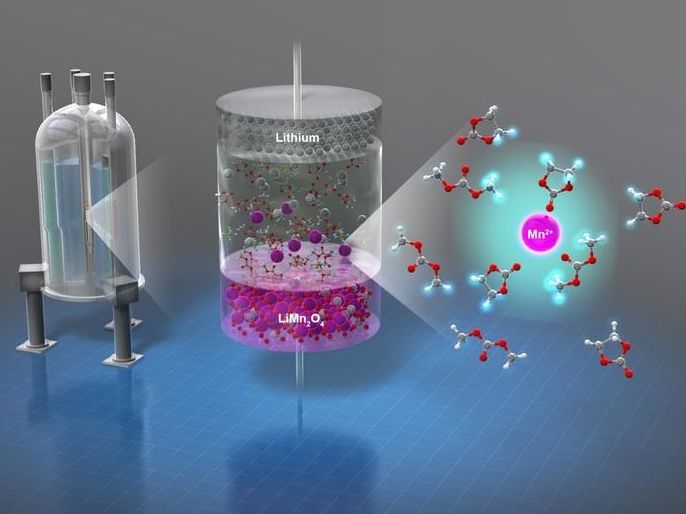
Illustration of how MRI was used to observe metal-ion dissolution
©Hellar et al.
One of the causes of this decline in performance is the dissolution of the metal ion in the cathode into the electrolyte in the battery. However, it has been difficult to study this process as the amounts in the dissolution are very small. Consequently, to understand what is happening in the battery at the cathode, researchers need to know where, when and how much dissolution is occurring before they can address the problem.
Researchers at Tohoku University have been working on a method to detect and investigate the dissolution of the metal ion in the cathode. Using nuclear magnetic resonance imaging (MRI), they were able to directly observe the dissolution in real time.

The results of their research were published in Communications Materials on February 13, 2025.
According to Nithya Hellar, a researcher at the Institute of Multidisciplinary Research for Advanced Materials (IMRAM) at Tohoku University, "the results of the present study show that the dissolution of a very small amount of manganese (Mn) can be detected with high sensitivity by MRI and visualized in real time, which can greatly accelerate the speed of research."
An MRI is a medical imaging technology that uses magnetic fields and radio waves to produce imaging scans. To enhance the visibility of areas of interest in an MRI image, contrast agents such as gadolinium are used. Gadolinium is paramagnetic, and it can alter the magnetic properties of targeted areas, thereby increasing their visibility to the MRI.
The Tohoku University group was able to use this principle of MRI as the Mn dissoluted from the cathode is paramagnetic. Specifically, they looked at the dissolution of Mn2+ from spinel-type LiMn2O4 cathode, in a commercial battery electrolyte LiPF6 EC:DMC. So, if dissolution is occurring it would show up as an increase in signal intensity in the MRI images, and that is exactly what they saw. Using the MRI gave them the ability to directly observe the dissolution as it occurred in real time.
The researchers used this technique to investigate whether an alternative electrolyte system could suppress the dissolution. Using the MRI, they could observe the dissolution of the metal ion. It also follows that if there was no increase in signal, that dissolution was not occurring. They tested the electrolyte system LiTFSI MCP developed by researchers from MEET (Munster Electrochemical Energy Technology) Battery Research Center, University of Munster, Germany, which they believed would suppress the dissolution of the metal ion. There was no significant increase in signal intensity on the MRI. From this, they concluded that there was no dissolution occurring.
Using this testing method gives researchers invaluable help in "exploring the metal ion dissolution in any electrochemical systems under different electrochemical conditions, such as changing the electrolyte solution, salt, electrodes, and additives. This identification method may help design lithium battery materials and improve their performance," said Junichi Kawamura, Emeritus Professor at Tohoku University.
Looking to the future, there is enormous promise in how this technique can increase the ability of researchers to understand how reactions within these batteries work and how to test alternate battery technology. "We believe the method developed here can answer the long-time unanswered question of when, where, and how the metal ion dissolution occurs in the lithium-ion battery electrode and can be extended to other electrochemical systems," said Hellar.
Original publication


Other news from the department science




















These products might interest you


Most read news












More news from our other portals

























See the theme worlds for related content
Topic World Battery Technology
The topic world Battery Technology combines relevant knowledge in a unique way. Here you will find everything about suppliers and their products, webinars, white papers, catalogs and brochures.

Topic World Battery Technology
The topic world Battery Technology combines relevant knowledge in a unique way. Here you will find everything about suppliers and their products, webinars, white papers, catalogs and brochures.
Last viewed contents
BASF and PETRONAS Chemicals Group to build an aroma ingredients complex in Kuantan - First plants of integrated project operational in 2016
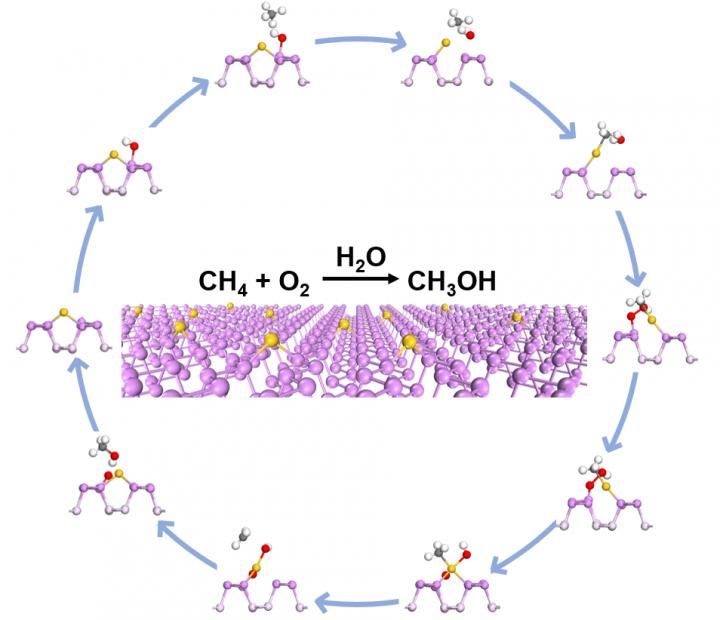
Gold-phosphorus nanosheets catalyzes nature gas to greener energy selectively - Water enables mild oxidation of methane to methanol on gold single-atom catalysts
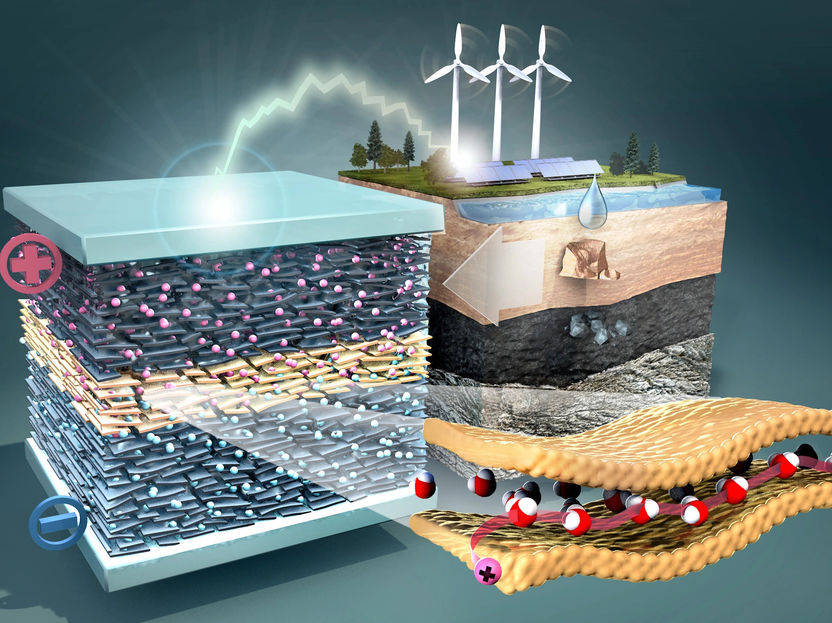
Water, Clay and Carbon: A New Route to Sustainable Energy Storage - Researchers demonstrate an all-water supercapacitor stable over 60,000 charging cycles
Don't Give the Slightest Chance to Toxic Elements in Medicinal Products - New high-accuracy reference solutions for the SI-traceable measurement

Bodo Möller Chemie Group enters exclusive acquisition talks with Rocktin - Strengthen adhesives distribution in Asia
Researchers develop procedure to interpret x-ray emission spectra of liquid water - Study helping to advance the understanding of the structure of water
How can life emerge in a world of minerals? - The European Research Council (ERC) has awarded an ERC Synergy Grant to the project “The role of silica at the dawn of life on our planet” (PROTOS)
New reactor could save millions when making ingredients for plastics and rubber from natural gas - With oil production dropping, a process using natural gas is needed to avert a shortage of a workhorse chemical used for automotive parts, cleaning products and more
Manganese could make luminescent materials and the conversion of sunlight more sustainable

Fibers from old tires can improve fire resistance of concrete

Consortium develops evolutionary concept for recycling of end-of-life polyurethane mattress foams - Ecomaison, Covestro, Secondly and Federal Eco Foam launch research project