Scented wax melts may not be as safe for indoor air as initially thought, study finds
Advertisement


As traditional candles burn, they can contribute to indoor air pollution by emitting volatile compounds and smoke, which may pose inhalation risks. Scented wax melts are often marketed as safer alternatives to candles because they’re flame- and smoke-free. But in a study,researchers describe how aroma compounds released from the melted wax can react with ozone in indoor air to form potentially toxic particles.

Researchers monitored the nanoparticles produced from scented wax melts using lab equipment set up inside a model home.
Purdue University/Kelsey Lefever
Previous research has shown that scented wax melts emit more airborne scent compounds than traditional candles. The direct heating of the wax maximizes its surface area, thereby releasing more fragrance – such as volatile organic compounds (VOCs) made of hydrocarbons – into the air. Researchers know that these chemicals can react with other compounds in the air to form nanometer-wide particles, which have been linked to negative health effects when inhaled. However, the potential for nanoparticle formation during wax-melt use was unknown. So, Nusrat Jung, Brandon Boor and colleagues set out to investigate this process using wax melts in a full-scale house model that mimicked a typical residential house.
The researchers conducted experiments on 15 commercially available wax melts, both unscented and scented (e.g., lemon, papaya, tangerine and peppermint), in the model house. They first established a baseline of indoor air pollutants and then switched on the wax warmer for about 2 hours. During and after this period, the researchers continuously sampled the air a few yards (meters) away from the wax melts and found airborne nanoparticles, between 1 and 100 nanometers wide, at levels that were comparable to previously reported levels for traditional, combustion-based candles. These particles could pose an inhalation risk because they are small enough to pass through respiratory tissues and enter the bloodstream, say the researchers.
Additionally, using literature data, the team calculated that a person could inhale similar amounts of nanoparticles from wax melts as from traditional candles and gas stoves. Previous studies have found exposure to high levels of nanoparticles in indoor air can be linked to health risks like decreased cognitive function and increased prevalence of childhood asthma.
In the experiments, the main VOCs emitted from the wax melts were terpenes, such as monoterpenes and monoterpenoids. The researchers identified that the airborne terpenes reacted with ozone and formed sticky compounds, which aggregated into nanoscale particles. However, after warming an unscented wax melt, the team observed no terpene emissions or nanoparticle formation, which suggests that these aroma compounds contribute to nanoparticle formation.
The researchers say this study challenges the perception that scented wax melts are a safer alternative to combustion-based candles; however, they emphasize that more toxicology research is needed on the risks of breathing in nanoparticles formed from wax melts.
Original publication



Other news from the department science





















Most read news












More news from our other portals

























Last viewed contents
Chromium replaces rare and expensive noble metals

From CO2 to acetaldehyde: Towards greener industrial chemistry - This breakthrough tackles two environmental issues at once
BASF Coatings starts operations at production site for paints in Russia

TU Graz develops mobile device for the high-precision measurement of air pollutants - A device the size of a moving box can detect traces of toxic gases from miles away
Search for new semiconductors heats up with gallium oxide
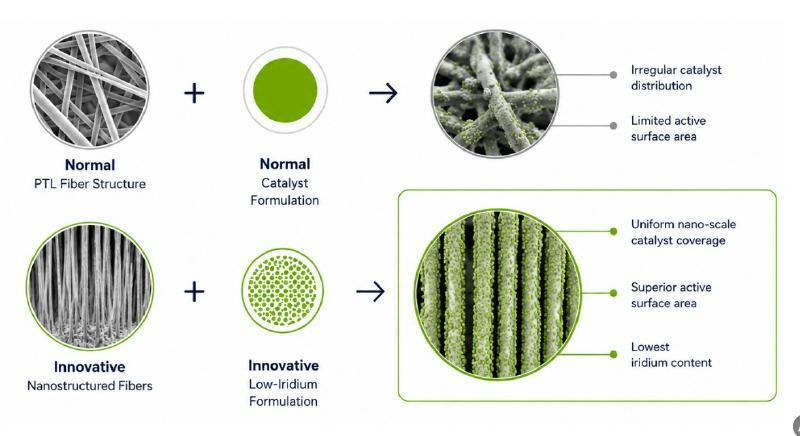
Smoltek Hydrogen and Heraeus Precious Metals advance next-generation ultra-low iridium electrolysis technology

Chemistry without detours: Researchers introduce a two-step process for producing phosphorus-containing chemicals - This promising innovation not only contributes to environmental protection but also saves significant time and costs

Evidence stacks up for poisonous books containing toxic dyes

Adhesives from waste wood, biofuel from straw - EU research project on the potential of agroforestry waste as environmentally friendly raw materials completed

Computational trick enables better understanding of exotic state of matter - New process relevant for fusion and materials research

Pushing boundaries: Detecting the anomalous Hall effect without magnetization in a new class of materials - The first experimental evidence for the anomalous Hall effect emerging in a collinear antiferromagnet with non-Fermi liquid behavior