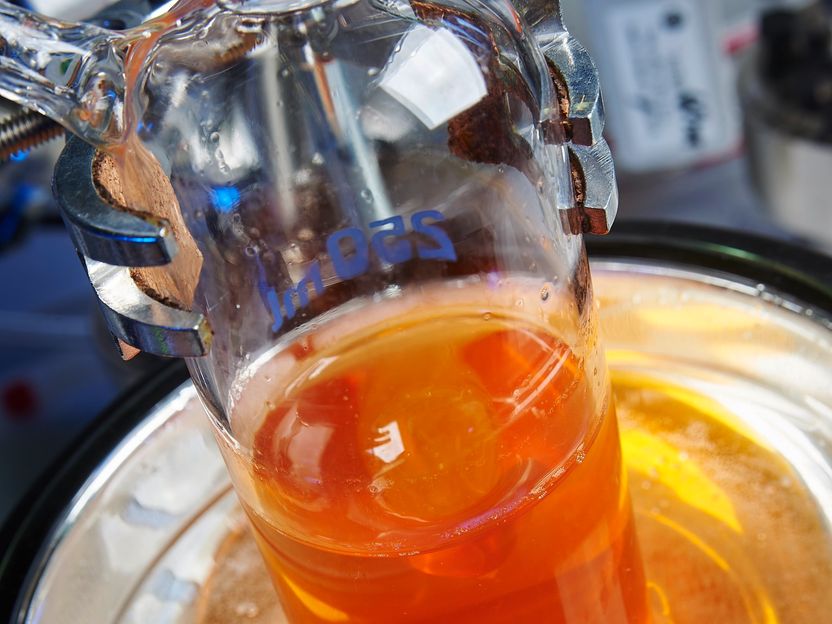
Temporary tattoo could detect an unwanted drug in your drink
A chemical receptor turns red when it detects the drug γ-hydroxybutyrate

Advertisement


Temporary tattoos aren’t just for kids anymore — semi-permanent versions have become a favorite among adults who don’t want the commitment of the real thing. Now, researchers reporting in ACS Sensors have created their own temporary tattoo sticker that has a hidden, but possibly lifesaving, purpose: detecting the presence of one drug used to “spike” alcoholic beverages and facilitate sexual assault. The sticker responds within 1 second to even low concentrations of the drug γ-hydroxybutyrate (GHB).
Unfortunately, consuming a drink spiked with drugs including Rohypnol (commonly known as roofies) or GHB when drinking in a social setting is an ever-present danger — even among friends and acquaintances. These drugs are colorless and tasteless, inducing a stupor in the victim that’s similar to severe alcohol intoxication, which can lead people to being vulnerable to nonconsensual sexual contact or sexual assault. People can protect themselves by testing their drinks with specialized strips or cards that change color when exposed to these drugs. But current tests are often conspicuous or take minutes to report a result, introducing additional danger. So, Gyeong-Ji Kim, Jai Eun An, Kyong-Cheol Ko, Oh Seok Kwon and colleagues wanted to develop a rapid-acting test for GHB that’s worn on the skin using a tattoo-like sticker.
To create the stickers, the researchers placed a mold overtop a thin plastic film decorated with tattoo-like designs. Into the mold, they poured a gel mixture containing a chemical receptor that turns red when it detects GHB. Then they coated the back of the sticker with a diluted glue solution, so it could stick to skin.
The researchers tested the sticker’s ability to detect small amounts of GHB in a variety of beverages: whiskey, vodka, beer, soju (a Korean alcoholic beverage) and coffee. Within a single second, it detected the drug across a range of concentrations and below a level that would induce serious physiological symptoms: 0.01 micrograms of GHB in 1 milliliter of beverage. In practice, a wearer could dip a finger into a beverage, touch the drop to the sticker and see the result almost immediately. And the sticker displays the positive result for up to 30 days after detection, which could be important if it’s needed as a form of evidence of tampering. The researchers say that their sticker technology is inexpensive and easy to manufacture, and it could be commercially available soon.
Original publication


Other news from the department science




















Most read news












More news from our other portals


























Last viewed contents
Engineering Duckweed to Produce Oil for Biofuels, Bioproducts - Scientists drive oil accumulation in rapidly growing aquatic plants
New insights into bonding nature of antimony – implications for materials research - The findings could be used to optimise material properties

Tweezers of sound can pick objects up without physical contact - Hemispherical array of ultrasound transducers lifts objects off reflective surfaces

More than just spilling the beans: High quality methane to be formed from spent coffee grounds

Synthopol Chemie Dr. rer. pol. Koch GmbH & Co. KG - Buxtehude, Germany
Disposal of effluents from neutralised Syrian chemical weapons completed

Smart AI makes all kinds of shapes on its own - Artificial neural network system recommends plastic molding process conditions

Seeing the invisible: A real life Eye of Sauron? - “That’s the idea here: an all-seeing eye that can detect hazardous aerosols against a very crowded background of other substances”
Neutron-rich nucleus shapeshifts between a rugby ball and a discus
Surfing water molecules could hold the key to fast and controllable water transport - Scientists have identified a new way of moving molecules across the surfaces of certain materials.

Umicore expands production capacity for fuel cell catalysts