Wastewater contains energy from 100 nuclear power plants: new technology makes it usable
Electrochemically active microorganisms convert chemical energy into electricity
Advertisement


Turning wastewater not only into clean water, but also into electricity and nutrients - this is possible with technologies that use electrochemically active microorganisms. An international research review published in Frontiers in Science under the leadership of the University of Greifswald shows the enormous environmental and resource-saving potential of microbial electrochemical technologies (METs).
Worldwide, we produce around 359 billion cubic meters of wastewater every year - four times the volume of Lake Geneva. "This contains over 800,000 GWh of chemical energy, comparable to the annual production of 100 nuclear power plants," explains study leader Prof. Dr. Uwe Schröder from the University of Greifswald. "Wastewater also contains plenty of nutrients that we have let go to waste."
The right microbes do the trick: electricity from wastewater
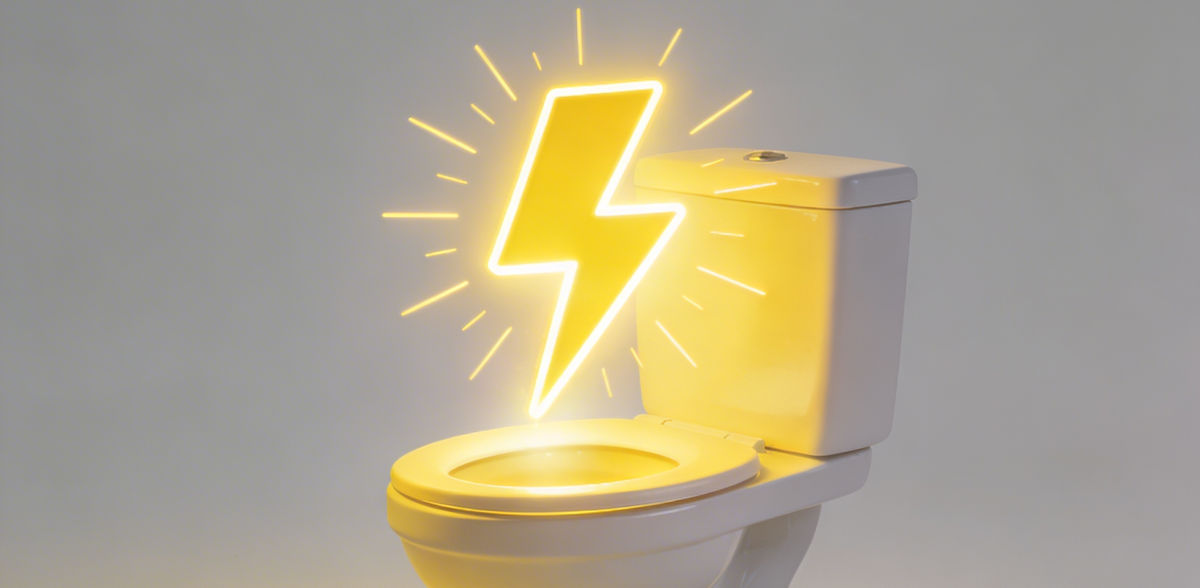
This is exactly where METs come in: Special microorganisms that occur naturally in wastewater convert the chemical energy it contains into electrical energy, while at the same time purifying the water. In the laboratory, up to 35 percent of the energy bound in wastewater has already been converted into electricity. Pilot plants such as "Pee Power®" prove that the technology also works in practice: in 2015, it supplied the toilet lighting at the Glastonbury Festival with electricity from urine. Long-term studies in Uganda, Kenya and South Africa have shown that such systems can also reliably treat large quantities of urine - and contribute to greater safety in regions with inadequate infrastructure thanks to illuminated sanitary facilities.
Around 3.5 billion people worldwide do not have access to adequate sanitary facilities. The researchers see METs as an important contribution towards achieving the sixth UN Sustainable Development Goal: the sustainable provision of water and sanitation for all. "The widespread use of these technologies offers many advantages, especially for regions with heavily polluted wastewater where existing treatment technologies are too expensive or do not reach everyone," emphasizes co-author Prof. Dr. Falk Harnisch from the Helmholtz Centre for Environmental Research (UFZ) in Leipzig.
Extracting nutrients from the water
Valuable nutrients such as nitrogen and phosphorus can also be recovered from wastewater using METs. Although they are abundant in wastewater, these substances are currently extracted elsewhere in an extremely energy-intensive and unsustainable manner, including rising prices - a contrast that METs could revolutionize in terms of a sustainable circular economy: "Up to around 7 percent of the phosphate requirement and 11 percent of the global demand for ammonium nitrogen could be covered from wastewater," explains Schröder.
From the lab to the market
In order for METs to make the step into widespread use, the systems must become more robust, cost-effective and energy-efficient. Professor Schröder and his team in Greifswald are researching the biochemical and electrochemical principles in order to further optimize reactors and electron transfer. At the same time, persuasion is needed - for example through funding programs, pilot plants and economic incentives - in order to win over the established wastewater industry in Central Europe to the new technology.
Note: This article has been translated using a computer system without human intervention. LUMITOS offers these automatic translations to present a wider range of current news. Since this article has been translated with automatic translation, it is possible that it contains errors in vocabulary, syntax or grammar. The original article in German can be found here.
Original publication
Uwe Schröder, Falk Harnisch, Elizabeth Heidrich, Ioannis A. Ieropoulos, Bruce E. Logan, Dibyojyoty Nath, Deepak Pant, Sunil A. Patil, Sebastia Puig, Jason Ren, Ruggero Rossi, Amelia-Elena Rotaru, Annemiek ter Heijne; "Waste to value: microbial electrochemical technologies for sustainable water, material, and energy cycles"; Frontiers in Science, Volume 4, 2026-2-24


Other news from the department science





















Most read news











More news from our other portals



























Last viewed contents

Mondi and traceless team up to develop a ground-breaking coating solution from agricultural by-products - Alternative to plastic-coated packaging
Enzymes Overcome the 100-Degree Heat Barrier - The process is of interest to the chemical industry
Step towards sustainable hydrogen production with cyanobacteria - An oxygen-free microenvironment protects the sensitive enzymes
Atomic reshuffle paves way for record-breaking catalysts for hydrogen production - "This opens a new strategy for designing adaptive catalysts for a wide range of applications"

Global underground CO₂ storage hits record 43.6 million tonnes - London Register expands reach
Research Breakthrough on the Path to a New Reserve Antibiotic - For the first time, chemists have succeeded in synthesizing the highly potent natural compound neosorangicin A
Endress+Hauser expands its presence in the U.S. - 44 million euros are being invested in the new facility in Greenwood, Indiana
Plastic bottles could find new life in batteries as graphite - Penn State researchers converting PET waste into synthetic graphite that outperforms natural graphite
Turning food waste into carbon captors - Expected to be cheaper than other capture methods
Study shows: Lithium and sodium-ion technologies are more closely linked than assumed - "Switching to a new battery technology does not automatically open the door to new market players"
ETH spin-offs sweep the board at Venture Awards