Izatt-Christensen Award 2026 for Frank Würthner
A professor of chemistry at the University of Würzburg receives the highest international honour in the field of supramolecular chemistry
Advertisement


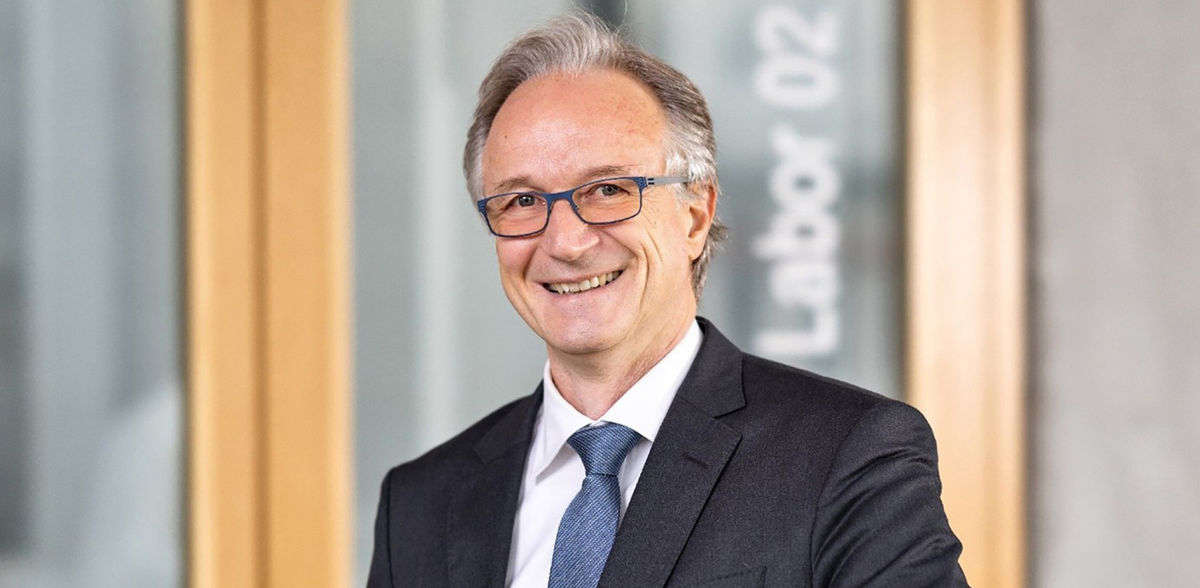
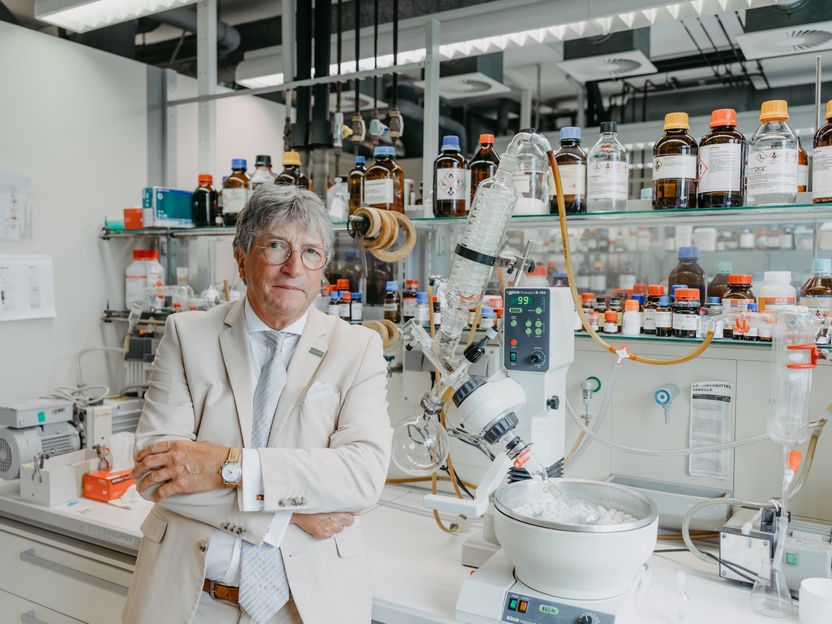
The prestigious Izatt-Christensen Award 2026 goes to Professor Frank Würthner, Chair of Organic Chemistry II and Director of the Center for Nanosystems Chemistry at the University of Würzburg. The prize is regarded as the world’s most prestigious award in the field of supramolecular chemistry.
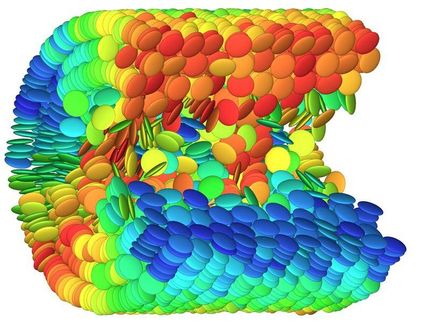
Supramolecular chemistry deals with the organisation of molecules into larger, complex structures. Frank Würthner has expanded this field with his work on the assembly of dyes into multichromophore molecular assemblies, supramolecular polymers and organic functional materials.
“This award is a great honour. It is dedicated to my entire research group and to all our collaborative partners who have contributed to our research over many years,” says the laureate. Supramolecular chemistry offers enormous potential for linking fundamental scientific questions with applications relevant to society.
Applications in electronics and photovoltaics
The chemistry professor’s team has developed fundamental insights into the self-organisation of functional dye molecules and the development of supramolecular polymers and nanomaterials. The potential applications of these compounds lie in organic electronics and optoelectronics, photovoltaics and artificial photosynthesis.
Among the scientific milestones set by Frank Würthner are the development of biomimetic nanoreactors for light-driven water splitting, as well as groundbreaking work on the production of dye aggregates and their use as light-harvesting systems and organic semiconductors – both of which are fields of research paving the way for next-generation sustainable energy technologies.
Frank Würthner will be presented with the award at the International Symposium on Macrocyclic and Supramolecular Chemistry (ISMSC 2026), which will take place from 5 to 10 July 2026 in Bordeaux (France).
Profile of the laureate
Frank Würthner, born in 1964 in Villingen-Schwenningen, has held the Chair of Organic Chemistry at Julius-Maximilians-Universität Würzburg since 2002. He has published more than 600 scientific papers and has regularly been listed among the world’s most frequently cited chemists since 2014. He is an elected member of the German National Academy of Sciences Leopoldina and the Bavarian Academy of Sciences and Humanities, as well as a Fellow of the Royal Society of Chemistry.
His other honours include the Adolf von Baeyer Medal from the German Chemical Society (GDCh, 2019) and the Elhuyar-Goldschmidt Award from the Spanish Chemical Society (2016). The European Research Council has awarded him two ERC Advanced Grants (2017, 2024) – prestigious research grants worth 2.5 million euros. These are awarded only to outstanding researchers pursuing innovative projects.


Other news from the department science





















Most read news











More news from our other portals



























Last viewed contents
Scientists unveil mechanism behind greener ammonia production
Siemens to digitalize one of Europe's largest renewable hydrogen projects - Physics-based digital twin and real-time optimization
Collaboration between University of Bristol and Malvern Panalytical - Bringing academia and business together to solve global challenges
Digital lab day 2025 celebrates international success - virtual battery day 2025 follows in November
RE:VOLTAGE and CometHire Win the HTW Startup Challenge 2026 in Berlin - The competition awarded 10,000 euros in prize money in the GreenTech and Impact Entrepreneurship categories
Atomic reshuffle paves way for record-breaking catalysts for hydrogen production - "This opens a new strategy for designing adaptive catalysts for a wide range of applications"

Global underground CO₂ storage hits record 43.6 million tonnes - London Register expands reach
Research Breakthrough on the Path to a New Reserve Antibiotic - For the first time, chemists have succeeded in synthesizing the highly potent natural compound neosorangicin A
Endress+Hauser expands its presence in the U.S. - 44 million euros are being invested in the new facility in Greenwood, Indiana
Plastic bottles could find new life in batteries as graphite - Penn State researchers converting PET waste into synthetic graphite that outperforms natural graphite
Turning food waste into carbon captors - Expected to be cheaper than other capture methods