How Magnetic Nanoparticles Remove "Eternity Chemicals" from Water
Advertisement


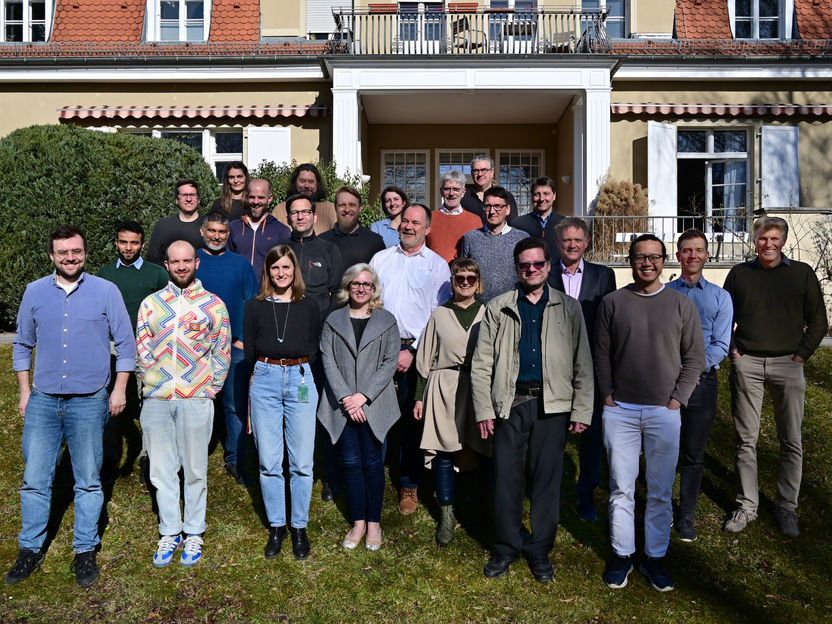
PFAS—the so-called “forever chemicals”—have become an integral part of numerous everyday and industrial products. At the same time, they are among the most problematic pollutants of our time: They are extremely persistent, accumulate in the environment and in organisms, and are difficult to remove from water. A research team from Friedrich-Alexander University Erlangen-Nuremberg (FAU), Erlangen University Hospital, and the Bavarian State Office for Health and food safety, led by Prof. Dr. Marcus Halik of the Chair of Polymer Materials at FAU, has developed a method that efficiently removes PFAS from water using functionalized magnetic nanoparticles.
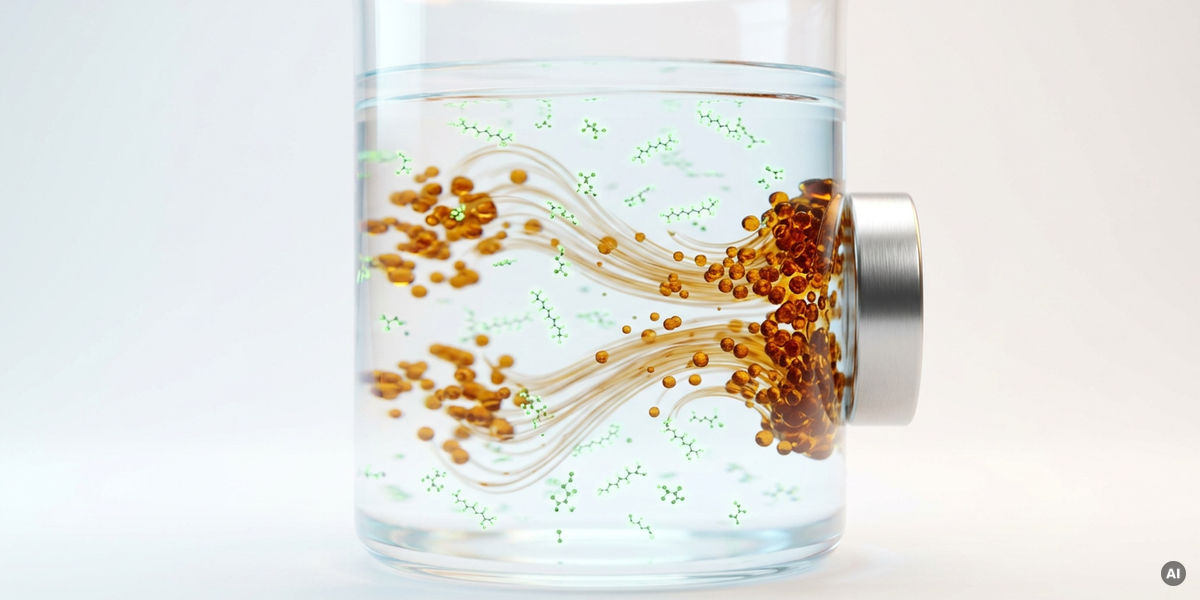
Johannes Voß and Linda Rockmann from Halik’s team developed functionalized iron oxide nanoparticles with specific magnetic properties for this purpose; their surfaces were specifically modified so that they can bind different PFAS. Once bound to the iron oxide—or rust—particles, the PFAS can be easily removed from the water using a magnet. The scientists are taking a broad approach: Instead of focusing on individual PFAS compounds, they sought to create a versatile solution capable of capturing as many substances as possible from this diverse class of materials—that is, magnetic nanoparticles that can be specifically adapted to meet the varying requirements of water treatment.
Focus on Ubiquitous Microplastics
The new study by Halik’s team expands the potential applications of magnetic water purification to include another highly relevant class of contaminants. For the first time, the scientists were able to demonstrate that the underlying principle can be applied not only to individual PFAS molecules but also to fluorinated microplastics. Fluorinated microplastics are produced, for example, as abrasion particles when washing technical clothing or are found in cosmetics.
The key advantage of the technology lies in the customized surface chemistry of the particles. Depending on their functionalization, the iron oxide particles possess different properties: The material used in the study reliably removes a broad spectrum of PFAS even from water samples contaminated with a variety of substances and organisms—such as laundry wastewater or river water. Other iron oxide nanoparticles that Halik’s team worked with can be regenerated after magnetic separation and reused multiple times. In addition, the iron oxide particles are technically scalable and non-toxic.
“Our technology thus spans the spectrum from molecular contaminants to microscopic particles and underscores the potential of functionalized iron oxide nanoparticles as a versatile and sustainable platform for water treatment—including water samples with complex contamination,” explains Professor Halik.
Successful Even Under Real-World Conditions
It was particularly important to the researchers to demonstrate that the process also works outside the laboratory. Therefore, the team tested the technology on a real-world contaminated drinking water source, river water, wash water from soil remediation, and wash water from outdoor textiles. In doing so, they succeeded in reducing PFAS concentrations in a contaminated drinking water source by 87 percent, bringing them below the new limit of 100 nanograms per liter that applies in Germany. In addition, fluorinated microplastics were also successfully removed from the water using magnetic means.
Note: This article has been translated using a computer system without human intervention. LUMITOS offers these automatic translations to present a wider range of current news. Since this article has been translated with automatic translation, it is possible that it contains errors in vocabulary, syntax or grammar. The original article in German can be found here.
Original publication


Other news from the department science





















Most read news











More news from our other portals



























Last viewed contents

From toxic to valuable: Cleaning wastewater, finding treasure - Researchers develop a 2-in-1 approach to clean heavy metals and recover valuable rare-earth elements from water

Study Reveals Hidden Climate Impact of Digital Industries - Digital emissions are often hidden in the footprints of other sectors

Turning waste into the future: scientists produce base materials for nylon from polystyrene - They have made bacteria break down polystyrene and convert it into useful chemicals
New paths for quantum technologies: Optical control of nuclear spins in molecules - Molecular systems can be chemically tailored and could thus enable atomically precise qubits

How Carbon Accounting Rules Shape Incentives for Hydrogen Production

How Chemicals End Up in the Mountains - Permanent chemicals harm insects—even in near-natural habitats
Quasiparticle solves mystery of vanishing conductivity - CAU team detects polarons in rare earth compound for the first time
Cryo-electron microscopy – Reaction cycle of an enzyme for CO2 fixation decoded - A promising enzyme candidate for biofuel production from carbon dioxide

Protein Content in Foods — New Conversion Factors Enable More Precise Assessment - Max Rubner Institute Releases New Database for Nitrogen-to-Protein Conversion

AI-driven microorganism mix has the potential for groundbreaking innovation - Federal Ministry for the Environment Launches First Joint SPRIND Challenge for a Biotech Breakthrough in the Circular Economy
Researchers develop cleaner, scalable process to recycle lithium-ion batteries - "We’ve shown that it’s possible to create high-performance batteries from recycled materials at scale"