Finland lays the groundwork for large-scale underground hydrogen storage in crystalline bedrock

Advertisement


As Europe scales up renewable hydrogen production, large-scale hydrogen storage will be needed to balance production and consumption. A new Finnish study by VTT Technical Research Centre of Finland and Geological Survey of Finland GTK, together with companies operating in Finland’s hydrogen economy, shows that underground hydrogen storage can also be developed in crystalline bedrock – an important finding for countries and regions that cannot rely on salt caverns.
Underground hydrogen storage is needed to balance hydrogen production and use over days and weeks, not just hours. While hydrogen transmission pipelines can provide short-term flexibility, multi-day balancing requires large underground storage facilities. The findings are particularly relevant for Finland, which aims to become one of Europe’s leading hydrogen economies but lacks the underground salt caverns that are available for hydrogen storage in many other European countries.
“Developing underground hydrogen storage facilities is a lengthy and capital- intensive undertaking. The project estimated that constructing a 40,000 m³ storage facility would cost approximately EUR 30 million. Including planning and permitting phases, the overall project duration would be four to five years,” says Pasi Valkokari , Senior Scientist at VTT and project leader of the research initiative.
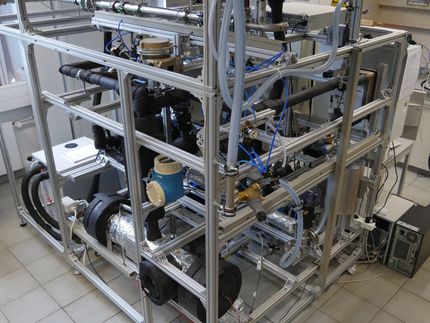
In a joint research project funded by Business Finland, VTT and GTK have, for the first time, carried out a comprehensive assessment of the requirements for hydrogen storage under Finnish conditions. The HUG project also involved nearly twenty companies operating in Finland’s hydrogen economy.
“The project has generated valuable knowledge on underground hydrogen storage alternatives and improved understanding of both the opportunities and the remaining uncertainties that need to be resolved. The results provide a strong foundation for developing large-scale hydrogen storage as an integral part of future hydrogen systems,” says Satu Sipola , Vice President, Hydrogen and Power-to-X, at Fortum Power and Heat.
Storage cavern design and safety require further research
Existing underground salt caverns in Central Europe and the United Kingdom can be used for hydrogen storage as they provide naturally gas-tight conditions. Finland, however, lacks suitable salt formations, meaning that storage caverns must be excavated in crystalline bedrock and gas-tightness created with technical solutions. This makes Finland a relevant test case for other regions where salt cavern storage is not available.
“The geological site selection, site investigations, and material studies for a hard rock hydrogen storage facility are essential to ensure that the surrounding bedrock remains stable and that safety is not compromised if hydrogen were to react with other materials,” says Teemu Lindqvist , Geologist at GTK.
The joint study examined the feasibility of locating large underground hydrogen storage caverns in Finnish bedrock. As an outcome, the project developed a high-level storage concept covering storage structure design, operating models, geological and safety requirements, technical and societal risks, investment needs, and ecosystem models. In addition to the findings, several important technical, commercial and regulatory questions remain and will require further investigation.
“We are now preparing the next phase of the research with the industry consortium and aim to continue developing the research-based design requirements that will enable the development of a pilot facility and a replicable storage concept for wider deployment,” says Jutta Nyblom , who is responsible for industrial collaboration in the project and for preparing the initiative at VTT.
Phased development of hydrogen economy
Finland’s hydrogen economy is expected to develop in stages. The first phase will see the emergence of regional hydrogen clusters. As hydrogen production and consumption volumes grow, dedicated storage facilities will become a critical enabler of commercially viable hydrogen value chains by helping to stabilise hydrogen prices and availability.
Initially, smaller storage solutions will suffice. However, the need for medium-scale underground hydrogen storage facilities with a volume of 10,000 to 40,000 cubic metres is expected to grow rapidly.
“Public investment support is critical to accelerating green hydrogen investment and the development of Finland’s hydrogen economy, as well as ensuring that storage projects can move forward without delay. Alongside public support, projects will require close collaboration across value chains, a stable and predictable regulatory environment, and firm offtake commitments to move forward,” says VTT’s Pasi Valkokari.
Industrial partners of the HUG project
AFRY Finland Oy BusinessOulu Danfoss Drives Oy DEKRA Industrial Oy EDR Medeso Oy Energiateollisuus ry Fortum Power and Heat Oy Gasgrid vetyverkot Oy Geomachine Oy Green North Energy Oy Helen Oy Lujabetoni Oy Mincon Nordic Oy Neste Oyj St1 Oy Sweco Finland Oy Valmet Automation Oy Vantaan Energia Oy
The project was primarily funded by Business Finland. Research activities were carried out by VTT Technical Research Centre of Finland and the Geological Survey of Finland GTK.


Other news from the department science





















Most read news











More news from our other portals



























Last viewed contents

Tracking forever chemicals across food web shows not all isomers are distributed equally

The competitiveness of low-carbon fuels depends on location - New infrastructure could boost European production
Deep tech startup Reduciner introduces novel technology to turn captured carbon into sustainable fuels - Raising 3.6 million euros in its initial funding round, the Finnish startup plans to build its first industrial-scale pilot
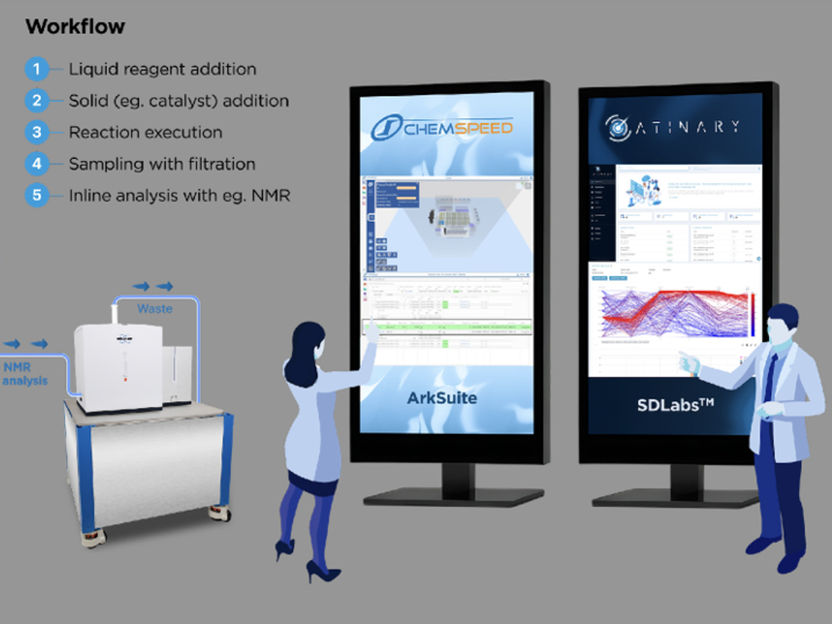
Bruker announces strategic collaboration with Atinary Technologies to advance self-driving laboratories

FUST Lab Receives Investment from Asia2G Capital - The Korean deep-tech company plans to use the capital to expand into the U.S., European, and Japanese markets

ACHEMA Middle East: Debut in Saudi Arabia not until 2027 - Messe Frankfurt Saudi Arabia and DECHEMA are responding to regional uncertainties and are also changing the venue

New core-shell design for anodes significantly increases performance of sodium-ion batteries - Researchers coat porous carbon with a filter-like layer that allows sodium ions to pass through while keeping disruptive electrolyte molecules out

New "chemical armor" could unlock the holy grail of solid-state battery technology - A simple one-step coating builds a silicon-indium hybrid shield on lithium metal, quadrupling current density and extending battery cycle life
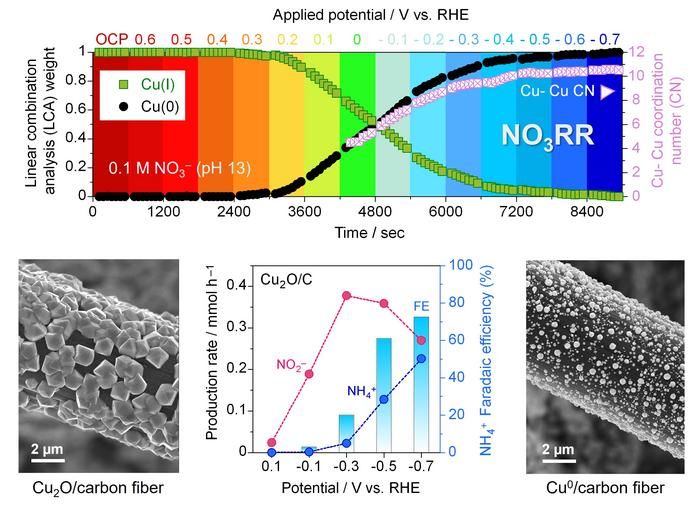
Scientists unveil mechanism behind greener ammonia production
Siemens to digitalize one of Europe's largest renewable hydrogen projects - Physics-based digital twin and real-time optimization
Collaboration between University of Bristol and Malvern Panalytical - Bringing academia and business together to solve global challenges