Nanophase Announces Commercial Availability of Novel New Nanomaterials
Advertisement


Nanophase Technologies Corporation, a technology leader in nanomaterials and nanoengineered products, announced commercial availability of a new class of cerium-based oxide nanomaterials from the Company's patented NanoArc(TM) technology. The new nanomaterials, termed HSA nanoproducts, are approximately 5-15 nanometers with tight particle size distribution and are targeted to ultrafine polishing applications (CMP for semiconductors) and catalysts applications (catalytic converters).
Nanophase's new HSA nanomaterials may also be combined with dopants, such as rare earths, to form single crystal multi-element nanomaterials. For example, Ceria may be combined with rare earths (Lanthanum, Samarium, and/or Praseodymium) or other elements (Zirconium), to form multi-element nanomaterials that are uniquely contained in a single nanocrystal. Nanophase's NanoArc(TM) technology further allows the Company to tailor the nanoparticle surface and obtain highly concentrated, very stable dispersions of nanomaterials.
"This new class of commercially available nanomaterials, with novel physical and chemical properties, are more chemically active than the present nanomaterials produced for Nanophase's CMP products that are currently being introduced to the market through our partnership with Rohm & Haas Electronic Materials (Rodel)," stated Joseph Cross, Nanophase's president and CEO. "Nanophase is able to uniquely manufacture commercial quantities of multi- elemental nanoparticles that do not occur in nature as a single-phase solid solution. These new nanoproducts are homogenous nanoparticles with very tight particle size distribution and exhibit high thermal stability, including high temperature oxygen storage capacity, ion mobility, and chemical reactivity. We believe that these materials should have direct applications in ultrafine polishing, catalysts, and potentially fuel cells."


Other news from the department research and development















Most read news








More news from our other portals



























Last viewed contents
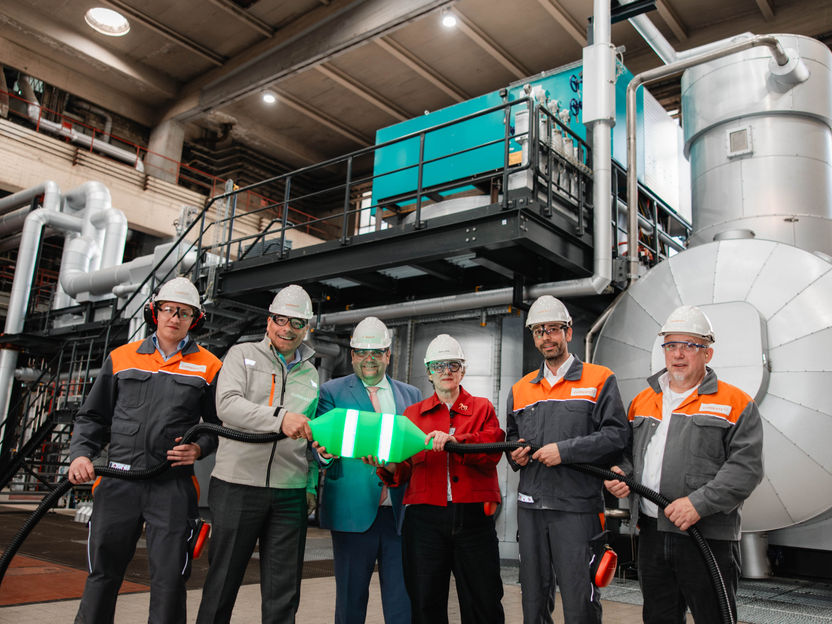
Chempark Uerdingen gets out of coal: First electrode boiler supplies steam - Important step for the future-proof orientation of the Chempark site
Dr Eike Griess appointed as Country Manager for LGC Promochem GmbH, Germany
Investing in the future: Bohle Technology Center to be opened in March 2015
Vitamins doing gymnastics: Scientists capture first full image of vitamin B12 in action - Work by University of Michigan and MIT team yields new understanding of crucial reaction in the body and in CO2-scrubbing bacteria
FEI's Quanta SEMs and Malvern's Advanced Particle Analysis Software Combine to Deliver Solution for Nanoscale Applications
CIM midsummer survey: Global chemicals industry continues to be optimistic
USC scientists turn a harmful greenhouse gas into a tool for making pharmaceuticals - New technique finds a use for ozone-destroying chemical waste product
ULTRA Scientific inorganic standards available through LGC Promochem - The optimum standards for tracing inorganic contaminants in soil, sediment, water, oil, plants and food materials
Improving the degradation of toxic hydrocarbons - Initiation of a worldwide research project under the direction of the HZI
Dance of the molecules: New methods of producing tailor-made materials - Scientists observe vibrational dynamics of organic acid molecules on iron oxide surface

New insights into binding configuration and mobility of molecules on nanoparticle surfaces - Physicists investigate binding between molecules and nanoparticles with high resolution