Elemental analyzers at a glance: products, function and application
Purchase elemental analyzers the easy way: Discover all products and suppliers for the chemical industry. Find out product prices easily by requesting a quote. Tip: Select a quick entry below to view selected particle analyzers by supplier or application.

Elemental analyzers at a glance: products, function and application
Advertisement


Elemental analyzers at a glance
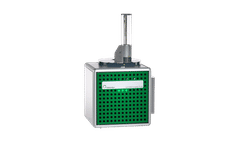
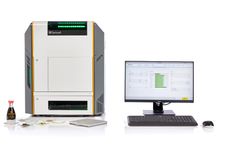
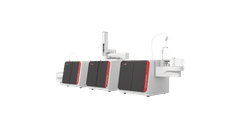
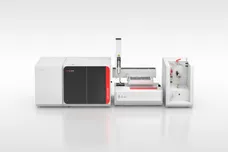
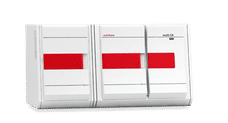
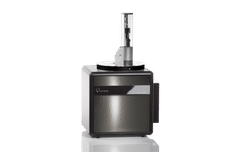
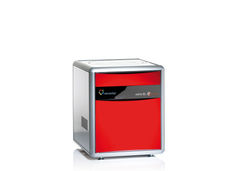
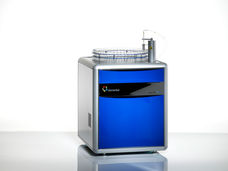
Choose elemental analyzers by product category
Buy elemental analyzers from these suppliers

Select elemental analyzers for your application
Buy elemental analyzers for the lab or the production process
Find more elemental analyzers content in our topic worlds
Topic world Elemental analysis
Elemental analysis is a fundamental pillar of chemical research and enables the quantitative determination of the basic elements contained in a compound. It gives insight into the atomic composition and provides essential information about the structure and properties of molecules.
Topic world Elemental analysis
Elemental analysis is a fundamental pillar of chemical research and enables the quantitative determination of the basic elements contained in a compound. It gives insight into the atomic composition and provides essential information about the structure and properties of molecules.
Elemental Analyzer Guide: Everything You Need to Know, Explained Clearly
Elemental Analyzers: A Guide to Function, Types and Application
Elemental analyzers are instruments of instrumental analysis that quantitatively determine the elemental composition of organic and inorganic samples. They thus provide fundamental information about the material composition of a substance, regardless of whether it is a natural product, a synthetic material or an environmental sample.
The relevance of this class of instruments arises from its broad range of applications: they are used in quality control, research, environmental analysis and process monitoring. A central component of many analyses is the determination of carbon, nitrogen and sulfur content, since these elements allow conclusions to be drawn about the protein content, purity or contaminant load of a sample.
Technically, most instruments are based on a combustion or pyrolysis reaction in which the sample is converted into defined gases at high temperatures – often between 950 °C and 1,400 °C. These gases are then separated and quantified with specific detectors, such as thermal conductivity detectors. Depending on the application, instruments differ considerably in terms of sample quantity, element combination and degree of automation, so that selecting the right system requires a careful examination of the respective requirements.
Elemental Analyzers: Definition, Function, History
An elemental analyzer is an analytical instrument that determines the percentage mass fractions of chemical elements in a sample through thermal decomposition and subsequent gas analysis.
The classic measuring principle is based on the complete combustion or pyrolysis of the sample in an oxygen-enriched or inert atmosphere. The resulting combustion gases – usually carbon dioxide, water, nitrogen oxides or elemental nitrogen, and sulfur dioxide – are separated from one another by gas chromatography or via specific adsorption/desorption columns and measured one after another at a detector.
Historical background: The foundation of today's combustion analysis was laid by the French chemist Jean-Baptiste Dumas back in 1831 with a method for the quantitative determination of nitrogen by combustion. This so-called Dumas method still forms the operating principle of many modern nitrogen and protein analyzers today and, since the 1990s, has increasingly become established as a more environmentally friendly alternative to wet chemical methods.
Central components of an elemental analyzer:
- Combustion or pyrolysis furnace: thermal digestion of the sample at temperatures often between 950 °C and over 1,200 °C
- Gas separation unit: separation columns or gas chromatography modules for separating the gas mixture
- Detector: usually a thermal conductivity detector (TCD), sometimes supplemented by infrared detectors for trace analysis
- Sample introduction/autosampler: automated feeding of solid, liquid or pasty samples for series measurements
A further distinction is made according to sample quantity between micro elemental analyzers for small sample weights and macro elemental analyzers for larger sample quantities.
What types of elemental analyzers are there?
The products listed on this page can be assigned to several instrument types that differ in measuring principle and typical field of application.
| Typ | Messprinzip | Typische Anwendung | Beispielprodukte |
|---|---|---|---|
| C/N/S/X analyzer | Combustion with multi-element detection (C, N, S, Cl) | Solid and liquid samples in laboratory and process | multi EA 5000 from Analytik Jena |
| CHNOS analyzer | Combustion/pyrolysis with full element range C, H, N, O, S | Pharmaceutical and organic material characterization | – |
| CHNS analyzer | Pyrolysis/combustion with gas chromatographic separation and TCD | Micro and macro samples in research and quality control | UNICUBE / vario EL cube / vario MAX cube from Elementar Analysensysteme |
| Micro elemental analyzer | Combustion of small sample weights (below 10 mg) | Samples with a limited amount of substance | – |
| TOC analyzer | Oxidative digestion with subsequent CO₂ detection | Water, wastewater and soil analysis | multi N/C from Analytik Jena, acquray® TOC from Elementar Analysensysteme |
| Nitrogen/protein analyzer (Dumas) | Combustion at over 950 °C with N₂ detection | Food and feed analysis | N-Realyzer from C. Gerhardt, nitrogen and protein analyzers of the exceed PLUS series from Elementar Analysensysteme |
Elemental analyzers in comparison: combustion analysis versus alternative methods
Combustion analysis according to Dumas is a method for element determination that is based on the thermal decomposition of the sample and therefore works faster than classic wet chemical methods.
Historically, the Kjeldahl method – developed in 1883 and thus more recent than the Dumas method published in 1831 – was long the reference method for nitrogen determination. In the Kjeldahl method, the sample is chemically digested at around 420 °C over about 90 minutes with concentrated sulfuric acid and a catalyst. Combustion analysis according to Dumas, by contrast, achieves a result within a few minutes and works without the use of concentrated sulfuric acid or other hazardous substances.
Key differences at a glance:
- Analysis time: combustion analysis delivers results within a few minutes, whereas Kjeldahl usually requires several hours
- Chemical use: Kjeldahl requires concentrated sulfuric acid and catalysts, while combustion analysis works without such reagents
- Range of parameters: In addition to nitrogen, combustion analysis also allows the simultaneous determination of further elements such as carbon and sulfur, whereas the classic Kjeldahl digestion is only suitable for nitrogen
- Laboratory infrastructure: Unlike Kjeldahl apparatus, combustion analyzers do not require space in the fume hood
Compared with ICP-based analysis, which primarily detects metallic and inorganic elements, classic elemental analysis concentrates on the non-metals carbon, hydrogen, nitrogen, sulfur and oxygen. For the determination of total nitrogen in complex aqueous matrices, such as those encountered in TOC analysis, instruments such as the multi N/C from Analytik Jena combine oxidative digestion technology with specific detection – according to the product description, with a large measuring range even without prior sample dilution.
In which areas are elemental analyzers used?
Elemental analyzers are used in numerous industries in which the quantitative elemental composition of a sample represents a central parameter.
Food and feed analysis: Nitrogen determination according to Dumas often serves protein determination, for example in cereals and cereal products. Instruments listed on this page such as the nitrogen and protein analyzers of the exceed PLUS series from Elementar Analysensysteme or the N-Realyzer from C. Gerhardt are typical for this application.
Environmental and water analysis: For the determination of organic carbon and total nitrogen in water and soil samples, TOC analyzers such as the multi N/C from Analytik Jena or the acquray® TOC from Elementar Analysensysteme are used, which according to the product description enable the simultaneous determination of total phosphorus and total nitrogen from a single sample.
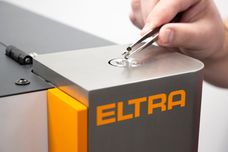
Battery and material analysis: For oxygen and nitrogen analysis in connection with battery recycling, the ELTRA – ELEMENTRAC ONH-p 2 from Verder Scientific is used, for example, which according to the product description detects oxygen, nitrogen and hydrogen down to the trace range.
Metal and quality control analysis: For carbon and sulfur analysis in metals and inorganic materials, the inductar® CS cube from Elementar Analysensysteme is listed, which according to the description is equipped with an integrated sample feeder and a camera for combustion monitoring.
Further application examples that arise from the listed products:
- Determination of sulfur and nitrogen contents in liquids, gases and LPG samples, for example with the compEAct series from Analytik Jena
- C, S and Cl solid analysis with the multi EA 4000 from Analytik Jena
- Multi-element analysis for laboratory and process environments with the multi EA 5000 from Analytik Jena
For laboratories with CHNS requirements, the products listed on this page include, among others, the UNICUBE / vario EL cube / vario MAX cube range from Elementar Analysensysteme, which according to the product description is designed equally for micro and macro samples.
Technology and innovations
Modern elemental analyzers are characterized by an increasing combination of different digestion and detection principles in a single system.
Combined element determination without instrument conversion: Systems such as the multi EA 5000 from Analytik Jena enable, according to the product description, the determination of carbon, nitrogen, sulfur and chlorine (C/N/S/X) in one instrument without the need to reconfigure between analyses.
Automated sample processing: The fully automatic solid sample feeder of the multi EA 4000 from Analytik Jena is exemplary of the trend toward higher sample throughput with simultaneously reduced maintenance effort.
Extended measuring ranges: The UNICUBE / vario EL cube / vario MAX cube range from Elementar Analysensysteme allows, according to the manufacturer, the analysis of samples with C/N element ratios of up to 12,000:1, which supports matrix-independent analysis even of samples that are difficult to digest.
Integrated process monitoring: The inductar® CS cube from Elementar Analysensysteme has an integrated camera for observing the combustion process, which facilitates control even with difficult sample matrices.
FAQs about elemental analyzers
How do I choose the right elemental analyzer for my laboratory?
The choice depends primarily on the type of sample, the required range of elements (e.g. CHNS or C/N/S/X) and the required sample throughput rate. Micro elemental analyzers are suitable for small amounts of substance, while macro analyzers are designed for larger sample weights.
Which types of elemental analyzers are suitable for food analysis?
For protein and nitrogen determination in food and feed, Dumas-based nitrogen and protein analyzers are frequently used, such as those represented on this page by the exceed PLUS series from Elementar Analysensysteme.
How long does a typical analysis with an elemental analyzer take?
Combustion-based analyses generally deliver a result within a few minutes, whereas wet chemical reference methods such as Kjeldahl can take several hours.
What sample preparation is necessary for an elemental analyzer?
Solid samples are usually weighed out and transferred into suitable crucibles or capsules; liquid samples can be dosed directly or after dilution, depending on the instrument. The specific preparation depends on the digestion method used (combustion or pyrolysis).
What is the difference between micro and macro elemental analyzers?
Micro elemental analyzers are designed for small sample weights, while macro elemental analyzers can process larger sample quantities. Some instruments, such as the UNICUBE range from Elementar Analysensysteme listed on this page, combine both ranges in one system according to the manufacturer.
Can an elemental analyzer also be used for process applications?
Yes, some of the listed products are designed for both laboratory use and process monitoring, for example in the field of battery analysis or continuous quality control in production.
Final summary
Elemental analyzers determine the quantitative elemental composition of samples by means of thermal decomposition and subsequent gas detection. The range extends from micro to macro analyzers and from simple nitrogen determinations according to Dumas to complex C/N/S/X systems. Compared with classic wet chemical methods such as Kjeldahl, combustion analyzers offer shorter analysis times and dispense with hazardous chemicals. The right choice of instrument depends on the type of sample, the required range of elements and the field of application – from food through environmental to material analysis.
Haven't found the right product yet?
The chemeurope.com Product Search
Start your targeted search now with a wide selection of filter options. Here you can easily find the right product for your search, including manufacturer information and options for requesting a quote or downloading the corresponding brochure.