Molecules in an egg carton
How water surfaces can be used to produce functional materials
Advertisement


The production of high-quality monolayers – i.e. only one molecule high - is highly relevant for optoelectronic components such as organic light-emitting diodes used today in modern cell phones: Both lifetime and energy efficiency can be increased. Scientists at the Max Planck Institute for polymer research, through a collaboration with TU Dresden, have now used lasers to investigate how water surfaces can be used as a template for the regular arrangement of molecules and what physicochemical mechanisms underlie this.

Molecules in an egg carton: How water surfaces can be used to produce functional materials
Max-Planck-Institut für Polymerforschung
A team at the MPI for Polymer Research has investigated how molecules can arrange themselves under the control of a water surface.
Organic light-emitting diodes consist of many thin layers, some of which are only one molecule thick. “On-water chemistry" - the use of water surfaces to influence chemical reactions - discovered back in the 1980s, is a promising candidate for producing such layers. Like an egg carton, this type of chemistry offers the possibility of selectively forcing molecules into a crystalline - i.e., regularly arranged - structure: They can only sit where the surfactants on the water surface allow them to.

Until now, it was unclear what physical and chemical processes are operative to achieve this arrangement. For example, what role does the charge of the surfactant play? To what extent do bond distances on the water surface have to match those of the applied molecule?
Yuki Nagata, group leader in Mischa Bonn's department at the MPI for Polymer Research, and his team have addressed these questions. For this purpose, they used the molecule "polyaniline" as an experimental object and investigated the process of arrangement on the water surface in more detail using laser spectroscopy.
Sum-frequency generation spectroscopy (SFG) is ideally suited for this purpose, as it only provides signals from the interface and not from the underlying water. With its help, the team was able to map the polymerization process over a period of several hours and also detect any intermediates that were formed.
"We were able to show that the charge on the surface matters for the quality of the synthesized samples," Nagata said. "We hope that our research will provide the way to produce tailored polymeric coatings by tailoring the water surfaces accordingly."
The team's findings have now been published in the October issue of the journal Chem.
Original publication


Other news from the department science





















Most read news












More news from our other portals

























See the theme worlds for related content
Topic World Spectroscopy
Investigation with spectroscopy gives us unique insights into the composition and structure of materials. From UV-Vis spectroscopy to infrared and Raman spectroscopy to fluorescence and atomic absorption spectroscopy, spectroscopy offers us a wide range of analytical techniques to precisely characterize substances. Immerse yourself in the fascinating world of spectroscopy!

Topic World Spectroscopy
Investigation with spectroscopy gives us unique insights into the composition and structure of materials. From UV-Vis spectroscopy to infrared and Raman spectroscopy to fluorescence and atomic absorption spectroscopy, spectroscopy offers us a wide range of analytical techniques to precisely characterize substances. Immerse yourself in the fascinating world of spectroscopy!
Last viewed contents
Artificial Intelligence has learned to estimate oil viscosity - Indirect measurements are a lucky alternative for a variety of sectors
‘Smart plastic’ material is step forward toward soft, flexible robotics and electronics - A new plastic-like material can be manipulated to be soft and stretchy or hard and rigid with only the application of a catalyst and visible light
Exotic vibrations in new materials - New insights show universal applicability of carbyne as a sensor
BASF increases price for Vitamin B2

First controllable nanoscale gas-liquid interface fabricated
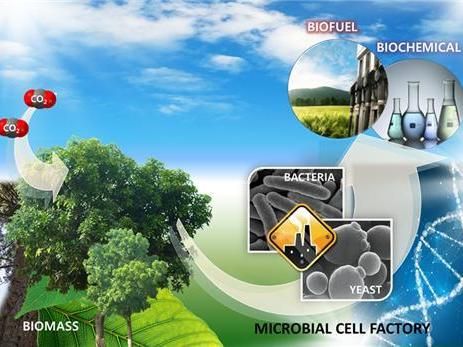
Biodiesel made from discarded cardboard boxes - Development of a microorganism that doubles the yield of biodiesel precursor production using genetic scissors and based on the principles of evolution

Breakthrough for efficient and high-speed spintronic devices - New soft X-ray source could be used for many applications in physics, chemistry, and biology

Keep safe and cool in the pool - Novel chip sensor quickly and continuously does all the work of a chemistry laboratory

“Dictionaries” make fluorescence-based data for integrative structure models and their dynamics accessible - 3D structures of biomolecules

PSL - Powder Systems Limited - Liverpool, United Kingdom
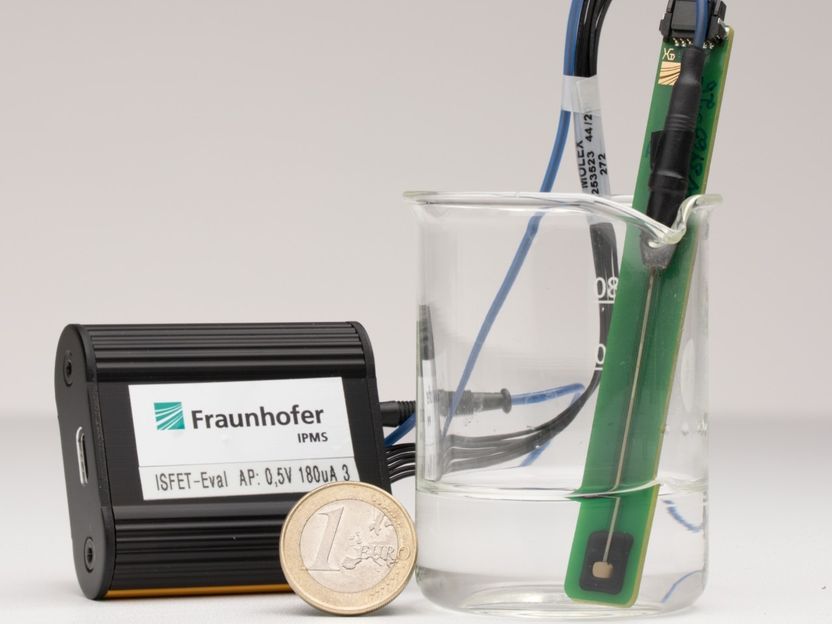
Significant progress achieved in chemical liquid analysis - ISFET-based pH sensor-control successfully miniaturized and optimized for easy use