Light accelerates conductivity in nature’s ‘electric grid’
“It is a completely different form of photosynthesis”
Advertisement


The natural world possesses its own intrinsic electrical grid composed of a global web of tiny bacteria-generated nanowires in the soil and oceans that “breathe” by exhaling excess electrons.
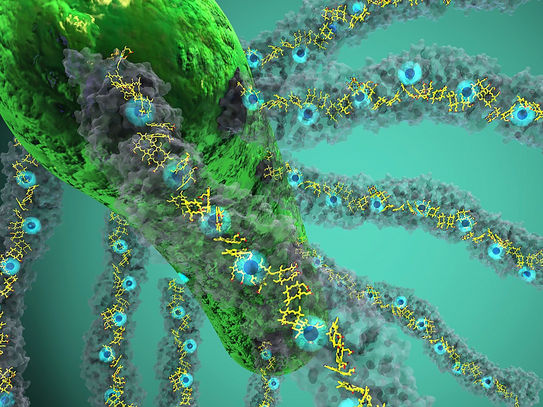
Bacteria producing nanowires made up of cytochrome OmcS.
Ella Maru Studio
In a new study, Yale University researchers discovered that light is a surprising ally in fostering this electronic activity within biofilm bacteria. Exposing bacteria-produced nanowires to light, they found, yielded an up to a 100-fold increase in electrical conductivity.
The findings were published Sept. 7 in the journal Nature Communications,
“The dramatic current increases in nanowires exposed to light show a stable and robust photocurrent that persists for hours,” said senior author Nikhil Malvankar, associate professor of Molecular Biophysics and Biochemistry (MBB) at Yale’s Microbial Sciences Institute on Yale’s West Campus.
The results could provide new insights as scientists pursue ways to exploit this hidden electrical current for a variety of purposes, from eliminating biohazard waste and creating new renewable fuel sources.
Almost all living things breathe oxygen to get rid of excess electrons when converting nutrients into energy. Without access to oxygen, however, soil bacteria living deep under oceans or buried underground over billions of years have developed a way to respire by “breathing minerals,” like snorkeling, through tiny protein filaments called nanowires.
When bacteria were exposed to light, the increase in electrical current surprised researchers because most of the bacteria tested exist deep in the soil, far from the reach of light. Previous studies had shown that when exposed to light nanowire-producing bacteria grew faster.
“Nobody knew how this happens,” Malvankar said.
In the new study, a Yale team led by postdoctoral researcher Jens Neu and graduate student Catharine Shipps concluded that a metal-containing protein known as cytochrome OmcS — which makes up bacterial nanowires — acts as a natural photoconductor: the nanowires greatly facilitate electron transfer when biofilms are exposed to light.
“It is a completely different form of photosynthesis,” Malvankar said. “Here, light is accelerating breathing by bacteria due to rapid electron transfer between nanowires.”
Malvankar’s lab is exploring how this insight into bacterial electrical conductivity could be used to spur growth in optoelectronics — a subfield of photonics that studies devices and systems that find and control light — and capture methane, a greenhouse gas known to be a significant contributor to global climate change.
Original publication


Other news from the department science





















Most read news












More news from our other portals

























Last viewed contents

BASF Schwarzheide GmbH - Schwarzheide, Germany
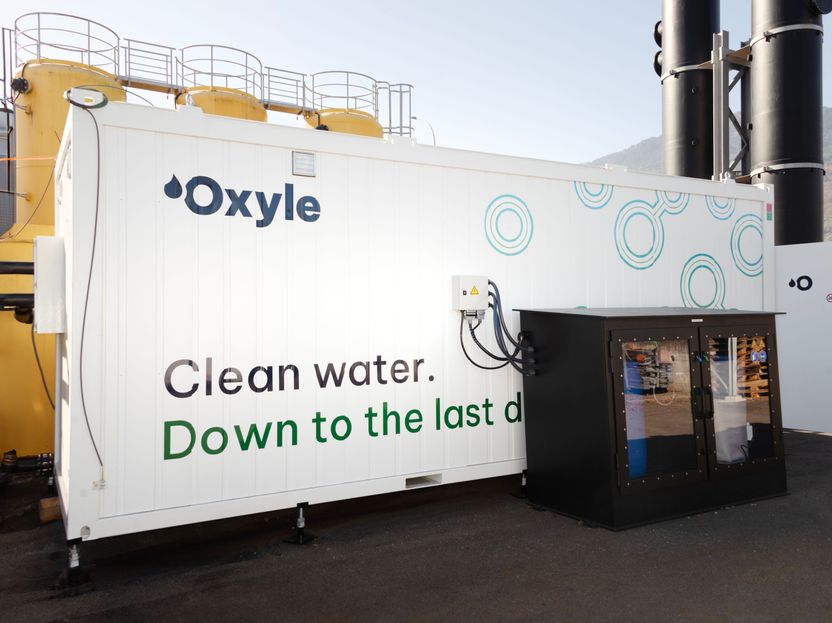
Swiss start-up Oxyle commissions first complete PFAS destruction system - Key milestone for Oxyle: the company scales its solution to solve PFAS problems on an industrial scale around the world
High-speed imaging of microchips - Novel method enables fast X-ray scans of large objects with nanometre resolution
Initial energy efficiency index for the German Industry published - High sensitivity – little action
First brew beer, then store energy - Chemists create carbon materials for energy storage device from brewery waste
Artificial Intelligence has learned to estimate oil viscosity - Indirect measurements are a lucky alternative for a variety of sectors
‘Smart plastic’ material is step forward toward soft, flexible robotics and electronics - A new plastic-like material can be manipulated to be soft and stretchy or hard and rigid with only the application of a catalyst and visible light
Exotic vibrations in new materials - New insights show universal applicability of carbyne as a sensor
BASF increases price for Vitamin B2

First controllable nanoscale gas-liquid interface fabricated
Biodiesel made from discarded cardboard boxes - Development of a microorganism that doubles the yield of biodiesel precursor production using genetic scissors and based on the principles of evolution
