Thianthrenium chemistry allows for reactivity switch of a nucleophilic amino acid into a versatile intermediate
Useful and broadly applicable tool in the field of chemical biology

Advertisement


Chemical diversification of proteins is an important concept in the study of biological processes and the complex structures of the proteins themselves. It involves using quick and mild reactions that selectively target a specific amino acid and therefore a building block of proteins. cysteine is a prominent example and can currently be modified in two ways. The first way requires the synthesis of electrophiles for each and every desired modification, e.g. a fluorescence probe that allows for following the molecule in very complex biological mixtures. The second way turns cysteine itself into a chemical linchpin, which can then be diversified. Until now, this has been carried out in multistep syntheses. These methods have the drawback that the linchpin cannot be introduced in presence of external reagents required for its diversification. That is often accompanied by a limited choice of reagents for the functionalization as the linchpin needs to persist in solution during purification processes and has therefore an intrinsically decreased reactivity. A new technique by the research group of Tobias Ritter, director at the Max-Planck-Institut für Kohlenforschung, is intriguing because it enables the introduction of a highly reactive intermediate in a one-pot process based on a single electrophile. Additionally, this method allows for a broad diversification of the new intermediate even in the presence of external reagents.
Transfoming the Cysteine
In their study, the Ritter group found a way to utilize vinyl thianthrenium salts to transform cysteine into a highly reactive episulfonium electrophile in situ. That approach allows to connect cysteine with various other external nucleophiles in a single one-pot process without the need for additional steps. The method enables the scientists to link different biorelevant functional groups to proteins using a short and stable ethylene linkage very close to the protein’s surface. Hence, providing a new and attractive way to add labels or functionalities that alter the chemical environment of a protein.
When there are no external nucleophiles added, other amino acids can react with the episulfonium intermediate in an intramolecular reaction. That reactivity allows for protein-protein ligation and macrocyclization of linear peptides. While the first approach allows to study protein complexes and their often altered biological activity, the second approach makes the peptides more stable towards biological degradation if used e.g. as a drug.
Additionally, the synthesis of vinyl thianthrenium salts from ethylene gas allowed the Ritter group to synthesize reagents with a different composition of isotopes. Those isotope labeled compounds possess the same reactivity as the non-labelled derivatives but slightly differ in their molecular weight. Hence, they can be utilized in state of the art mass spectrometry proteomics research to extract quantitative information from whole cellular systems. Overall, the method using vinyl thianthrenium salts is showcased as a useful and broadly applicable tool in the field of chemical biology.
Original publication
Philipp Hartmann, Kostiantyn Bohdan, Moritz Hommrich, Fabio Juliá, Lara Vogelsang, Jürgen Eirich, Rene Zangl, Christophe Farès, Julia Beatrice Jacobs, Dwaipayan Mukhopadhyay, Johanna Marie Mengeler, Alessandro Vetere, Marie Sophie Sterling, Heike Hinrichs, Stefan Becker, Nina Morgner, Wolfgang Schrader, Iris Finkemeier, Karl-Josef Dietz, Christian Griesinger, Tobias Ritter; "Chemoselective umpolung of thiols to episulfoniums for cysteine bioconjugation"; Nature Chemistry, 2023-12-20


Other news from the department science





















Most read news












More news from our other portals

























See the theme worlds for related content
Topic world Synthesis
Chemical synthesis is at the heart of modern chemistry and enables the targeted production of molecules with specific properties. By combining starting materials in defined reaction conditions, chemists can create a wide range of compounds, from simple molecules to complex active ingredients.

Topic world Synthesis
Chemical synthesis is at the heart of modern chemistry and enables the targeted production of molecules with specific properties. By combining starting materials in defined reaction conditions, chemists can create a wide range of compounds, from simple molecules to complex active ingredients.
Last viewed contents
BASF inaugurates new $1 billion MDI production facility at its Geismar Verbund site - BASF’s largest single investment made to date in the U.S.

Akeno receives 4.5 million euros for real-time production planning - From BASF project to international rollout
Pitt researchers harness carbon nanomaterials for drug delivery systems, oxygen sensors - Researchers describe carbon nanocapsules for drug and energy storage in Advanced Materials, creation of highly sensitive oxygen sensors in Nature Chemistry
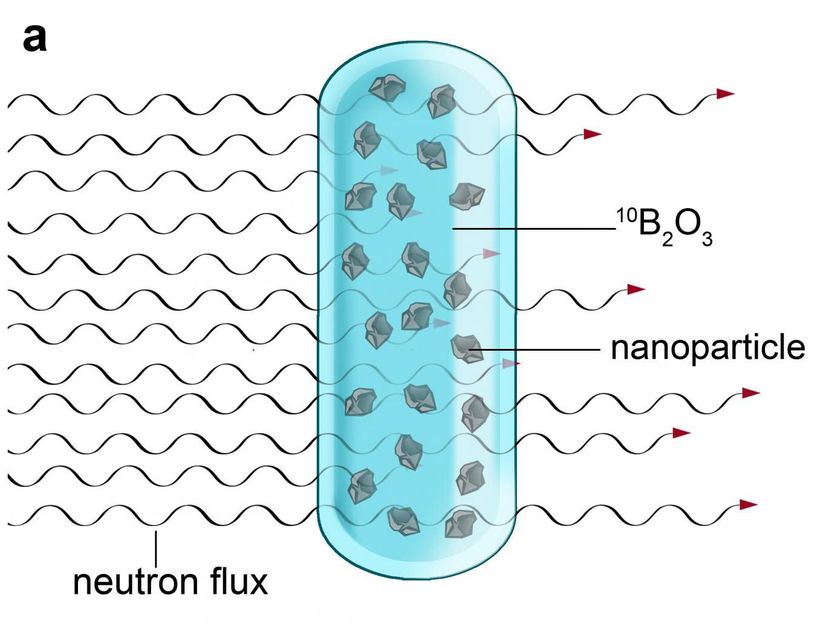
How to produce fluorescent nanoparticles for medical applications in a nuclear reactor
Water, Clay and Carbon: A New Route to Sustainable Energy Storage - Researchers demonstrate an all-water supercapacitor stable over 60,000 charging cycles
Don't Give the Slightest Chance to Toxic Elements in Medicinal Products - New high-accuracy reference solutions for the SI-traceable measurement

Bodo Möller Chemie Group enters exclusive acquisition talks with Rocktin - Strengthen adhesives distribution in Asia
Researchers develop procedure to interpret x-ray emission spectra of liquid water - Study helping to advance the understanding of the structure of water

How can life emerge in a world of minerals? - The European Research Council (ERC) has awarded an ERC Synergy Grant to the project “The role of silica at the dawn of life on our planet” (PROTOS)

New reactor could save millions when making ingredients for plastics and rubber from natural gas - With oil production dropping, a process using natural gas is needed to avert a shortage of a workhorse chemical used for automotive parts, cleaning products and more
Manganese could make luminescent materials and the conversion of sunlight more sustainable