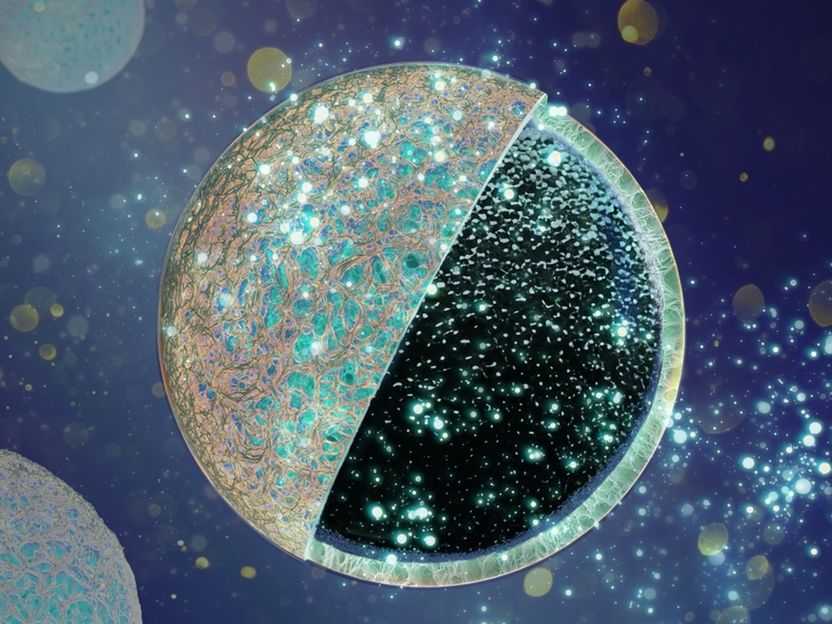
BAM, HZB and HU are conducting joint research on sodium batteries
Berlin Battery Lab develops batteries that conserve raw materials and is also open to partnerships with start-ups
Advertisement


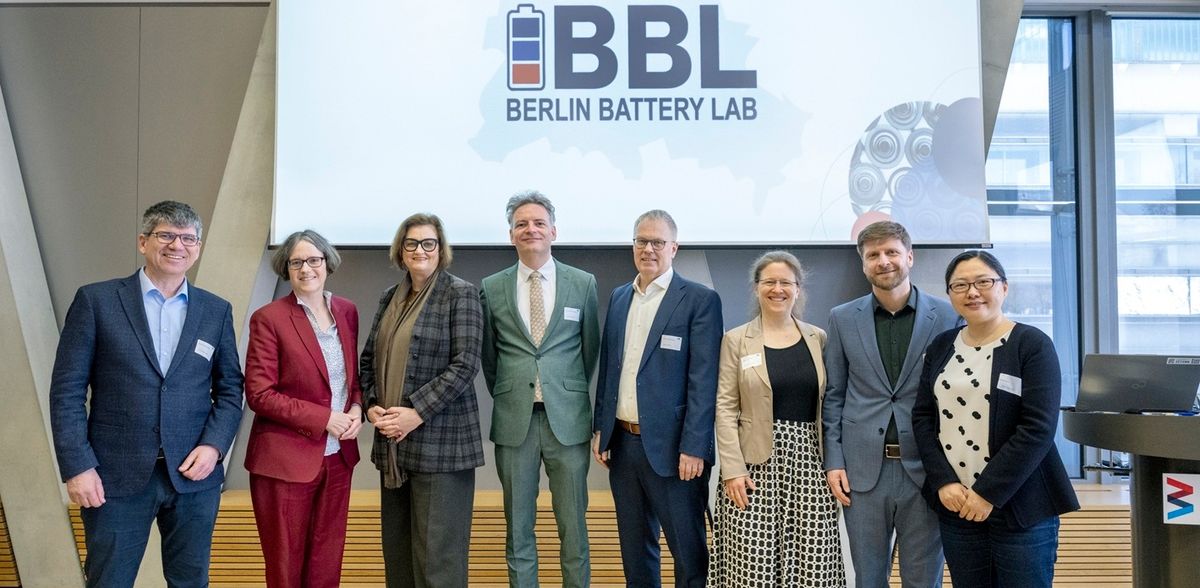
The Federal Institute for Materials Research and Testing (BAM), the Helmholtz‑Zentrum Berlin (HZB) and Humboldt-Universität zu Berlin (HU) officially inaugurated the Berlin Battery Lab (BBL). At this new research platform, BAM, HZB and HU jointly develop and test resource-efficient battery technologies with a focus on sodium-based systems. Together, they develop new materials, investigate innovative cell chemistries, and produce battery prototypes. The research infrastructure of the Berlin Battery Lab is also open to external partners from science and industry and is designed to accelerate the transfer from research to application.
In recent years, Berlin has developed into a leading location for battery research. Sustainable alternatives such as sodium-ion or lithium-sulfur batteries are increasingly coming into focus.
Within this context, the Berlin Battery Lab functions as a central platform that strategically integrates the complementary expertise of the participating institutions. BAM contributes internationally recognized expertise in battery safety and the development of innovative energy materials. HU is one of the leading academic research institutions in the field of sodium-ion batteries. HZB provides long-standing experience in lithium-sulfur battery research and operates BESSY II, one of the world’s most powerful X-ray sources for studying battery-chemical processes.

With the Berlin Battery Lab, BAM, HU Berlin and HZB are creating a research environment in the German capital that systematically combines fundamental research, materials development, cell design and safety testing at a single location. This bridges an important gap on the path to industrial application. Start-ups and technology-oriented companies stand to benefit in particular: the lab is open for cooperation and aims to significantly support the development of locally produced, sustainable battery technologies.
At the inauguration, the Berlin Senator for Science, Health and Care Dr. Ina Czyborra, stated: "The Berlin Battery Lab illustrates Berlin's strength in strategically bringing together top-level research and technological needs – through close cooperation between three outstanding partners and a short path from research to application. Battery research is a key technology on the High-Tech Agenda. The Berlin Battery Lab strengthens Germany's technological sovereignty by reducing dependence on critical raw materials and increasing the resilience of key value chains. These national challenges can only be met through close collaboration – with a clear joint commitment from the federal and state governments, including appropriate funding instruments. The State of Berlin is pleased to support this goal and is providing the Berlin Battery Lab with an additional €2.4 million from the European Regional Development Fund (ERDF) between 2026 and 2028."
Prof. Dr. Ulrich Panne, President of BAM: “Many new battery technologies are being developed in Germany, but they are not reaching application quickly enough. This is exactly where the Berlin Battery Lab makes a difference: here in Berlin, we bring together research, development and cell manufacturing while integrating safety considerations and regulatory requirements to help transfer sustainable innovations into practice.”
Prof. Dr. Julia von Blumenthal, President of Humboldt-Universität zu Berlin: “Batteries are a key technology for the sustainable energy supply of the future. The Berlin Battery Lab consolidates the expertise of three outstanding research institutions in this field at the Berlin location. The Berlin Battery Lab will span the entire research chain, facilitate collaboration with industry and accelerate the processes leading to practical application. It will create innovations and thus make an important contribution to addressing one of the central challenges of our time.”
Prof. Dr. Bernd Rech, Scientific Director of HZB: “At the Berlin Battery Lab, we combine our diverse competencies to accelerate development and technology transfer to industry. At HZB, we are establishing a new pouch-cell laboratory for sodium-ion batteries and providing state-of-the-art characterization methods at BESSY II.”
During the inauguration, Prof. Dr. Philipp Adelhelm (HU), one of the three scientific directors of the Berlin Battery Lab alongside Dr. Tim‑Patrick Fellinger (BAM) and Prof. Dr. Yan Lu (HZB), received a Wilhelm-Ostwald Fellowship from BAM. Named after Nobel laureate Wilhelm Ostwald, the award recognizes Adelhelm’s contributions to the physical chemistry of batteries, particularly in the field of sodium-ion technology. The fellowship enables in-depth scientific collaboration between HU and BAM and strengthens interdisciplinary exchange within the Berlin Battery Lab.



Other news from the department science





















Most read news











More news from our other portals



























Something is happening in the chemical industry ...
This is what true pioneering spirit looks like: Plenty of innovative start-ups are bringing fresh ideas, lifeblood and entrepreneurial spirit to change tomorrow's world for the better. Immerse yourself in the world of these young companies and take the opportunity to get in touch with the founders.
See the theme worlds for related content
Topic World Battery Technology
The topic world Battery Technology combines relevant knowledge in a unique way. Here you will find everything about suppliers and their products, webinars, white papers, catalogs and brochures.

Topic World Battery Technology
The topic world Battery Technology combines relevant knowledge in a unique way. Here you will find everything about suppliers and their products, webinars, white papers, catalogs and brochures.
Last viewed contents
Innovation paves way to make ‘clean’ chemicals, plastics and food using solar energy - Integrated solar reactor uses sunlight, water, CO2 and engineered bacteria to grow biomass in a single beaker
Chemicals and energy sectors move away from fossil raw materials - Fraunhofer and an Estonian deep-tech start-up are testing a modular biomass platform on an industrial scale
From Flue Gas to Raw Material: Extracting Carbon from CO₂ Produced by Waste Incineration - KIT and EEW Energy from Waste (EEW) plan to use CO₂ from flue gases in the NECOC process

KAIST identifies a route to faster-charging, longer-lasting EV batteries - Research team uses a 3D digital twin to reveal localized degradation mechanisms during fast charging

Matthews Engineering and start-up hs-tumbler partner on dry battery electrode manufacturing - Companies aim to enable dry electrode manufacturing through trajectory mixing

Winter-ready lithium batteries: scientists use "polarity-contras" electrolyte strategy to outsmart extreme cold - Lithium metal batteries retain 80% capacity after 150 cycles at -40 °C

The competitiveness of low-carbon fuels depends on location - New infrastructure could boost European production
Deep tech startup Reduciner introduces novel technology to turn captured carbon into sustainable fuels - Raising 3.6 million euros in its initial funding round, the Finnish startup plans to build its first industrial-scale pilot
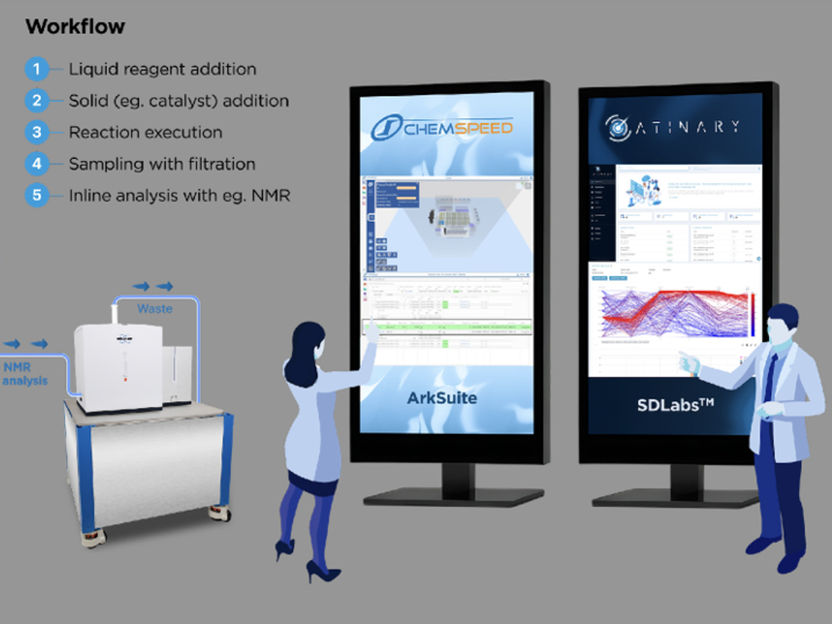
Bruker announces strategic collaboration with Atinary Technologies to advance self-driving laboratories

FUST Lab Receives Investment from Asia2G Capital - The Korean deep-tech company plans to use the capital to expand into the U.S., European, and Japanese markets

ACHEMA Middle East: Debut in Saudi Arabia not until 2027 - Messe Frankfurt Saudi Arabia and DECHEMA are responding to regional uncertainties and are also changing the venue