GET H2 Nukleus Gains Momentum: First Hydrogen from Lingen Arrives in Marl
Germany's first integrated industrial-scale hydrogen project is underway
Advertisement


The first electrolytic hydrogen produced in Lingen, Lower Saxony, has reached Marl in the northern Ruhr region. This means that all components of the integrated hydrogen project GET H2 Nukleus are now successfully working together as a network.
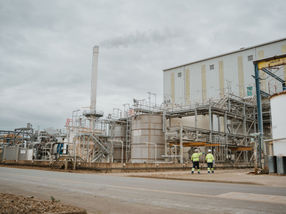
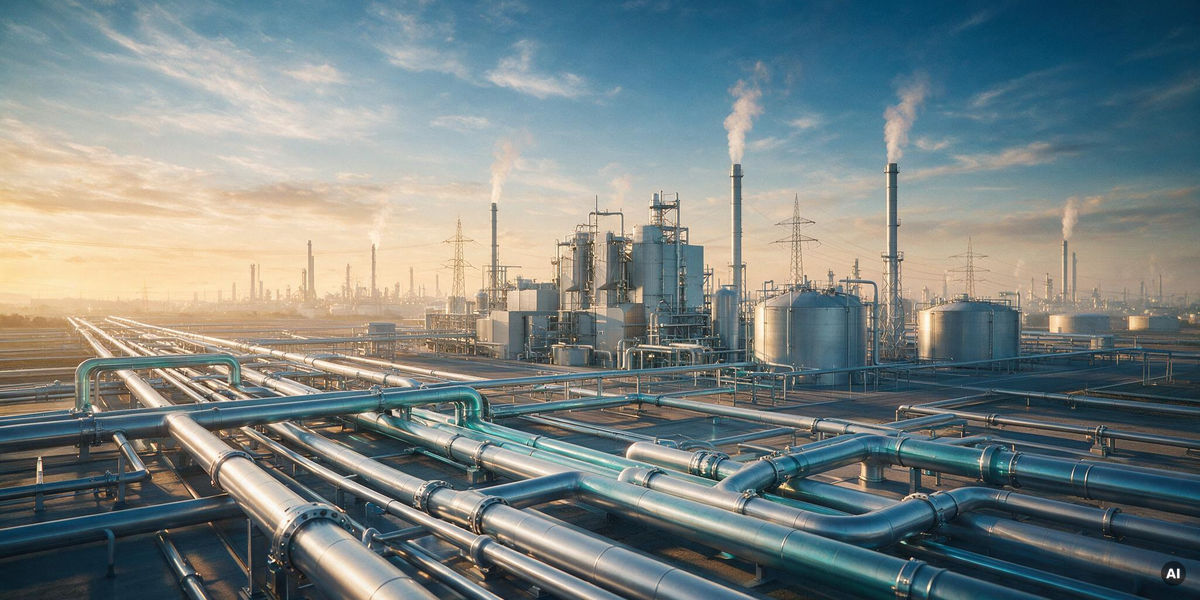
As part of the ongoing commissioning process for two 100-megawatt electrolysis plants operated by RWE in Lingen, the first batches of renewable hydrogen are being produced in accordance with EU regulations. This hydrogen flows through a pipeline network approximately 120 kilometers long, operated by the transmission system operators Nowega and OGE as well as Evonik subsidiary SYNEQT, to Evonik’s Marl Chemical Park, where it is put to use.
Parts of the GET H2 Nucleus are funded by the federal government and the states of Lower Saxony and North Rhine-Westphalia as part of the Hy2Infra IPCEI (Important Projects of Common European Interest) program. The pipelines are among the first segments of the hydrogen core network, which is being built up piece by piece nationwide.
“With the GET H2 Nucleus, our first hydrogen pipelines are entering network operation. This is an important step toward establishing the hydrogen economy in the region and in Germany,” says Thomas Hüwener, CEO of OGE. “At the same time, this project lays an important foundation for future market design and allows us to test key processes such as grid access, capacity booking, and balancing in real-world operations.”
Nikolaus Valerius, CEO of RWE Generation SE: “The fact that certified renewable hydrogen from Lingen is reaching Marl via pipelines shows that the interplay between electrolysis, transport infrastructure, and off-take is working. We are now moving swiftly toward the full commissioning of our electrolysers. Over the next few months, we will prepare the facilities for commercial operation."
RWE will commission 200 megawatts of electrolysis capacity in Lingen by the end of 2026; starting in 2027, the entire plant is expected to produce 300 megawatts. The hydrogen produced at RWE’s electrolysis plants meets EU requirements for renewable fuels of non-biological origin (RFNBO). Customers receive sustainability certificates for this hydrogen and can thus count it toward their decarbonization targets.
“The early dialogue and joint project development with the first transport customers as part of GET H2 have paid off,” says Frank Heunemann, Managing Director of Nowega. “This early start and constructive collaboration are providing important impetus for the design of the new overall system. Now we’re moving into the practical phase of the concrete interaction between the various elements.” In the GET H2 TransHyDE research project, the companies had already gained initial experience in recent years, which can now be further expanded in “real-world system operation.”
“Our persistence is paying off. With this jointly conducted project, we are now opening the door even wider to sustainable change and the future-oriented development of the chemical park. Once it arrives here in Marl, the hydrogen can be used directly to meet the industry’s needs. At the same time, its availability enhances the site’s appeal for new businesses,” says Thomas Basten, CEO of SYNEQT. “The long-standing collaboration among all partners has made this possible. We have pooled our experience, knowledge, and expertise, thereby laying the foundation for the necessary ramp-up of hydrogen production.”
Other pipeline projects linked to the GET H2 Nucleus have already been completed or are currently underway. These include the 10-kilometer-long new pipeline from Heek to Epe, to be completed by OGE and Nowega by the end of 2025, which will connect the hydrogen storage facility. RWE Gas Storage West will begin filling Europe’s first commercial cavern storage facility for hydrogen here at the end of 2026, with the facility scheduled to go into operation in mid-2027. To connect additional industrial customers, OGE and Nowega will also convert an existing pipeline from Legden to Dorsten to carry hydrogen by 2027 and construct a new pipeline from Dorsten to Marl. In addition, a pipeline connecting the SYNEQT to the Marl Chemical Park and the refinery in Gelsenkirchen-Scholven has already been completed.
About GET H2
Hydrogen is one of the keys to decarbonizing industry and other sectors. Founded in 2019, the initiative brings together more than 50 companies, institutions, associations, and municipalities that aim to jointly lay the foundation for a sustainable hydrogen economy in Germany. The focus is on the concrete planning and implementation of projects along the entire H2 value chain: from electrolysis, import, transport, and storage to applications in various industrial sectors.
Through the GET H2 Nukleus project—funded by the federal and state governments as an IPCEI (Important Project of Common European Interest)—the partners commissioned one of the first integrated hydrogen projects on an industrial scale in 2026.
Note: This article has been translated using a computer system without human intervention. LUMITOS offers these automatic translations to present a wider range of current news. Since this article has been translated with automatic translation, it is possible that it contains errors in vocabulary, syntax or grammar. The original article in German can be found here.


Other news from the department manufacturing