Oxyle Makes On-Site PFAS Destruction Cost-Effective
Groundwater Pilot Project in Switzerland Successfully Completed
Advertisement


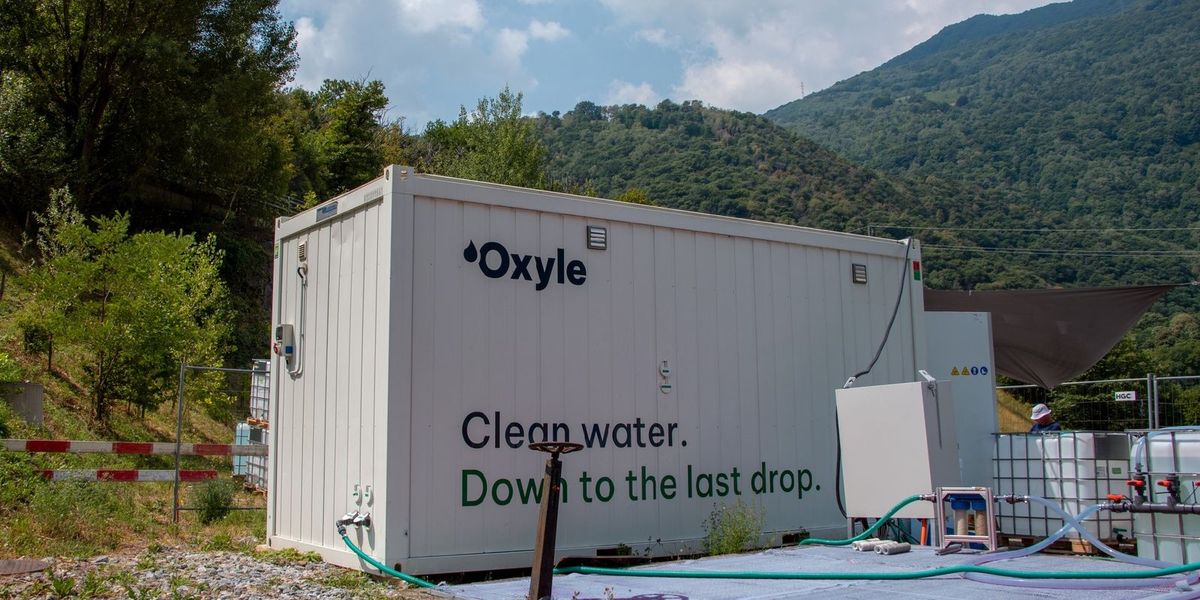
The Swiss cleantech company Oxyle has successfully completed a groundwater treatment pilot project at a construction site in Switzerland. Technical estimates for full-scale implementation, based on the pilot project, indicate significant potential for cost, energy, and space savings. The results demonstrate a viable path toward economically viable, large-scale on-site PFAS destruction. This reduces reliance on costly transportation and disposal of PFAS-contaminated waste.
Tens of thousands of sites worldwide are contaminated with PFAS. In groundwater remediation, large volumes of water with comparatively low PFAS concentrations often need to be treated. Until now, companies have faced a nearly insurmountable dilemma in this regard. The common solution using activated carbon filters merely shifts the problem elsewhere. Once the activated carbon is saturated, the PFAS-contaminated material must be further treated, regenerated, or disposed of—often involving expensive transportation and, in some cases, high-temperature incineration. This results in recurring transportation and incineration costs. The permanent destruction of PFAS on-site on a large scale has been economically challenging until now, especially when dealing with large volumes of groundwater. Treating such large volumes required too much energy and oversized facilities that were logistically impractical.
New Approach Reduces Destruction Costs
Oxyle makes on-site destruction economically viable by connecting two technologies in series within a mobile container. First, a nanofiltration system reduces the volume of liquid to be treated by a factor of three. In the process, PFBA is concentrated into a significantly smaller water stream. Next, the photochemical OxLight system—which combines UV light with special chemical mediators—treats this concentrated stream and permanently breaks the strong carbon-fluorine bonds. Since only the concentrated stream—and not the entire original volume of water—is treated, operating energy costs and space requirements are significantly reduced.
Technical estimates for large-scale application based on the pilot results show that the combination of nanofiltration and OxLight can reduce total treatment costs by about 50 percent. Electricity consumption decreases by about 60 percent, and the required plant area is up to 40 percent smaller. The basis for comparison is the direct treatment of the same volume of groundwater with OxLight without upstream nanofiltration; the additional costs of nanofiltration are taken into account. These are estimates for large-scale application, not cost savings that were directly measured during the three-week pilot operation.
Field tests at the Swiss construction site also confirmed that the integrated process meets strict environmental requirements. When treating 13 m³ of groundwater, the OxLight technology achieved a degradation of the persistent short-chain PFAS perfluorobutanoic acid (PFBA) of more than 99.9 percent in the destruction stage. Over the entire treatment process, a PFBA reduction of 99.6 percent was achieved.
After combining the treated sub-streams, the total concentration of nine PFAS was 73 ng/l, well below the project’s discharge limit of 100 ng/l. The on-site treatment performance was confirmed by laboratory analyses independently commissioned by the client. Complete defluorination—in which all fluorine is removed from the PFAS molecules—was additionally demonstrated in supplementary laboratory tests.
“Until now, the permanent destruction of PFAS in large groundwater flows has simply been unaffordable for many organizations,” says Dr. Fajer Mushtaq, co-founder and CEO of Oxyle. “This pilot project demonstrates that PFAS can be efficiently concentrated and permanently destroyed directly on-site, rather than transporting the contamination to another location at considerable cost. By combining our technologies, we offer the market a sustainable and economically viable alternative that tackles the environmental problem and the high costs at their root.”
Note: This article has been translated using a computer system without human intervention. LUMITOS offers these automatic translations to present a wider range of current news. Since this article has been translated with automatic translation, it is possible that it contains errors in vocabulary, syntax or grammar. The original article in German can be found here.


Other news from the department business & finance







Most read news






More news from our other portals





















Something is happening in the chemical industry ...
This is what true pioneering spirit looks like: Plenty of innovative start-ups are bringing fresh ideas, lifeblood and entrepreneurial spirit to change tomorrow's world for the better. Immerse yourself in the world of these young companies and take the opportunity to get in touch with the founders.