Cooling speeds up electrons in bacterial nanowires
This is very surprising because cooling typically freezes electrons and slows them down in organic materials
Advertisement


The ground beneath our feet and under the ocean floor is an electrically-charged grid, the product of bacteria “exhaling” excess electrons through tiny nanowires in an environment lacking oxygen. Yale University researchers have been studying ways to enhance this natural electrical conductivity within nanowires 1/100,000th width of a human hair by identifying the mechanism of electron flow.
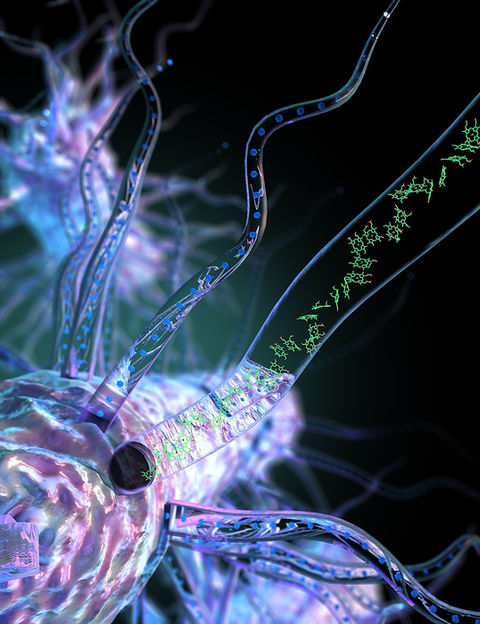
Bacteria producing nanowires made up of cytochrome OmcS
Ella Maru Studio
In a new study published in Science advances, a team led by graduate student Peter Dahl with Nikhil Malvankar, Assistant Professor of Molecular Biophysics and Biochemistry in the Microbial Sciences Institute, and Victor Batista, Professor of Chemistry, found that nanowires move 10 billion electrons per second without any energy loss. These studies explain the remarkable capacity of these bacteria to send electrons over long distances. The team also found that cooling the environment around the nanowires of Geobacter from room temperature to freezing increases conductivity 300-fold. This is very surprising because cooling typically freezes electrons and slows them down in organic materials. By combining experiments with theory, the researchers found that the colder temperatures restructure hydrogen bonds and flatten heme proteins within nanowires, thus enhancing the flow of electricity. Leveraging this naturally occurring electrical grid might one day lead to the development of living and self-repairing electrical circuits, new sources of electricity and bioremediation strategies.
Original publication


Other news from the department science





















Most read news












More news from our other portals

























Last viewed contents

Sustainable Chemistry Based on Wood - Producing materials for solar cells, light-emitting diodes and other organic electronics applications as sustainably as possible

Flexing the power of a conductive polymer - A new material holds promise for the next generation of organic electronics
Max-Planck-Institut für Struktur und Dynamik der Materie - Hamburg, Germany
Fast and energy-saving synthesis method for new electrocatalysts - Water electrolysis and the associated hydrogen production could become more energy-efficient in the future

Modified microwave oven cooks up next-gen semiconductors - The breakthrough could change the geometry of transistors used in microchips
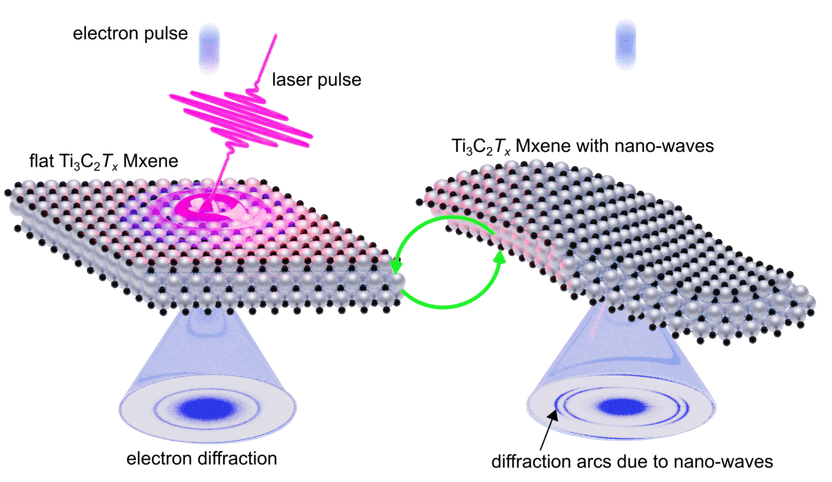
Light-induced shape shifting of MXenes - Femtosecond light creates switchable nano-waves in MXenes and moves the materials’ atoms at a record-breaking speed
A touch of gold and silver - For the first time, it is possible to produce crystalline layers of precious metals that consist of a single atomic layer and which are semiconducting

Nanoparticle supersoap creates 'bijel' with potential as sculptable fluid

Inspired by nature: Scientists have developed a nanopore-microchip

Reinforcement of structures with Memory Steel
Ultra-thin lenses that make infrared light visible - Researchers have achieved this using a special metal-oxide lens material called lithium niobate and through nanoscale pattern, stamped into the material