Artificial DNA base pair developed based on halogen bonds
Completely newly designed artificial base pair works according to a new chemical principle
Advertisement


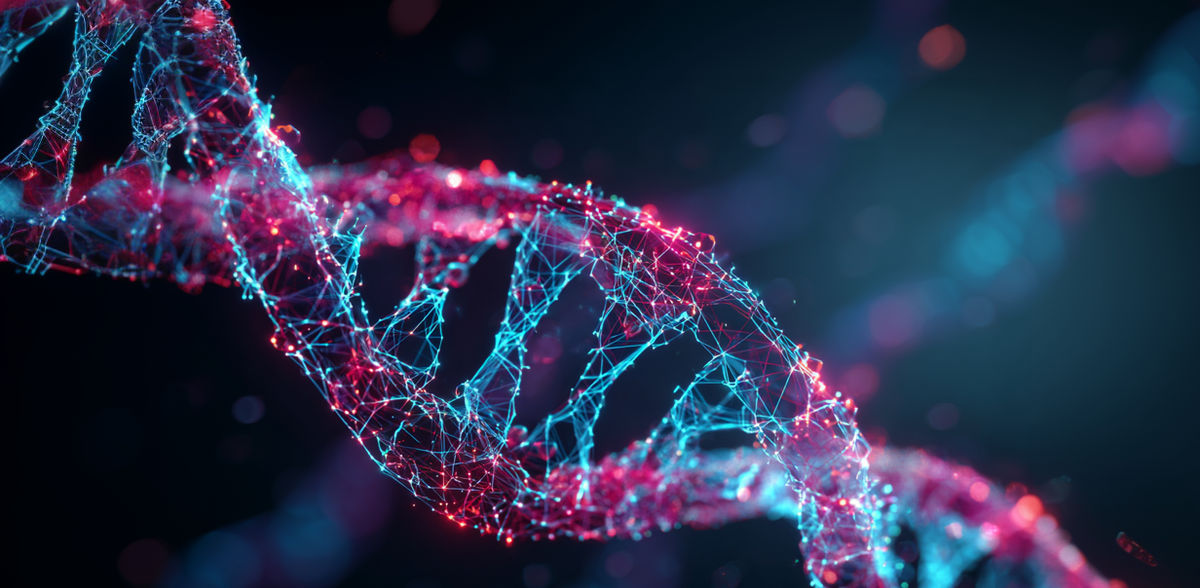
For the first time, researchers have succeeded in developing an artificial DNA base pair that is based on a different chemical force than natural genetic material. While the common natural DNA building blocks are held together by hydrogen bonds, the new base pair relies on halogen bonds as its central attraction force. These act like tiny, precisely aligned ‘docking sites’ between molecules. The study demonstrates for the first time that such alternative bonds also enable stable DNA structures. It was published under the title ‘Investigating Halogen Bonds as Pairing Force in an Artificial DNA Base Pair’ in the Journal of the American Chemical Society.
Over the past decades, numerous artificial base pairs have been developed that mimic or complement the principle of hydrogen bonding. “Our approach takes it a step further: we developed a completely newly designed artificial base pair that uses halogen bonds as an alternative attractive force,” says principal investigator Professor Dr Stephanie Kath-Schorr from the University of Cologne’s Institute of Organic Chemistry. To achieve this, the team designed special chemical building blocks containing a halogen atom – in this case, iodine. Using computer simulations, the researchers first calculated how these building blocks needed to be arranged optimally. They subsequently produced the molecules in the laboratory and investigated whether they formed the intended bonds. The experiments confirmed that the novel building blocks reliably recognize each other and form a stable pair.
Particularly noteworthy is that a naturally occurring enzyme accepts the artificial building blocks. DNA polymerases are enzymes that function as the cell’s ‘copying machines’, synthesizing new DNA strands. In the experiments, the researchers demonstrated that a DNA polymerase can incorporate the newly developed building blocks into a growing DNA strand. Thus, the artificial base pair functions not only in a test tube but also within a biological context.
“DNA does not rely exclusively on the known chemical principle,” says Kath-Schorr. “Our results expand the genetic alphabet and deepen our understanding of how flexible the molecule of life truly is.” In the long term, such additional DNA building blocks could open up new possibilities in synthetic biology, for example in the development of novel diagnostic and therapeutic approaches.
Original publication
Robert Dörrenhaus, Philip K. Wagner, Leonie Wilczek, Sophie Lüggert, Tobias A. Behn, Martin Breugst, Stephanie Kath-Schorr; "Investigating Halogen Bonds as Pairing Force in an Artificial DNA Base Pair"; Journal of the American Chemical Society, 2026-2-12


Other news from the department science




















Most read news












More news from our other portals


























Last viewed contents

DKSH extends partnership with Bruker in China - Distribution agreement to expand coverage for Bruker’s 3D X-ray Microscopy product portfolio for non-destructive imaging technology

A popular compostable plastic doesn’t break down in the ocean - “Biodegradable” is a misleading term for plastic substitutes that require heat to break down or industrial compositing conditions
CO₂ as a raw material: Power2Polymers sets milestone for climate-friendly chemistry - New materials with real added value

Scientists develop novel method for strengthening PVC products - New method may mean less microplastic pollution

Finally, 3D-printed graphene aerogels for water treatment - Study shows how to make stable and large aerogels that remove heavy metals, organic solvents, organic dyes
Paper discs that can pick up hydrogen peroxide - “We are in touch with a start-up company in Chennai”
Bacterial protein could help find materials for your next smartphone
MOL and thyssenkrupp lay foundation stone for new polyol complex in Hungary
Chemical plastics recycling is ready to go - “It’s every chemical engineer’s dream to have a formula like this at hand for their process”
Neutrons optimize high efficiency catalyst for greener approach to biofuel synthesis