Artificial muscles that can be controlled by light
Chemist develops intelligent materials based on tiny molecular machines
Advertisement


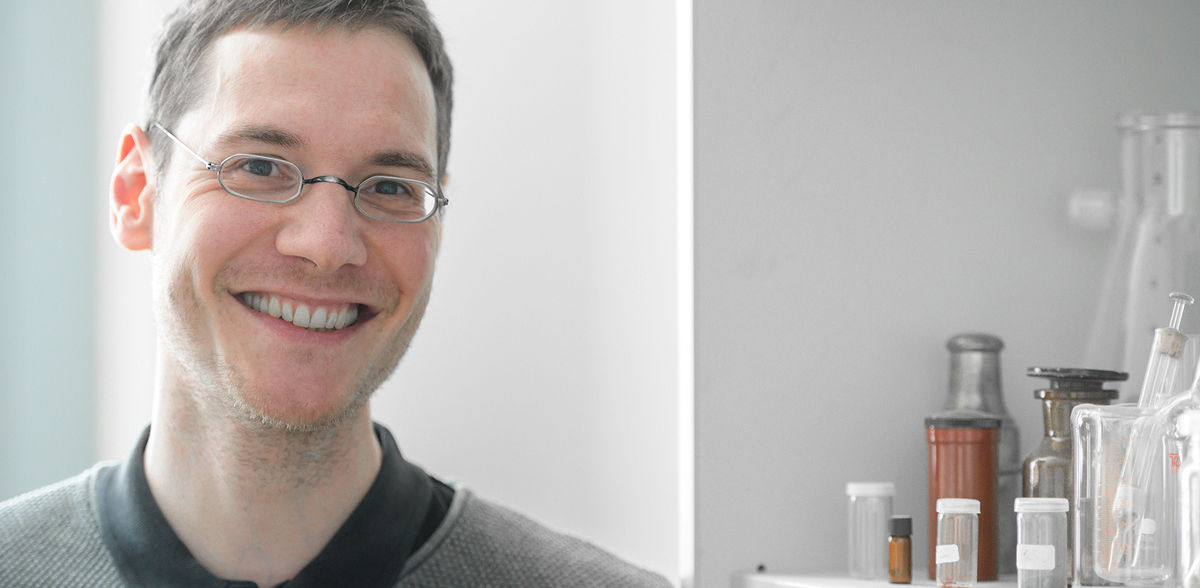
Robotic muscles that contract after a pulse of light; cube-shaped screens on which three-dimensional images can be viewed from all directions: Prof. Dr. Henry Dube from Friedrich-Alexander-Universität Erlangen-Nürnberg (FAU) wants to develop materials for completely new applications over the next four years. They are based on tiny molecular machines, each consisting of just a few dozen atoms. The chemist wants to combine different types of them into three-dimensional fabrics that enable different functions depending on the type and arrangement of the building blocks. The project is being funded by the Volkswagen Foundation with more than 900,000 euros.
Dube's idea is not as exotic as it sounds: In all living beings, countless molecular machines are at work, each specialized for specific tasks. Muscles, for example, are made up of proteins that shimmy along each other through pull-up-like movements, causing the muscle to shorten. 'We have been developing molecules for some time now that allow similar functions in principle,' explains the scientist, who has held the Chair of Organic Chemistry I at FAU since 2020. 'However, they usually have a completely different structure to their natural counterparts and are also much smaller.
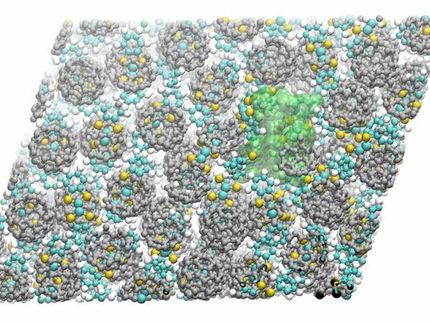
These include, for example, tiny cogwheels that consist of just a few dozen atoms and can be grouped together to form gears. Dube has also already built nano-motors or tweezers that can grip the smallest objects. In the Volkswagen Foundation project, he now wants to go one step further. Countless "pull-up molecules" are connected in series in a muscle. In addition, they are bundled hundreds of thousands of times so that they can develop sufficient force together. "We also want to produce three-dimensional tissue in which we link numerous molecular machines together according to defined rules," says the chemist. "Depending on which different types of building blocks we combine in these polymers, we can create intelligent materials for a wide variety of applications."
Materials whose properties can be programmed with light
In this way, it should be possible, for example, to produce artificial muscles for new types of robots. Unlike their natural counterparts, they will not be controlled by voltage pulses, but by light. "Many of the nanomachines we use change their shape when exposed to light," says Dube. "This allows us to trigger movements, for example." This change in shape often also causes them to take on a different color. In this way, for example, cube-like screens can be produced on which three-dimensional images can be written. These can be viewed from all directions and - unlike laser engravings in glass - can also be easily erased.
"We are also planning to produce materials whose properties can be programmed," explains the chemist. "For example, they could become solid when exposed to blue light and elastic when exposed to red light." It would even be possible to construct a gripper arm that only becomes elastic for a short time and at a defined point and can be bent there.
Uncharted scientific territory
Dube is breaking new ground with his project. The Volkswagen Foundation is funding it as part of its so-called Momentum program. This is aimed at scientists who have only recently taken up a professorship and want to expand their expertise into a new field. "As organic chemists, we normally work with single molecules," he says. "With our ideas, however, we are moving into materials science - a field that requires completely different expertise." He will therefore use the foundation's funds to finance postdocs who have the necessary expertise in precisely this area. "I am absolutely optimistic that we will be able to successfully implement our ideas in this way."
Note: This article has been translated using a computer system without human intervention. LUMITOS offers these automatic translations to present a wider range of current news. Since this article has been translated with automatic translation, it is possible that it contains errors in vocabulary, syntax or grammar. The original article in German can be found here.


Other news from the department science