A regulator for unconventional superconductivity
Research at RWTH Aachen University provides new insights into the formation of superconductivity in exotic materials
Advertisement


Researchers at RWTH Aachen University, led by Professor Dante Kennes from the Chair of Theoretical Condensed Matter Physics, have contributed to a new study that addresses a long-standing problem in physics: superconductivity, which cannot be explained by established theories. The team's contribution lay in the theoretical modeling of the underlying mechanisms. The results have been published in the journal Nature and are presented there under the title "Angle evolution of the superconducting phase diagram in twisted bilayer WSe2".
Superconductivity - a phenomenon in which electric current can flow without energy loss - is of great importance for numerous high-tech applications. For example, superconductors can be used to transmit electricity over long distances without loss, whereas in conventional cables energy is lost in the form of heat. They also enable the production of extremely strong electromagnets, such as those used in MRI devices, and are also used in maglev trains, which travel at high speeds with virtually no friction.
A key disadvantage of conventional superconductors is that they only work at very low temperatures and therefore have to be operated with complex and costly cooling systems - often close to absolute zero. This limitation has driven research into unconventional superconductors, which already become superconducting at higher temperatures and therefore require significantly less cooling.
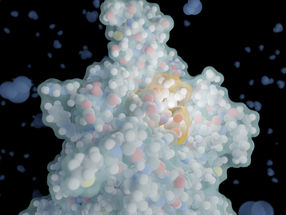
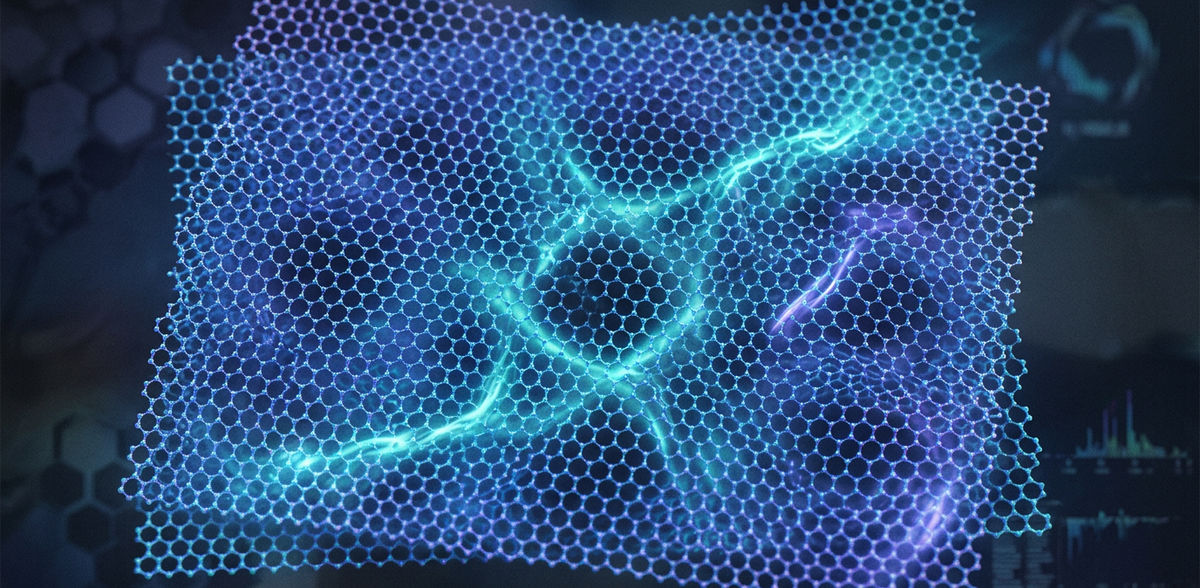
Moiré superconductors are a particularly interesting class. They consist of ultra-thin crystal layers - usually graphene - which are twisted against each other at a precisely defined, small "magic angle". This twisting creates a large-scale moiré pattern, which gives the materials their name. In this pattern, electrons interact strongly with each other and form pairs as they move through the material - a central physical basis for superconductivity.
Recently, a new unconventional superconductor was discovered in twisted layers of tungsten diselenide. However, it was previously unclear exactly how superconductivity arises in this material. In the present study, the researchers show that by specifically varying the angle of twist - i.e. the relative rotation of the two layers - it is possible to investigate how moiré patterns arise and at the same time control how easily electrons couple into pairs and move through the crystal.
Physicists can now use this "controller" to simulate the processes that lead to superconductivity - a control option that is extremely rare for solids. The results could also be transferred to other unconventional superconductors, such as cuprate-based materials that become superconducting at comparatively higher temperatures. Kennes emphasizes the far-reaching significance of the study: "We now have an extremely rare platform that allows us to think specifically about the construction of exotic phases of matter with superconducting properties."
Note: This article has been translated using a computer system without human intervention. LUMITOS offers these automatic translations to present a wider range of current news. Since this article has been translated with automatic translation, it is possible that it contains errors in vocabulary, syntax or grammar. The original article in German can be found here.
Original publication
Yinjie Guo, John Cenker, Ammon Fischer, Daniel Muñoz-Segovia, Jordan Pack, Luke Holtzman, Lennart Klebl, Kenji Watanabe, Takashi Taniguchi, Katayun Barmak, James Hone, Angel Rubio, Dante M. Kennes, Andrew J. Millis, Abhay Pasupathy, Cory R. Dean; "Angle evolution of the superconducting phase diagram in twisted bilayer WSe2"; Nature, 2026-4-1


Other news from the department science