How to store your hydrogen?
Special alloys investigated at PETRA III
Advertisement


Name any of the possible sustainable energy source of the future, and hydrogen fuel cells are sure to be among them. The reaction of hydrogen with oxygen to form water releases large amounts of heat energy, that can be harnessed for many purposes, including powering vehicles and generating electricity. But a challenge in mass-producing hydrogen fuel cells is the containment and distribution of the hydrogen itself, as the gas needs to be absorbed within the cell, as it has a strong tendency to corrode a variety of materials.
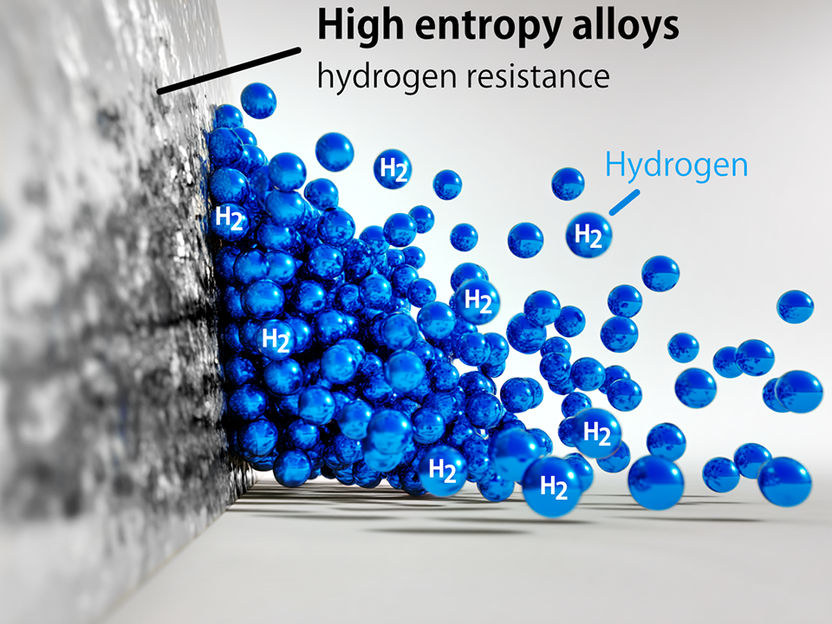
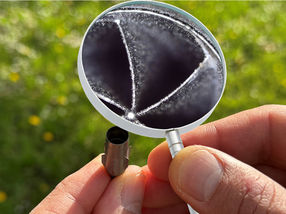
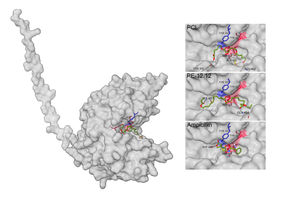
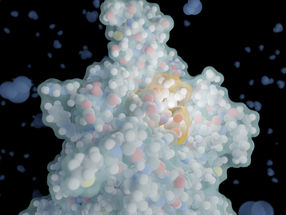
The Cantor alloy showed variable behaviour in the presence of hydrogen in relation to the pressure of the environment. In general, the alloy resisted the corrosive hydrogen at standard pressure but formed hydrides out of the hydrogen gas under high pressures.
Illustration: Konstantin Glazyrin, DESY
An international team of scientists, led by researchers from Ruhr University Bochum (RUB) and DESY, has used several world-leading experimental facilities, including PETRA III, and state-of-the-art theoretical calculations to examine a class of materials called high-entropy alloys – mixtures of multiple metals that result in corrosion-resistant, sturdy solids – and how they behave in a strong hydrogen atmosphere under pressure. Using X-ray and neutron studies, the team could examine the complex behaviour of this relatively new material class of materials with atmospheric hydrogen gas. Their findings are published in Nature Communications.
The team, led by Kirill Yusenko of RUB, investigated a compound called the high-entropy Cantor alloy. Unlike most other metal alloys, which comprise up to four elemental metals with trace amounts of various others, high-entropy alloys comprise near equal amounts of five or more different metal elements. First synthesized in 2004 by a UK-based research group led by materials scientist Brian Cantor, the Cantor alloy is characterized by equivalent molar ratios of the metal elements cobalt, chromium, iron, nickel, and manganese. The resulting solid can be a direct competitor to many conventional alloys used in modern industry and consumer products due to, among other aspects, its excellent corrosion resistance and mechanical properties.
Using X-ray–scattering at PETRA III in Germany and ESRF in France, as well as neutron-scattering studies at J-PARC in Japan, the research team found that when the Cantor alloy is exposed to hydrogen gas and placed under extreme pressure and heat, it emerges with hydrides – dissociated hydrogen atoms – bound to the alloy’s structure. However, the same study shows that under pressures and temperatures typical for industrial and consumer products, the Cantor alloy does not absorb the hydrogen, strongly counteracting corrosion.
“This paper adds important pieces to the puzzle regarding Cantor alloy resistance to hydrogen absorption, which is one of the major factors in hydrogen corrosion,” says Konstantin Glazyrin, a scientist at PETRA III’s P02.2 extreme conditions beamline and first author on the publication. “We hope that our novel methodological approach as well as our results will boost material research and inspire real-world applications in the field of hydrogen economy.”
However, the presence of the hydrides potentially provides an interesting wrinkle in the story. “The high-entropy alloys and their hydrides still represent an enigma,” says Kirill Yusenko. “On the one hand, some of them may enable sufficient absorption to be usable as a fuel cell medium. In the case of Cantor alloy, we observe that corrosion resistance and high hydrogen absorption are incompatible with the requirements of fuel cells, which are expected to store significant amounts of hydrogen. On the other hand, the Cantor alloy has properties that provide the resistance required for hydrogen storage in a broader context, in particular for its containment and delivery in various complex and demanding environments, such as reusable rocket stages and car engines.”
As a next step, the team will continue exploring other high-entropy systems comprising different materials to investigate differences in their behaviour under pressure and in the presence of hydrogen. “High-entropy systems are gaining increasing attention,” says Fritz Körmann of RUB, another co-author on the paper. “They are important for fundamental science, but also for their diverse applications, which may help shape a technologically advanced yet sustainable future.”
Original publication
Konstantin Glazyrin, Kristina Spektor, Maxim Bykov, Paulo H. B. Carvalho, Weiwei Dong, Fritz Körmann, Asami Sano-Furukawa, Takanori Hattori, Doreen C. Beyer, Martin Sahlberg, Yuji Ikeda, Ji Hun Yu, Yang Sangsun, Jai-Sung Lee, Shrikant Bhat, Michael Hanfland, Blazej Grabowski, Sergiy Divinski, Kirill V. Yusenko; "Synthesis of high-entropy hydride from the cantor alloy (fcc–CoCrFeNiMn) at extreme conditions"; Nature Communications, Volume 17, 2026-3-17


Other news from the department science