German plastics recycling on the brink of collapse
Six proposals to save the industry
Advertisement


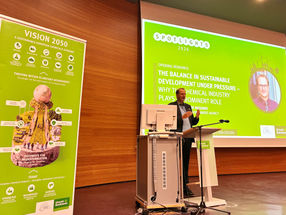
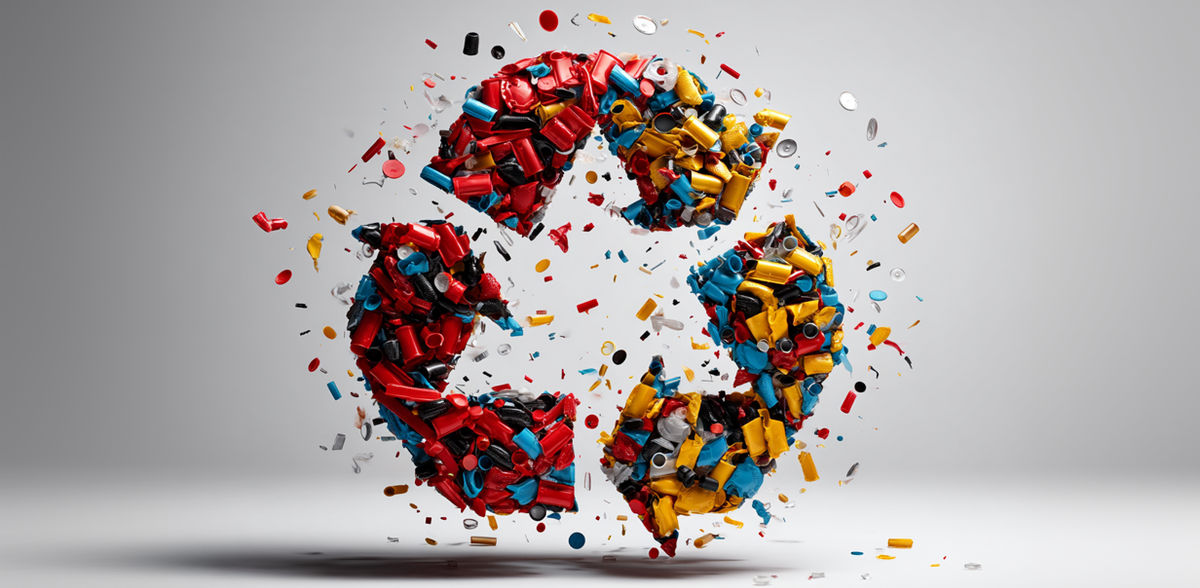
The plastics recycling industry, which is immensely important for climate and resource protection as well as independence from fossil fuel imports, urgently needs new impetus throughout Germany to become more competitive. This is the conclusion of a study conducted by the Wuppertal Institute on behalf of the German Federal Environmental Foundation (DBU). The current situation is dramatic, according to the research institute in a position paper presented at the IFAT environmental technology trade fair in Munich, which proposes six solutions to save the industry, including Promotion of circular business models, global plastic levy and public sector procurements for additional demand for recyclates, i.e. recycled plastics.
Bonde: We must not squander this trump card
"A comprehensive circular economy should be the compass for plastics," says DBU Secretary General Alexander Bonde. "The strained recyclate market must be supported with innovations - otherwise there is a risk of losing industry and ideas." Promising technologies in Germany must be established on the market. "We must not squander this trump card," said Bonde. The plastics value chain is largely organized in a linear fashion, and plastics production is primarily based on fossil oil and generates enormous amounts of waste. What is needed, however, is "a move away from the linear pattern of 'take-make-waste', i.e. the extraction, use and waste of raw materials. Sustainable action and economic activity only works in a circular economy - from product design and waste avoidance to reusing, sharing, repairing and recycling," said Bonde.
EU packaging regulation PPWR: upheaval for the entire plastics industry
In just a few months, on August 12, 2026, the plastics industry in Europe will be facing a major upheaval: on that day, the new European Union (EU)Packaging and Packaging Waste Regulation (PPWR), which came into force on February 11, 2025, will take effect. The PPWR is intended to reduce packaging consumption, improve recyclability and promote a circular economy, including minimum quotas for recyclates: from January 1, 2030, this will be 30% for contact-sensitive packaging with PET as the main component, and from 2040 as much as 50% in the same category. Single-use plastic drinks bottles must contain 30% recyclates from 2030, and as much as 65% from 2040. According to the EU, the PPWR should increase the demand for recyclate as a secondary raw material - and thus reduce the need for fossil raw materials, minimize greenhouse gas emissions and improve the recyclability of plastics. What sounds plausible at first glance, however, has several catches, as Prof. Dr. Henning Wilts, the author of the position paper, explains. Apart from the EU regulations, which he believes are "too late", the head of the Circular Economy Department at the Wuppertal Institute points to an acute predicament in the industry: the weak demand for recyclates - even with the rising oil price, which makes petroleum-based new plastic products more expensive and should therefore actually give products made from cheaper recyclates a competitive advantage. As a result, more and more plastics recycling companies are giving up due to a lack of investment security. According to Wilts, know-how is being lost. There is a threat of a recyclate gap, which could lead to "having to resort to recyclate imports from abroad due to the PPWR requirements".
Proposals from the Wuppertal Institute: plastic levy and reducing the variety of plastic materials
According to Wilts, the position paper aims to counteract this. The low demand for recyclate is partly due to the supposedly negative image of recycled plastic and partly due to special plastic requirements. The advantage of plastic diversity, for example in terms of shape, color and strength, is a disadvantage for the recycling industry: "There are tens of thousands of plastic variants that prevent theoretically conceivable recycling processes in practice," says the 48-year-old department head. Nationwide, the proportion of recyclate is less than 20 percent, "although innovative technologies would enable a significantly higher proportion". The six proposals in the position paper are intended to help the plastics industry out of its dilemma between the minimum recyclate quota and increasingly dwindling recycling capacity due to low demand for recyclates. Author Wilts advises, for example, to considerably reduce the "sometimes excessive variety of materials" - without jeopardizing the functionality of the material. Material diversity and minimum recyclate quotas are also part of the German government's "National Circular Economy Strategy" (NKWS), which is currently under discussion. Wilts continues: Public sector procurement offers "a central lever" for additional demand for plastic recyclates. A plastic levy would also make sense "to integrate the environmental costs of extracting and processing crude oil into plastic". However, this should be implemented in a globally coordinated manner and should not lead to "the use of ecologically disadvantageous alternative materials". Another point in the position paper: plastic as a service - a concept in which revenue is not generated through sales, but through the circular use of plastic. According to Wilts, Rolls-Royce, for example, charges fees for the use of aircraft turbines instead of selling them.
Around 431 million tons of plastic produced worldwide every year - from bathrooms to baking paper
Plastic is omnipresent - from bathrooms to baking paper, from clothing to computers and cosmetics, not forgetting the electronics and mobility sectors. According to the Plastics Europe association, around 431 million tons of plastic are produced worldwide every year, more than a third of which is produced in China, 55 million tons in Europe and 13 million tons in Germany. The consequences of waste: Plastic particles even on the Himalayas and more than 150 million tons of plastic waste in the oceans. Wilts estimates "around 16 million tons of plastic waste in Europe and six million tons in Germany". Nationwide, "just under half" is recycled, in Europe considerably less. According to Wilts, the global plastics recycling market is worth the equivalent of around 51.4 billion euros. The source materials for recyclates are currently products with specifications for plastic recycling, primarily packaging, vehicles, electronic goods and certain commercial waste. The plastics recycling market in Germany is predominantly medium-sized. "Almost everything" can be recycled, even "very specialized processing" using AI-based sorting. However, due to a lack of reliable demand, the state of the art is that "these innovations do not get beyond the university laboratories".
Note: This article has been translated using a computer system without human intervention. LUMITOS offers these automatic translations to present a wider range of current news. Since this article has been translated with automatic translation, it is possible that it contains errors in vocabulary, syntax or grammar. The original article in German can be found here.


Other news from the department business & finance