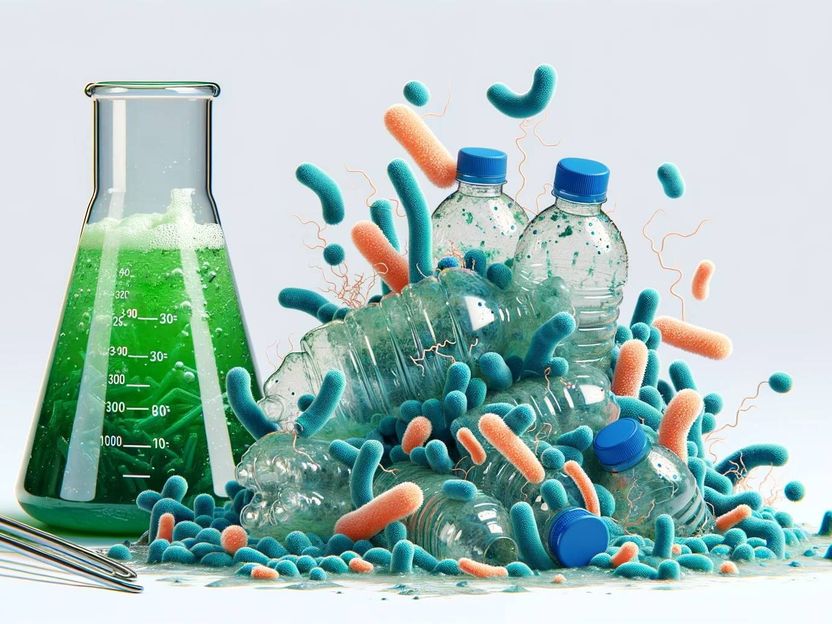
Enzymes as recycling heroes: Researches sustainable plastic recycling
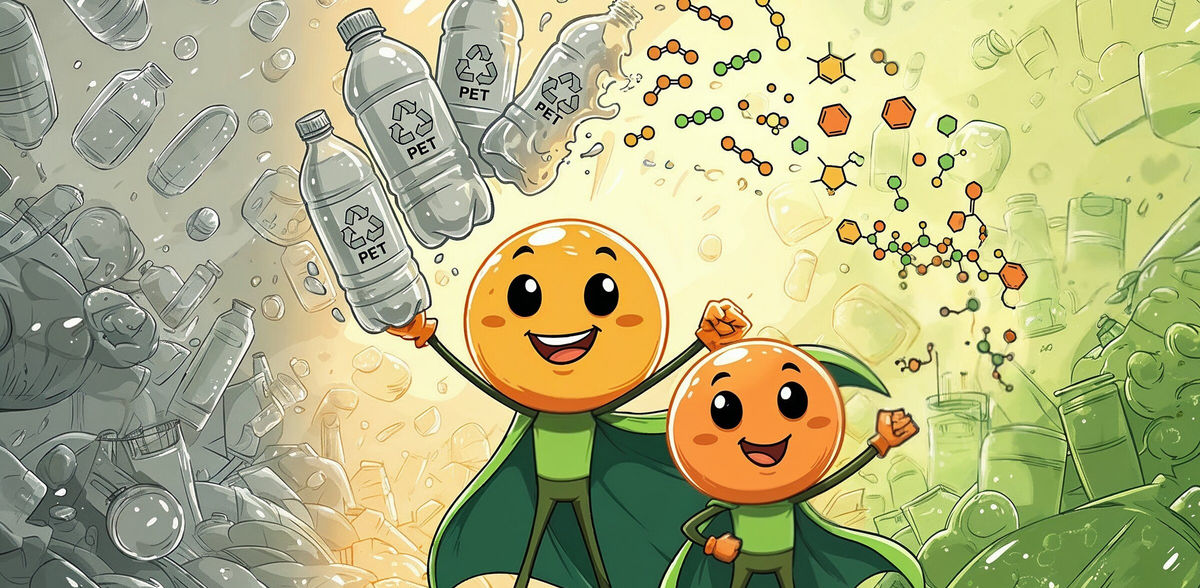
Enzymatic PET recycling becoming suitable for industrial use
Advertisement


Researchers at Leipzig University have taken another important step forward in plastic recycling research: in a study recently published in the journal Nature Communications, they specifically optimised the naturally occurring enzyme PHL7 to enable the efficient and stable breakdown of polyethylene terephthalate (PET) – a plastic widely used in everyday products – under industrially relevant conditions. The research, which builds on decades of expertise at Leipzig University, addresses a key challenge in the circular economy – the sustainable recycling of plastics. Using new bioinformatics approaches and interdisciplinary methods, Dr Georg Künze (Faculty of Medicine) and Dr Christian Sonnendecker (Faculty of Chemistry), together with other Leipzig University researchers, have paved the way for a practical, environmentally friendly recycling technology.
The enzyme PHL7, first described in 2021 by Sonnendecker after being isolated from a compost sample from Leipzig’s Südfriedhof cemetery, is considered one of the few naturally occurring hyperactive PET-degrading enzymes. Until now, however, it had been too unstable and insufficiently active for technical applications – particularly under real industrial conditions. The new study overcomes these obstacles: “Using bioinformatics predictions, we introduced targeted mutations into the amino acid sequence, resulting in significantly improved variants. These variants exhibit greater stability, higher activity and reduced dependence on salt concentrations – a decisive advantage, as the enzyme can now also function in ordinary tap water,” explains Künze.
For the experimental work carried out between summer 2022 and mid-2025, the research group led by Künze and Sonnendecker employed a wide range of modern methods: X-ray crystallography revealed the three-dimensional structure, impedance spectroscopy provided real-time data on the progress of the reaction, and molecular dynamics simulations helped decipher the enzymatic degradation process at molecular level. The enzyme variants were tested in bioreactors under conditions closely resembling those used in industry – with promising results. The findings have already formed the basis of a patent application.
“The PHL7 variants we have developed are now genuine candidates for industrial application,” says Sonnendecker. ESTER-Biotech, a start-up founded in Leipzig in 2025 as a spin-off from Leipzig University, is already planning to transfer the technology to a pilot plant. In the long term, enzymatic recycling could help make the plastics economy more circular and sustainable. The project is not yet complete: further optimisation using artificial intelligence is planned, along with the development of enzymes for other biodegradable plastics such as PLA and PBS. Whether the technology proves commercially viable will become clear over the coming years and will depend not only on technical advances, but also on economic factors.
More than 20 years ago, Professor Wolfgang Zimmermann at Leipzig University was already conducting pioneering research into plastic-degrading enzymes, with the aim of recycling plastics such as PET under environmentally friendly conditions. The current study brings the field one step closer to achieving that goal.
Original publication


Other news from the department science






Most read news







More news from our other portals


















Something is happening in the chemical industry ...
This is what true pioneering spirit looks like: Plenty of innovative start-ups are bringing fresh ideas, lifeblood and entrepreneurial spirit to change tomorrow's world for the better. Immerse yourself in the world of these young companies and take the opportunity to get in touch with the founders.
See the theme worlds for related content
Topic World Spectroscopy
Investigation with spectroscopy gives us unique insights into the composition and structure of materials. From UV-Vis spectroscopy to infrared and Raman spectroscopy to fluorescence and atomic absorption spectroscopy, spectroscopy offers us a wide range of analytical techniques to precisely characterize substances. Immerse yourself in the fascinating world of spectroscopy!

Topic World Spectroscopy
Investigation with spectroscopy gives us unique insights into the composition and structure of materials. From UV-Vis spectroscopy to infrared and Raman spectroscopy to fluorescence and atomic absorption spectroscopy, spectroscopy offers us a wide range of analytical techniques to precisely characterize substances. Immerse yourself in the fascinating world of spectroscopy!