Controlling chemical reactions more efficiently and sustainably
New synthesis method enables targeted modifications to hard-to-reach sites on molecules
Advertisement


A team at the University of Vienna, led by chemist Nuno Maulide, has developed a groundbreaking method for controlling chemical reactions in a more targeted and efficient manner. At the heart of this is the concept of 'cation sampling': specially selected groups (ketones), in a sense, function as molecular signposts for randomly migrating positive charges, enabling reactions to take place at sites on a molecule that were previously difficult to access. The method allows carbon-hydrogen bonds (C–H bonds) to be specifically modified. The study was published in the Journal of the American Chemical Society.
Organic molecules form the basis of almost all biological processes. They consist mainly of carbon and hydrogen – and hydrogen atoms in particular are very common in such molecules. "If you want to alter the properties of a molecule, you often have to specifically replace individual hydrogen atoms," explains Philipp Spieß, a former PhD student in the Maulide group and one of the study’s lead authors.
The precise modification of C–H bonds is therefore considered one of the key challenges of modern synthetic chemistry. It plays an important role in the development of new drugs, functional materials and more efficient chemical processes.
Scanning of positive charges enables precise control
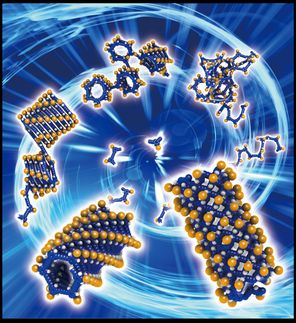
"Imagine a molecule as a string of beads: the first few beads are easy to count, but the further back you go, the harder it becomes," says Miloš Vavrík, a PhD student in the Maulide group and co-first author of the paper. "It’s similar with atoms along a molecular chain: nearby positions are easy to reach, distant ones much harder."
This is precisely where the new method comes in. It uses positive charges that randomly travel along the molecular chain. "The undirected charges are scanned by a specific functional group contained in the molecule and are selected with high precision," explains Nuno Maulide. "This means that our method intervenes precisely at the moment the desired position is reached." This enables reactions at sites that were previously accessible only with great effort, or not at all.
More efficient and sustainable synthetic chemistry
"Our work shows that cations do not simply behave in an uncontrolled manner, but can be specifically controlled," says Maulide. What is particularly remarkable is that the researchers can determine where on the molecule the reaction takes place –by simply controlling the reaction temperature.
"To stick with the image of the string of beads: we can specifically choose which bead is altered," says Maulide. This opens up new possibilities for the production of complex molecules, ranging from active pharmaceutical ingredients to functional materials.
The method also does not require complex transition-metal catalysts, which are often needed in comparable processes. In the long term, this could help make chemical syntheses more efficient and sustainable.
A new method with enormous potential
The results presented stem directly from Maulide’s C-HANCE research project, which has been awarded an ERC Advanced Grant by the EU (the first Advanced Grant in the field of chemistry for the University of Vienna).
"The method is still in its infancy," says Maulide. "But it opens up a new way of precisely controlling chemical reactions using migrating charges. There is enormous potential in this."
Original publication



Other news from the department science

















Most read news









More news from our other portals


























See the theme worlds for related content
Topic world Synthesis
Chemical synthesis is at the heart of modern chemistry and enables the targeted production of molecules with specific properties. By combining starting materials in defined reaction conditions, chemists can create a wide range of compounds, from simple molecules to complex active ingredients.

Topic world Synthesis
Chemical synthesis is at the heart of modern chemistry and enables the targeted production of molecules with specific properties. By combining starting materials in defined reaction conditions, chemists can create a wide range of compounds, from simple molecules to complex active ingredients.