A Solution to Alkene Alkylation
Max Planck Chemists Unlock a Long-Standing Challenge in Molecular Synthesis
Advertisement


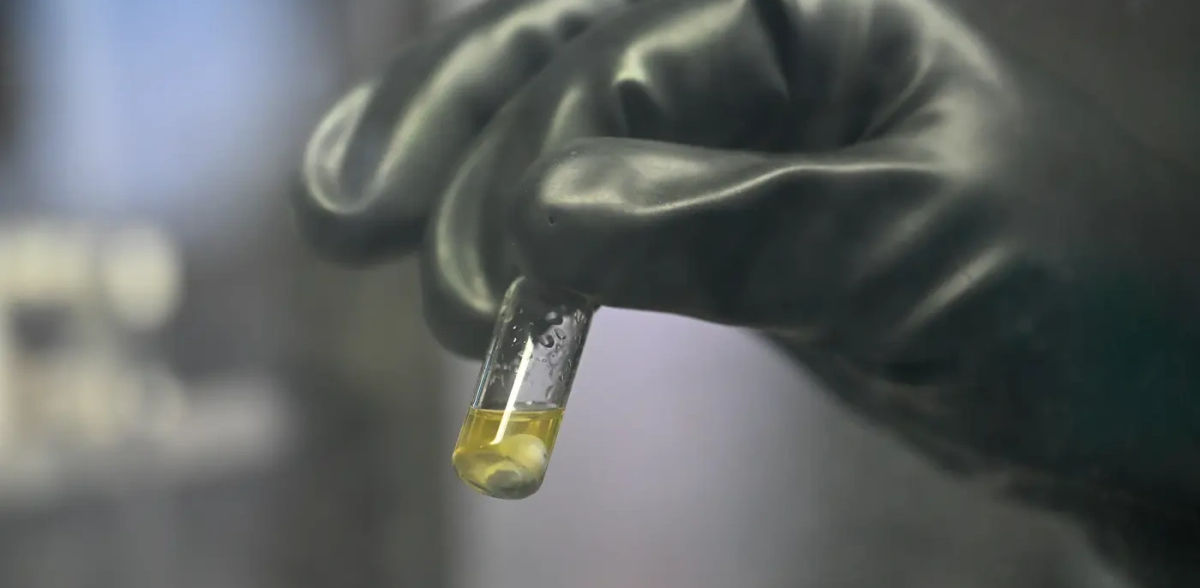
Chemists at the Max-Planck-Institut für Kohlenforschung have solved a decades-old synthetic puzzle, developing a practical, two-step method for the alkylation of alkenes via thianthrenation. The breakthrough, published today in the flagship journal Nature, simplifies the synthesis of complex molecules, offering potential applications in drug discovery, agrochemicals, and materials science.
"In high school chemistry, we learn about the Friedel-Crafts alkylation of arenes," explains Triptesh Kumar Roy, the Ph.D. student from the Ritter group involved in the study. "Although alkenes have a similar C–H bond dissociation energy to arenes, there has been no general protocol for their C–H alkylation, as alkenes prefer addition reactions over substitution. Our method provides access to substituted alkenes from simple parent alkenes, a transformation that has traditionally been difficult to achieve."
The research team, led by Prof. Dr. Tobias Ritter, addressed this limitation by utilizing a polar decarboxylative strategy. The protocol uses bench-stable carboxylic acids as the alkyl source. By converting these acids into redox-active esters, the researchers generated persistent alkylzinc intermediates. When combined with alkenyl thianthrenium salts, a specialty of the Ritter lab, the method enables controlled, regio- and diastereoselective carbon-carbon bond formation.
"To overcome previous limitations, we designed a polar decarboxylative cross-coupling strategy that operates differently than established radical pathways," said Prof. Dr. Tobias Ritter, Director at the Max-Planck-Institut für Kohlenforschung. "Because the starting materials are commercially abundant, this provides synthetic chemists with a versatile, practical tool to test new molecular combinations."
This approach accommodates a broad range of alkene substitution patterns, including internal, cyclic, and trisubstituted substrates that are often difficult to functionalize using existing methods. "By shifting from a transient radical pathway to a controlled polar manifold, the group has established a complementary retrosynthetic approach for alkene functionalization," Ritter added.
The team expects this catalytic strategy to prove useful in both academic labs and the pharmaceutical industry for the development of new functional molecules.
Original publication
Roy, T.K., Tamborini, F.M., Petzold, R. et al. Decarboxylative alkylation of alkenes. Nature (2026)



Other news from the department science















Most read news








More news from our other portals






















See the theme worlds for related content
Topic world Synthesis
Chemical synthesis is at the heart of modern chemistry and enables the targeted production of molecules with specific properties. By combining starting materials in defined reaction conditions, chemists can create a wide range of compounds, from simple molecules to complex active ingredients.

Topic world Synthesis
Chemical synthesis is at the heart of modern chemistry and enables the targeted production of molecules with specific properties. By combining starting materials in defined reaction conditions, chemists can create a wide range of compounds, from simple molecules to complex active ingredients.