Nanofiltration: effectively removing glyphosate from water
Advertisement


Membranes with nanometer-sized pores can filter the herbicide glyphosate and its degradation product AMPA from water. How well this works depends not only on the size and charge of the molecules, but also on their hydration: the thicker the water shell, the more difficult it is for them to pass through the membrane. Researchers at the Karlsruhe Institute of Technology (KIT) have discovered this. Their findings will help to further improve nanofiltration in order to supply people around the world with clean water. Results published in Nature Communications. (DOI: 10.1038/s41467-026-71492-y)
Water is essential for all life - contamination harms humans and the environment. Herbicides used in agriculture to control weeds pose a particular challenge. The most widely used herbicide in the world is glyphosate. Experts differ in their assessment of its use, as studies indicate possible risks such as a carcinogenic effect in humans, nerve damage and effects on biodiversity. Glyphosate can enter the water cycle after use in gardens or agriculture. Efficient treatment technologies are needed to protect water resources.
Membranes allow water to flow through and retain pollutants
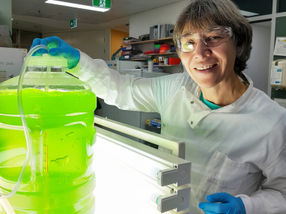
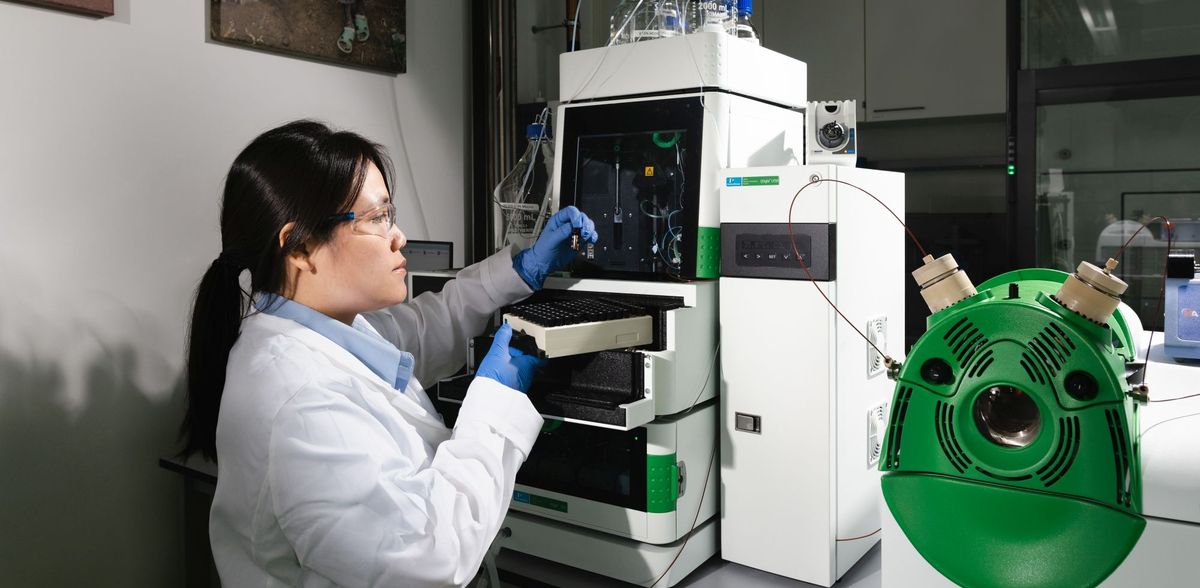
Researchers from the Institute for Advanced Membrane Technology (IAMT) at KIT are working on innovative membrane materials that allow water to pass through and retain pollutants. In a new study, they have teamed up with researchers from Ruhr University Bochum, the University of South Bohemia in České Budějovice in the Czech Republic and the University of Lodz in Poland to investigate how glyphosate and aminomethylphosphonic acid (AMPA) can be removed by nanofiltration membranes. AMPA is mainly formed in the soil as a degradation product of glyphosate. It has similar chemical properties, but is retained for longer.
Nanofiltration is a pressure-driven process in which the pores of the membranes measure just a few nanometers. "Our investigations show that the removal of pollutants such as glyphosate depends not only on the size of the molecules and their charge, but also strongly on the water environment," says Professor Andrea Iris Schäfer from KIT's IAMT and corresponding author of the study. "This finding helps us to further improve nanofiltration - and thus supply people around the world with clean, safe water."
Nanofiltration membranes retain pollutants in various ways: Firstly, they function like a sieve. Molecules that are larger than the pores cannot pass through. Secondly, many membranes carry electrical charges and repel ions with the same charge. Thirdly, molecules in water are often surrounded by a shell of attached water molecules. This hydration influences how large the molecules appear in the water and how difficult it is for them to pass through the membrane.
Higher pH values are associated with greater hydration of the molecules
"We were able to show that the pH value of the aqueous solution and the pressure during nanofiltration have a decisive influence on the removal of glyphosate and AMPA," says Phuong Bich Trinh, PhD student at the IAMT. Depending on the pH value, i.e. how acidic or basic the solution is, the molecules can be charged differently. At higher pH values, charge exclusion becomes more important. This also increases the hydration of the molecules, making it easier to remove glyphosate and AMPA from the water. However, higher pressure can lead to the hydration layer being partially destroyed - which in turn makes removal more difficult.
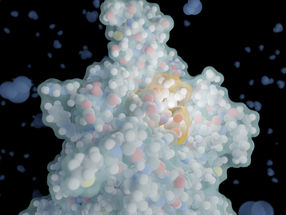
However, the hydration layer of organic substances is difficult to measure. For their investigations, scientists at Ruhr-Universität Bochum used Fourier transform infrared spectroscopy (FTIR spectroscopy), in which infrared light interacts with molecular vibrations. Researchers from the University of South Bohemia in Budweis and the University of Lodz supplemented the experiments with computer-aided molecular dynamics simulations. The study makes a significant contribution to understanding the molecular details of the filtration process and helps to make nanofiltration technologies even more effective and more energy and cost efficient in the future.
Note: This article has been translated using a computer system without human intervention. LUMITOS offers these automatic translations to present a wider range of current news. Since this article has been translated with automatic translation, it is possible that it contains errors in vocabulary, syntax or grammar. The original article in German can be found here.
Original publication


Other news from the department science