New Sustainable Polymer Class Discovered
The new triblock copolymers can encapsulate heat-sensitive enzymes—an approach to breaking down microplastics
Advertisement


Researchers at the University of Bayreuth have discovered a new class of polymers as part of the work carried out within the Collaborative Research Centre (CRC) 1357 Microplastics. These polymers are characterised by biodegradable and recyclable properties and can also be processed in a more sustainable way. The researchers report their findings in the scientific journal Small.
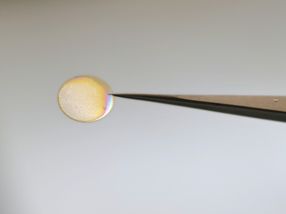
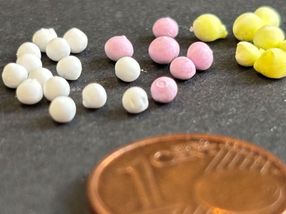
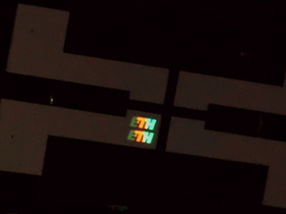
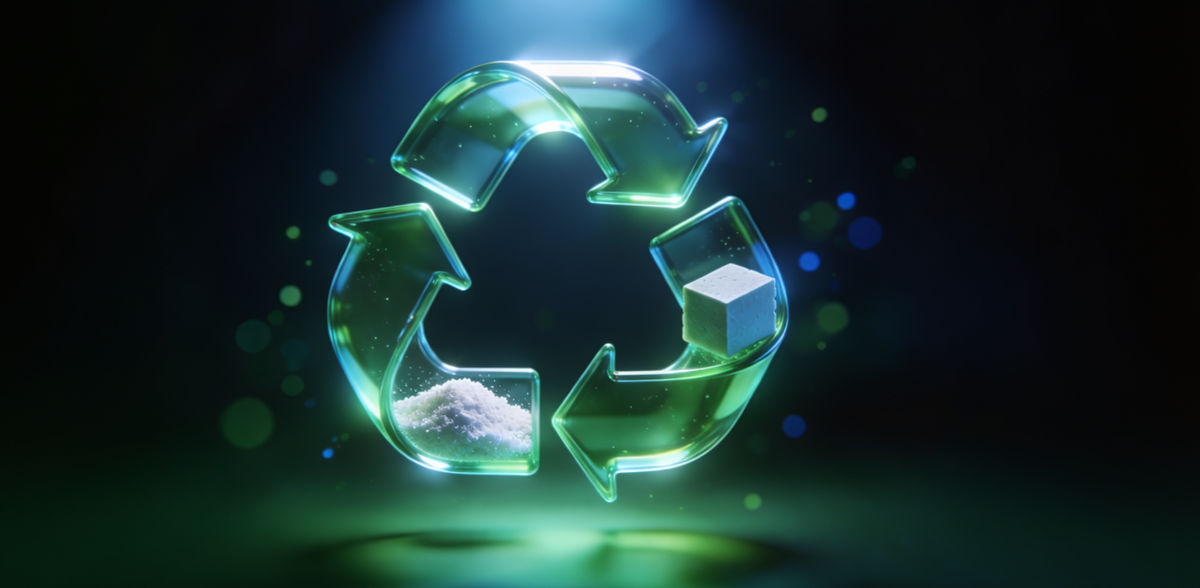
Researchers at the University of Bayreuth have discovered a new class of polymers with a distinctive property profile. These are so-called triblock copolymers of polyesters. Some representatives of this class exhibit baroplastic properties: they can be shaped solely by applying pressure and at low temperatures. In powder form, the baroplastic polymers can be pressed into moulded objects, making them an energy-efficient and sustainable alternative to conventional thermoplastics.
Thanks to the low processing temperatures, it is possible, for example, to encapsulate heat-sensitive enzymes or proteins – something that is not feasible, or only very difficult to achieve, with conventional thermoplastics. This could allow enzymes to be used for technical applications such as wastewater treatment or the degradation of microplastics. However, the application potential of baroplastic polymers goes far beyond this: under industrial composting conditions, the polyesters can decompose within two months, preventing the formation of microplastics and ensuring that no harmful residues remain in the long term.
In addition, the polymers can be recycled both chemically and physically, enabling their reuse in technical applications. They can also be produced in a comparatively straightforward and controlled manner, giving them realistic potential for practical use.
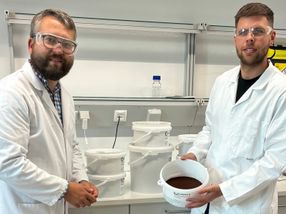
“I was very surprised to find that certain representatives of these block copolymers exhibit baroplastic properties and are also compostable. This opens up many further possibilities for me that go far beyond my previous work. I am pleased to have been able to contribute to this development and, in this way, to help make the world a better place,” says Dr Chengzhang Xu from the Chair of Macromolecular Chemistry and the Bavarian Polymer Institute at the University of Bayreuth.
Prof. Dr Seema Agarwal, Head of the Advanced Sustainable Polymers research group at the University of Bayreuth, emphasises:
“The study highlights the special interaction between the interdisciplinary sub-projects of CRC 1357 Microplastics, which together make such a development possible: ranging from synthesis, characterisation, processing and degradation testing in macromolecular chemistry, through enzymatic activity tests in biochemistry, to ecotoxicological tests in animal ecology.”
Original publication
Chengzhang Xu, Chengwei Yi, Emilia Fulajtar, Anja FRM Ramsperger, Julian Brehm, Christian Laforsch, Holger Schmalz, Sabine Rosenfeldt, Ulrich Mansfeld, Holger Kress, Andreas Möglich, Andreas Greiner, Seema Agarwal; "Compostable and Recyclable Baroplastic Triblock Copolymers Enable Low‐Energy Polymer Processing"; Small, 2026-3-30


Other news from the department science