Frequency combs: the key to the next generation of spectroscopy
A review article demonstrates how dual-comb interferometers can determine resolution solely through temporal coherence.
Advertisement


Atoms and molecules are the fundamental building blocks of matter. spectroscopy identifies and quantifies chemical species through the unique spectral fingerprints they imprint on light. Spectroscopy has many applications, ranging from fundamental tests of quantum electrodynamics and investigations of molecular structure to environmental sensing, biomedical diagnostics and industrial monitoring. A highly promising spectroscopic instrument that has the potential to transform the field has emerged over the years: the dual-comb spectrometer. This relies on the interference of two mode-locked ultrafast lasers that produce broad frequency combs composed of evenly spaced narrow spectral lines. In a tutorial article published in Nature Reviews Methods Primers, Nathalie Picqué and Theodor W. Hänsch review the principles, advances and future opportunities of the rapidly developing field of broadband atomic and molecular science using dual-comb spectroscopy.
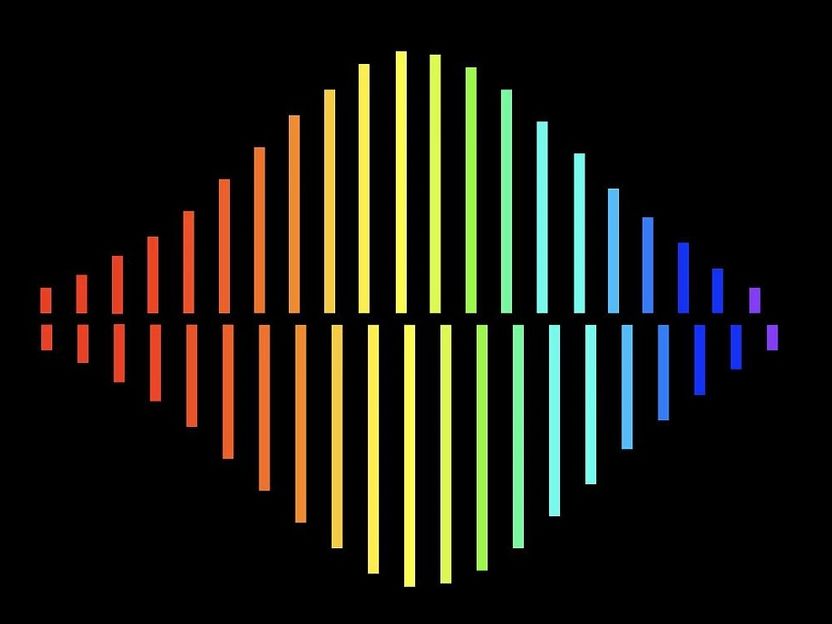
Two frequency combs of slightly different spacing interfere and provide a powerful way of performing spectroscopy at high resolution without moving parts.
MBI | Prof. Dr. Nathalie Picqué
A frequency comb is a spectrum of phase-coherent sharp laser lines that are evenly spaced. Such combs based on femtosecond mode-locked lasers, as pioneered at the Max-Planck Institute of Quantum Optics in the 1990s, have revolutionized measurements of frequency and time. In frequency metrology, a laser comb acts as a ruler in frequency space, that conveniently links microwave and optical frequencies, and/or measures a large separation between two optical frequencies. In the past two decades, frequency combs have found new applications. One of them is dual-comb spectroscopy. Dual-comb spectroscopy addresses the challenge of combining wide spectral coverage with high resolution and accuracy by using two optical frequency combs with slightly different repetition frequencies to map optical spectra directly into the radio-frequency domain. The method relies on time-domain interferometry and avoids mechanical scanning, enabling precise, rapid and broadband measurements.
Over the past two decades, dual-comb spectroscopy has been implemented across the electromagnetic spectrum, from the terahertz to the visible range, with ongoing efforts towards the ultraviolet range. In a primer just published in Nature Reviews Methods Primers, Nathalie Picqué (Max Born Institute and Humboldt University of Berlin) and Theodor W. Hänsch, (Max-Planck Institute of Quantum Optics and Ludwig-Maximilian University of Munich) present the principles, advances and representative applications of dual-comb spectroscopy, as well as its current limitations and emerging directions for further development. They highlight that, since the measurement does not rely on geometrical constraints, the dual-comb interferometer offers a conceptual route towards broadband spectroscopy, with the resolution being determined purely by temporal coherence, and towards highly miniaturised spectrometers.
Original publication


Other news from the department science















Most read news











More news from our other portals





























See the theme worlds for related content
Topic World Spectroscopy
Investigation with spectroscopy gives us unique insights into the composition and structure of materials. From UV-Vis spectroscopy to infrared and Raman spectroscopy to fluorescence and atomic absorption spectroscopy, spectroscopy offers us a wide range of analytical techniques to precisely characterize substances. Immerse yourself in the fascinating world of spectroscopy!

Topic World Spectroscopy
Investigation with spectroscopy gives us unique insights into the composition and structure of materials. From UV-Vis spectroscopy to infrared and Raman spectroscopy to fluorescence and atomic absorption spectroscopy, spectroscopy offers us a wide range of analytical techniques to precisely characterize substances. Immerse yourself in the fascinating world of spectroscopy!