Hormuz blockade puts global supply chains under pressure
Germany mainly affected indirectly
Advertisement


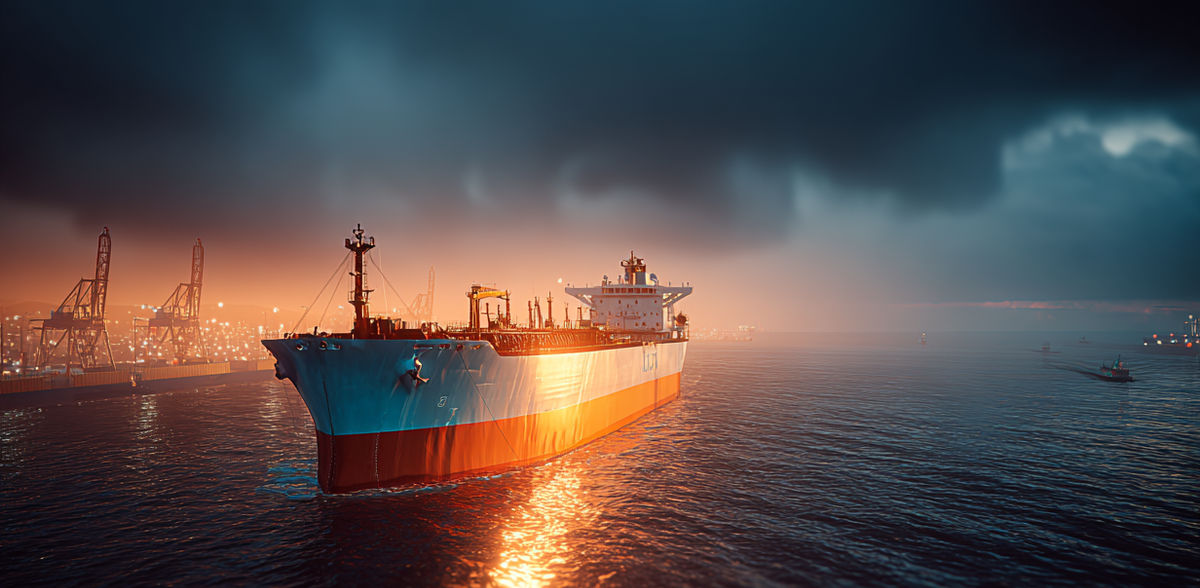
The current blockade of the Strait of Hormuz - one of the most important shipping routes for the global oil trade - is becoming an increasing risk for the global economy. A new study by the Supply Chain Intelligence Institute Austria (ASCII), the Complexity Science Hub (CSH) and TU Delft shows that a prolonged closure of the Strait of Hormuz could have a significant impact on global supply chains and energy markets. The study is the first to systematically examine the extent to which countries and industries worldwide are dependent on the exports of the five Gulf states whose maritime trade runs entirely through Hormuz: Iran, the United Arab Emirates, Qatar, Kuwait and Bahrain. In total, these five states export goods worth around 1.2 trillion US dollars per year, with energy products such as crude oil, liquefied natural gas and refined petroleum products accounting for the largest share of the affected trade flows at around 800 billion US dollars.
"The Strait of Hormuz is one of the most critical bottlenecks in the global economy. A prolonged blockade would not only affect energy markets, but also put pressure on numerous global supply chains," explains study author and ASCII Director Peter Klimek.
Duration of the blockade determines economic consequences
Using the specially developed shipping model TIDES, various scenarios with 10,000 simulated tankers and 1,315 ports worldwide were examined. The result: short blockades of up to two weeks would only have limited economic consequences. However, if a disruption lasts longer than four weeks, delays can build up along global supply chains. A 56-day blockade would significantly increase delays in global tanker traffic, as missed port windows, congestion in ports and postponed schedules would reinforce each other. In the short term, the researchers anticipate price increases and market volatility rather than immediate supply disruptions and supply bottlenecks. Strategic reserves, stocks and alternative suppliers could cushion short-term bottlenecks. However, long-term blockages could lead to persistently high energy prices, rising production costs and a decline in the competitiveness of energy-intensive industries.

"The longer a disruption lasts, the greater the impact of chain reactions in global supply chains. The economic consequences then increase disproportionately," explains Stefan Thurner, author of the study and President of the Complexity Science Hub (CSH).
Global economy heavily dependent on energy exports from the Gulf region
Large Asian economies are the most dependent on exports from the Gulf states. China imports goods worth around 97 billion US dollars annually, followed by India with 74 billion, Japan with 63 billion, South Korea with 30 billion and Thailand with 22 billion US dollars. These countries source large quantities of crude oil, liquefied petroleum gas and refined petroleum products from the region. In addition to energy products, other raw materials also play a role: between 2019 and 2023, around 31% of global urea exports (urea) came from the Gulf region. Together, the five countries surveyed export 8 to 10 % of global fertilizer production worth around USD 13.5 billion annually. Another strategic area is specialty gases for semiconductor production, such as neon, helium and argon. Here, exports from the Gulf states surveyed amount to around 3 billion US dollars per year.
Energy dependency is concentrated in just a few countries across Europe
The analysis shows a differentiated picture for Europe. The EU imports around USD 47 billion a year from the five Hormuz-dependent Gulf states, with the risks being heavily concentrated in just a few countries. At USD 9.8 billion per year, Italy is the largest importer within the EU and purchases large quantities of liquid gas from Qatar worth around USD 4.4 billion and propane worth around USD 3.2 billion. Belgium is also heavily exposed: The country imports around USD 5.8 billion worth of Qatari liquefied gas annually, primarily via the LNG terminal in Zeebrugge, while significant diamond trade flows from the United Arab Emirates pass through Antwerp. The United Kingdom even has the highest exposure in Europe at USD 12.9 billion per year, of which around USD 5.9 billion are gas products from Qatar. Germany and France, on the other hand, are more diversified. Germany imports around USD 5.7 billion and France around USD 8.1 billion from the countries concerned.
Germany: direct dependence low, but vulnerable to rising energy prices
Germany imports around USD 5.7 billion worth of goods from Gulf states every year and is comparatively diversified in terms of both products and supplier countries. The United Arab Emirates account for the largest share at USD 4.2 billion, mainly through the import of ships, yachts and industrial equipment rather than traditional consumer goods. Qatar contributes USD 0.6 billion, particularly through propane and specialty gases, which also play a strategically important role in semiconductor production and industrial processes. Further shares are attributable to Kuwait (USD 0.4 billion) and Iran (USD 0.3 billion), including carpets and pistachios. Overall, the broader diversification and lower dependence on energy imports that are difficult to replace means that Germany is considered more resilient than countries such as Italy or the UK. Nevertheless, there are indirect risks: rising energy prices, particularly for gas, could place a considerable burden on energy-intensive sectors such as the chemical industry in particular.
"Germany's direct dependency is comparatively low - the real vulnerability lies in the indirect effects. Rising energy prices act as a multiplier along the entire value chain and affect energy-intensive industries in particular. This is precisely where the extent to which geopolitical tensions ultimately affect the real economy is decided," says study author and ASCII Director Peter Klimek.
Study calls for rapid de-escalation
The analysis leads to three main conclusions for political decision-makers in Europe: Rapid de-escalation is crucial to keep disruptions in the shipping system short and prevent delays from spreading along global supply chains and triggering major economic consequences. At the same time, the study recommends precautionary planning for longer-lasting disruptions, as the effects can increase disproportionately from around one month onwards and delays along global supply chains can be exacerbated. Finally, clear and transparent communication from authorities also plays an important role in avoiding market uncertainties.
"Short-term disruptions can usually be managed. It becomes critical when a blockade lasts longer - even if this is unlikely from today's perspective - and delays along global supply chains build up. This makes it all the more important to find quick political solutions, prepare for longer crisis scenarios and communicate transparently so that markets are not further destabilized by panic reactions and panic buying," concludes study author and ASCII Director Peter Klimek.
Note: This article has been translated using a computer system without human intervention. LUMITOS offers these automatic translations to present a wider range of current news. Since this article has been translated with automatic translation, it is possible that it contains errors in vocabulary, syntax or grammar. The original article in German can be found here.


Other news from the department business & finance