Custom-fit packaging using 3D printing for sustainable logistics
Paderborn startup Palprint uses recycled PET and receives 125,000 euros in funding from the DBU
Advertisement


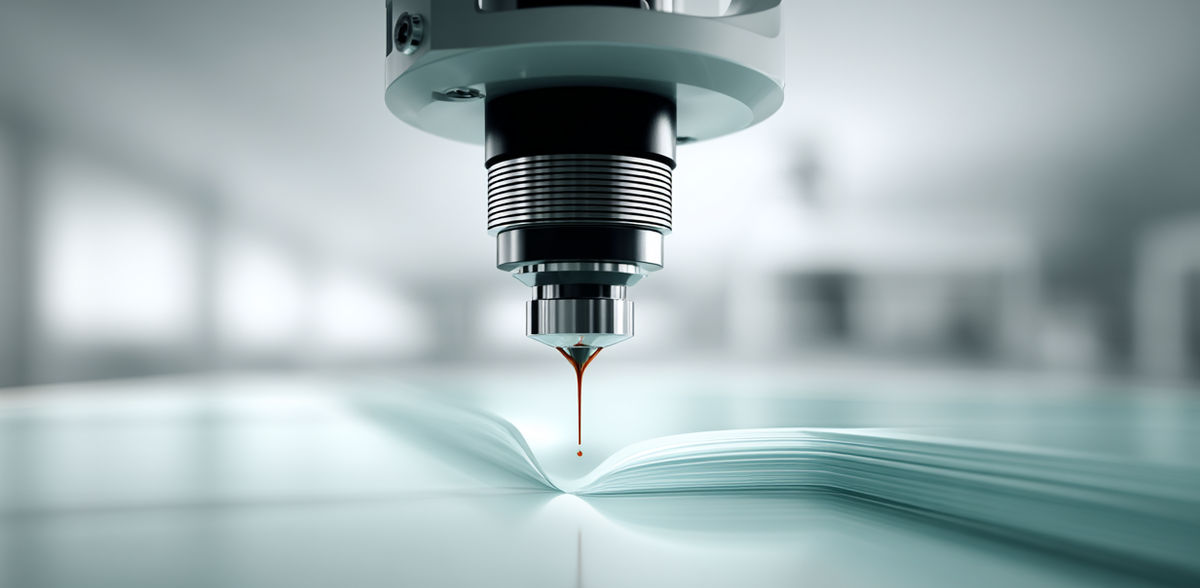
Oversized disposable packaging is still the standard in industrial logistics. The start-up Palprint from Paderborn wants to change this and is developing a system for a sustainable packaging cycle - with custom-fit packaging made from recycled PET using 3D printing. After use, they are almost completely reused as a raw material for new packaging. The German Federal Environmental Foundation (DBU) is funding the start-up with 125,000 euros.
Avoiding oversized packaging and unnecessary waste
For many industries in Germany, well-functioning logistics are the "engine for successful business", says DBU Secretary General Alexander Bonde. "Transport, handling and storage of goods also offer many components for greater sustainability - as well as options for economic optimization," continued Bonde. One such innovative approach is being developed by the start-up Palprint - a spin-off from Garage33, the University of Paderborn's start-up center. The young company is currently focusing its activities on mechanical and plant engineering in order to enable this sector in particular to produce individual packaging using 3D printing. In this process, materials are applied layer by layer in a printer to produce three-dimensional objects. Palprint founders Paul Lindner and Andreas Ribul-Olzer: "We produce packaging in the companies that is precisely tailored to the respective component." The basis is recycled PET - a plastic that is also used for many disposable and reusable bottles. This is intended to solve the following challenge: "Companies often order large quantities of standardized packaging that is not made for the special components in mechanical engineering and is oversized," explain the Palprint founders. "This packaging has to be stored at great expense and ends up in the bin after being used once." By using the 3D method, Palprint aims to significantly minimize such waste.
Palprint supplies software and hardware as a complete system
In addition to producing custom-fit packaging to order, PALPRINT primarily offers a system solution: depending on customer requirements, the start-up supplies 3D printers from partner companies, including its own software and material supply, and makes these available as a complete system. Ribul-Olzer: "With the help of such systems, a company can automatically generate packaging for the machine or spare part to be packaged using 3D data and print it to fit directly on site." The aim is to make operation as simple as possible. Palprint is also working with the Fraunhofer Institute for Manufacturing Engineering and Automation (IPA) and the Fraunhofer Institute for Chemical Technology (ICT) on a variant of 3D printing using PET foam. "Many people think of 3D printing as a slow process. But our foam expands up to 75 percent faster to the desired size with up to 90 percent less weight," says Ribul-Olzer. In this way, the company can also quickly produce large volumes in polystyrene haptics. The Palprint co-founder continues: "The material remains recycled PET. The foam can be melted down again and used for new packaging."
Keeping raw materials in the cycle
Palprint is also aiming to establish a recycling loop: "Once a certain amount of used packaging from our system has been used, we collect the waste with selected partner companies, recycle it and reuse it as a new raw material," explains Lindner. According to the co-founder, the start-up's packaging is "made from almost 100% recycled PET. This simplifies recycling considerably, as no materials need to be separated". This keeps important raw materials in the cycle in the long term and minimizes plastic waste. According to Lindner, the transportation and storage costs are also significantly reduced: "Only the plastic recyclates have to be delivered. These can be transported and stored in a space-saving manner." Reusable packaging and an associated deposit system are also planned. Lindner continues: "All these approaches ensure active environmental protection through recycling management, material savings and waste avoidance - at the same time, the system should be more financially worthwhile for companies than buying and storing more and more new disposable packaging."
Palprint and DBU at the IFAT trade fair in Munich
Palprint is one of five companies sponsored by the DBU that are taking part in the Munich trade fair IFAT (short for International Trade Fair for Wastewater Technology) together with the German Federal Environmental Foundation. The trade fair lasts until May 7. Together with the DBU, Palprint and the companies Zebrafant.ai, Fainin, Polysecure and Cleansort are presenting innovative solutions for a functioning circular economy.
Note: This article has been translated using a computer system without human intervention. LUMITOS offers these automatic translations to present a wider range of current news. Since this article has been translated with automatic translation, it is possible that it contains errors in vocabulary, syntax or grammar. The original article in German can be found here.



Other news from the department business & finance














These products might interest you

Most read news






More news from our other portals



















Something is happening in the chemical industry ...
This is what true pioneering spirit looks like: Plenty of innovative start-ups are bringing fresh ideas, lifeblood and entrepreneurial spirit to change tomorrow's world for the better. Immerse yourself in the world of these young companies and take the opportunity to get in touch with the founders.