Scientists develop a new technique that allows certain objects to be invisible
Advertisement


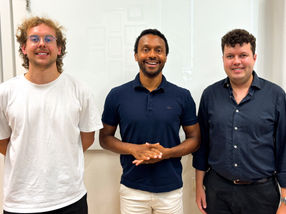
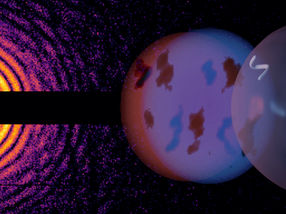
A research group of the Departments of Applied Physics and Electromagnetism of the University of Granada (Spain), directed by Professors Jorge Andrés Portí, Alfonso Salinas and Juan Antonio Morente, have taken a step forward with regard to one of mankind's biggest dreams and challenges, often tackled by fiction writers and film makers: invisibility. Scientists of the UGR have managed, by means of a numerical technique known as Transmission Line Matrix (TLM) Modelling method, to hide an object or make it invisible in a certain frequency, inside an electromagnetic simulator. Such studies are the germ to achieve invisibility to radars and even to the human eye.
This scientific work has been carried out in collaboration with researchers of the Massachusetts Institute of Technology, and has been recently published in two papers in Optics Express. This research work is part of the doctoral thesis carried out by Cedric Blanchard, another researcher of the UGR who is finishing off his education in the United States.
According to the scientists of the University of Granada, the growing interest for electromagnetic invisibility has been partly driven, in the last years, by the existence of powerful computer resources that allow to carry out specific numerical studies of such phenomenon, avoiding the use of commercial software unadjusted to the new research works.
This research work has developed a new condensed TLM node to model meta-materials and has managed to make invisible certain objects in conditions difficultly reachable when using commercial software.
The researchers have proposed a TLM simulation of hiding structures, composed of alternating isotropic layers, imitating an anisotropic frame. They had previously implemented a new technique to simulate meta-materials with the TLM method.
"This new prospect -the authors of the project say- leaves the usual TLM process virtually untouched; specifically, the delivery matrix is exactly the same used in classic environments, which provides a lot of flexibility when it comes to program". This way, this research has proved that it is possible to improve the effectiveness of hiding if the electromagnetic parameters of the frame are judiciously chosen.


Other news from the department science







These products might interest you