Particle analyzers at a glance: products, function and application
Purchase particle analyzers the easy way: Discover all products and suppliers for the chemical industry. Find out product prices easily by requesting a quote. Tip: Select a quick entry below to view selected particle analyzers by supplier or application.

Particle analyzers at a glance: products, function and application
Advertisement


Particle analyzers at a glance

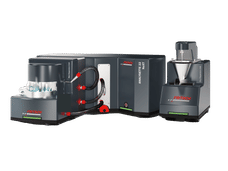
Choose particle analyzers by product category
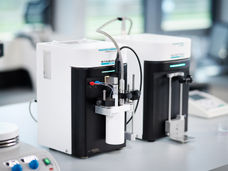
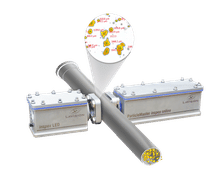
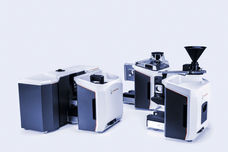








Select particle analyzers for your application

Buy particle analyzers for the lab or the production process
Related product categories
Find more particle analyzers content in our topic worlds
Topic World Particle Analysis
Particle analysis methods allow us to study tiny particles in various materials and reveal their properties. Whether in environmental monitoring, nanotechnology or the pharmaceutical industry, particle analysis gives us a glimpse into a hidden world where we can decipher the composition, size and shape of particles. Experience the fascinating world of particle analysis!

Topic World Particle Analysis
Particle analysis methods allow us to study tiny particles in various materials and reveal their properties. Whether in environmental monitoring, nanotechnology or the pharmaceutical industry, particle analysis gives us a glimpse into a hidden world where we can decipher the composition, size and shape of particles. Experience the fascinating world of particle analysis!
Particle Analyzer Guide: Everything You Need to Know, Explained Clearly
Particle Analyzers: Definition, Function, History
Particle analyzers are measuring instruments that capture the physical properties of individual particles or entire particle populations in order to derive size distributions, shape parameters, or stability values. They are used wherever the particle properties of a material have a direct impact on product quality, process control, or application performance – from milling and crystallization to the formulation of dispersions.
The instruments listed on this page use different measurement principles. In laser diffraction, a particle sample is illuminated with laser light; the particle size distribution is calculated from the diffraction angle of the scattered light intensity. Smaller particles produce larger scattering angles than larger particles. In dynamic image analysis, a high-speed camera optically captures individual particles and determines size and shape directly from the image data. Another principle is dynamic light scattering, which is used in particular in the nanometer range.
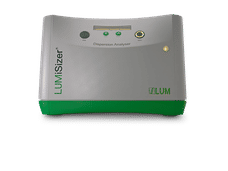
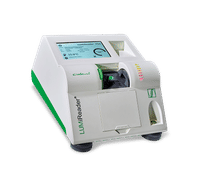
In addition to these optical methods, there are systems based on X-ray technology, such as the LUMiReader X-Ray from LUM, which characterizes highly concentrated nano- and microdispersions without prior dilution. A modern particle analyzer system typically consists of a dispersing unit (to separate particles for wet or dry measurement), a measurement or detection unit (laser, camera, or sensor), and evaluation software that converts the raw data into a particle size distribution or shape value. Dispersion plays a decisive role in the reproducibility of the measurement, which is why manufacturers such as Fritsch specifically rely on low-wear, low-maintenance dispersing units in the ANALYSETTE 22 NeXT, enabling measurement times of typically under one minute.
What Types of Particle Analyzers Are There?
| Type | Measurement Principle | Typical Application | Example Products |
|---|---|---|---|
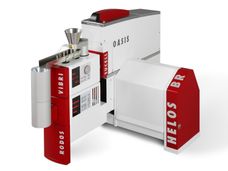
| Particle size analyzers | Laser diffraction | Quality control of powders and suspensions | HELOS | RODOS | MYTOS & Co. from Sympatec |
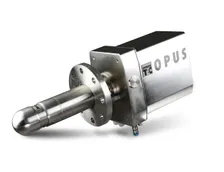
| Granulometers | Laser diffraction, real-time in-process measurement | Process measurement technology, milling, crystallization | OPUS from Sympatec |
| Nanoparticle analyzers | Dynamic light scattering, zeta potential measurement | Colloidal stability, dispersion development | NANOTRAC FLEX and STABINO ZETA Particle Analyzers DUO from Verder Scientific |
| 3D particle analyzers | Dynamic high-speed image analysis | Bulk material characterization, shape analysis | MICROTRAC CAMSIZER X2+ Particle Size & Shape Analyzer from Verder Scientific |
| Online particle analyzers | Continuous optical process monitoring | Automated quality control in production | ParticleMaster inspex from LaVision |
Particle size analyzers form the largest group on this page. Instruments such as the HELOS | RODOS | MYTOS & Co. system from Sympatec cover a measurement range from under 0.1 µm to 8,750 µm and use up to eight discrete measurement range modules to do so.
Granulometers such as the OPUS from Sympatec are specifically designed for real-time measurement in process environments and, according to the product description, also measure in optically dense liquids with a solids content of up to 70%, without the need to dilute the sample.
Nanoparticle analyzers capture particles in the nanometer range and frequently also provide information on particle surface charge, as in the combined size and zeta potential system from Verder Scientific.
3D particle analyzers such as the MICROTRAC CAMSIZER X2+ rely on dynamic image analysis with high sample throughput to precisely capture not only size but also the shape of bulk materials.
Online particle analyzers are designed for continuous process monitoring, such as the ParticleMaster inspex from LaVision for automated quality control directly in particle production.
Particle Analyzers Compared: Why Not Classical Methods?
A particle analyzer is an automated measurement system that differs significantly from classical, manual methods of particle characterization in terms of speed and reproducibility. Classical methods such as sieve analysis or manual light microscopy also provide information on particle size, but reach their limits with fine or irregularly shaped particles.
Sieve analysis mechanically separates particles by mesh size and is suitable mainly for coarser fractions; however, it provides no information on particle shape and is practically no longer applicable to particles in the micrometer or nanometer range. Laser diffraction-based systems such as the HELOS system from Sympatec, by contrast, cover a range from under 0.1 µm to 8,750 µm in a single measurement series.
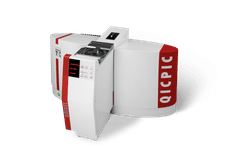
Manual microscopy allows visual assessment of individual particles, but is time-consuming for the statistically relevant evaluation of large particle populations. Dynamic image analysis systems such as the QICPIC | PICTOS & Co. from Sympatec automate this process using a 4-megapixel high-speed camera, evaluating a statistically robust number of particles per measurement.
A further difference lies in sample preparation: while many classical methods require dilution or drying of the sample, systems such as the OPUS from Sympatec or the LUMiReader X-Ray from LUM are designed to measure samples with high solids content or highly concentrated dispersions without dilution. This reduces sources of error arising from sample preparation itself and enables measurements closer to real process conditions.
In Which Fields Are Particle Analyzers Used?
Particle analyzers are measuring instruments used in almost all industries where particle properties determine product quality or process stability. The instruments listed on this page cover a broad range of applications.
Battery development and materials research: According to the product description, the MultiScan MS 20 from DataPhysics is used for the quantitative analysis of electrode slurries for lithium-ion batteries, with measurements in the temperature range from -10 °C to 80 °C. The LUMiReader X-Ray from LUM is also designed for applications in battery development.
Building materials analysis: The ANALYSETTE 22 NeXT from Fritsch is used, among other things, in building materials analysis and covers a measurement range of 0.01 to 3,800 µm.
Additive manufacturing and academic research: The MICROTRAC SYNC from Verder Scientific combines laser diffraction and dynamic image analysis in a single measurement and is used in these fields.
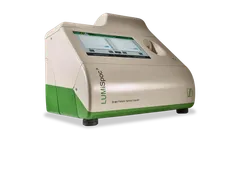
Formulation development and dispersion analysis: Systems such as the NANOTRAC FLEX and STABINO ZETA Particle Analyzers DUO from Verder Scientific or the LUMiSpoc from LUM support the early detection of instabilities in suspensions and emulsions.
Typical practical application examples include:
- Monitoring grinding fineness during powder comminution
- Monitoring crystallization processes in process environments
- Assessing the colloidal stability of formulations prior to market launch
- Quality assurance of bulk materials through combined size and shape analysis
For users who require real-time measurement during ongoing processes, the OPUS from Sympatec is one option listed on this page. Anyone wishing to combine particle shape and size in a single measurement will find a suitable system in the MICROTRAC SYNC from Verder Scientific. For stability analysis of dispersions, the MultiScan MS 20 from DataPhysics is represented among the listed products.
Technology and Innovations
Particle analytics is a field in which individual measurement principles are increasingly being combined in order to capture multiple particle properties in a single measurement. One example of this is the MICROTRAC SYNC from Verder Scientific, which, according to the product description, performs laser diffraction and dynamic image analysis synchronously on the same sample in the same sample cell using patented technology.
A further development trend is the combination of size and charge measurement in a single system, as implemented by the NANOTRAC FLEX and STABINO ZETA Particle Analyzers DUO from Verder Scientific: size distribution and zeta potential are captured here in a shared workflow, which, according to the manufacturer, facilitates the early detection of dispersion instabilities.
Progress is also being made outside of classical optical methods: the LUMiReader X-Ray from LUM uses X-ray technology to characterize highly concentrated, optically non-transparent pastes and pigments directly – without dilution – while simultaneously determining particle size and sedimentation behavior. For continuous process monitoring, the ParticleMaster inspex from LaVision relies on online characterization, enabling automated quality control directly within the production process instead of analyzing the sample offline in the laboratory.
FAQs
How do I choose the right particle analyzer for my laboratory?
The choice depends on the required measurement range, the type of sample (solid, liquid, dispersion), and whether size, shape, or both need to be measured. For broad measurement ranges, laser diffraction systems such as the HELOS system from Sympatec are suitable; for combined size and shape analysis, dynamic image analysis systems such as the MICROTRAC CAMSIZER X2+ are suitable.
Which particle analyzers are suitable for measurements in the nanometer range?
For the nanometer range, systems with dynamic light scattering or optical single-particle counting are suitable, such as the NANOTRAC FLEX and STABINO ZETA Particle Analyzers DUO from Verder Scientific or the LUMiSpoc from LUM, which captures particles from under 100 nm up to a few micrometers.
How long does a typical measurement with a particle analyzer take?
This depends on the instrument: for the ANALYSETTE 22 NeXT from Fritsch, the measurement time, according to the product description, is usually under one minute, since the measurement sequence can be programmed via standard operating procedures (SOPs).
Can particle analyzers also be used directly in the production process?
Yes, online and process instruments such as the OPUS from Sympatec or the ParticleMaster inspex from LaVision are designed for this purpose. They enable real-time measurement in process environments, in some cases without sample dilution.
What sample preparation is required for a particle analyzer?
The effort required varies considerably depending on the measurement principle: while some systems require dilution of the sample, instruments such as the OPUS from Sympatec or the LUMiReader X-Ray from LUM are designed to measure samples with high solids content or highly concentrated dispersions directly.
What is the difference between laser diffraction and dynamic image analysis?
In laser diffraction, particle size is calculated from the scattered-light angle of a laser beam, while dynamic image analysis captures particles optically with a camera and additionally derives shape parameters from this. Systems such as the MICROTRAC SYNC from Verder Scientific combine both principles in a single measurement.
Summary
Particle analyzers cover different measurement principles – laser diffraction, dynamic image analysis, dynamic light scattering, and X-ray-based methods – each suited to particular particle size ranges and sample types. The products listed on this page illustrate the range from laboratory to process applications. The choice of the appropriate instrument depends primarily on the required measurement range, the nature of the sample, and whether, in addition to size, shape or the stability of a dispersion is also of interest. A careful review of the technical specifications of the listed products helps identify the model best suited to the respective application.
Haven't found the right product yet?
The chemeurope.com Product Search
Start your targeted search now with a wide selection of filter options. Here you can easily find the right product for your search, including manufacturer information and options for requesting a quote or downloading the corresponding brochure.