Self-Limiting Heat at the Push of a Button
Zinc Ferrite Nanoparticles with Programmable Maximum Temperatures Developed

Advertisement


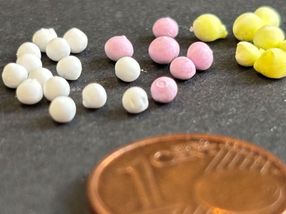
Researchers at Friedrich-Alexander-Universität Erlangen-Nürnberg (FAU) have developed cobalt-free magnetic nanoparticles whose maximum heating temperature can be precisely defined at the material level.
In many applications, it is not only crucial to generate heat, but to strictly control the maximum temperature reached. In cancer therapy, surrounding healthy tissue must be protected from overheating. In polymer-based materials, adhesive bonds should be released selectively without damaging adjacent structures. The newly developed material system enables heat generation that automatically stops at a predefined temperature.
The approach is based on zinc-substituted iron oxides, known as zinc ferrites (ZnₓFe₃₋ₓO₄). Their key feature is the Curie temperature—the physical threshold at which the material loses its magnetic order and becomes paramagnetic. Once this temperature is reached, heat generation in an alternating magnetic field ceases automatically. Further temperature increase is physically impossible, resulting in a stable temperature plateau.
Temperature Design from 30 to 250 °C
By combining a scalable spray-drying synthesis with a subsequent high-temperature annealing step between 1000 and 1100 °C, the researchers identified two critical parameters that govern the maximum heating temperature:
- the zinc content within the spinel structure
- the annealing temperature during post-synthesis treatment
Increasing the zinc fraction lowers the Curie temperature, while higher annealing temperatures enhance the achievable heating performance. This dual control mechanism allows maximum induction heating temperatures to be tuned continuously between approximately 30 °C and 250 °C.
Notably, unusually high zinc substitution levels of up to x = 0.75 were stably incorporated into the crystal structure. As a result, the magnetic properties—and therefore the thermal response—can be programmed directly via chemical composition.
Intrinsic Safety Instead of External Control
Conventional inductive heating systems are highly sensitive to external parameters such as field strength, particle concentration, heat dissipation, and environmental conditions. In contrast, the newly developed zinc ferrite nanoparticles limit their temperature intrinsically through a built-in physical mechanism.
This self-regulating behavior opens new opportunities for applications in diverse applications requiring strict temperature thresholds and reliable thermal control:
- Lower temperature limits are relevant for magnetic hyperthermia and other biomedical uses.
- Higher temperature regimes are suitable for technical processes such as inductive curing, thermally triggered reactions, or debonding-on-demand in polymer systems.
The nanoparticles also exhibit high colloidal stability in aqueous dispersion and can be reliably heated inductively—an important prerequisite for practical implementation.
A Cobalt-Free Material System
Unlike many magnetic heating materials, the developed system operates entirely without cobalt. Instead, zinc is used, offering advantages in terms of availability, cost efficiency, and biocompatibility.
By combining scalable synthesis, chemically programmable Curie temperatures, and intrinsic temperature limitation, the study demonstrates how magnetic nanoparticles can be rationally designed as tailored thermal switches for both medical and industrial applications.
Original publication


Other news from the department science