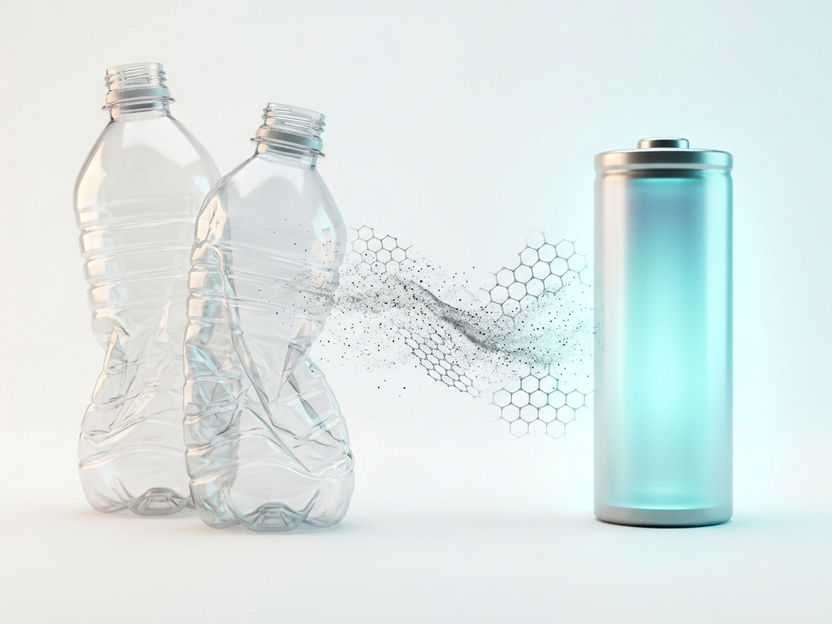
Waterloo researchers turning plastic waste into vinegar
The reaction takes place in water, making it particularly relevant for addressing plastic pollution in aquatic environments
Advertisement


Researchers at the University of Waterloo have discovered a way to turn plastic waste into acetic acid, the main ingredient of vinegar, using sunlight.
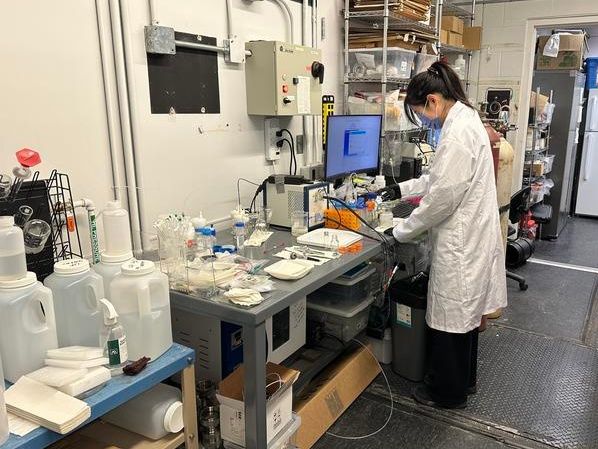
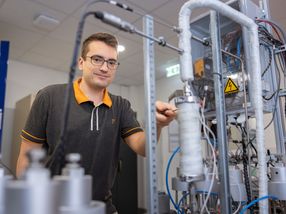
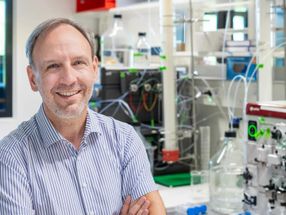
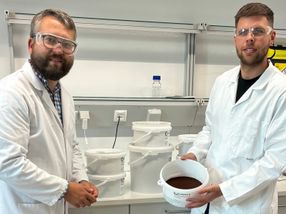
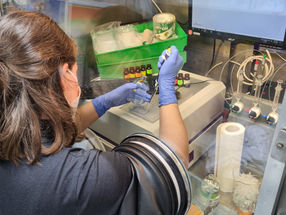
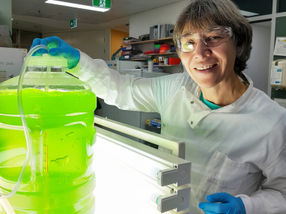
University of Waterloo PhD student Wei Wei, who led the research, in the lab working on plastic upcycling.
University of Waterloo
The breakthrough offers a promising new approach to reducing plastic pollution through photocatalysis, while simultaneously creating a useful, value-added chemical product through a process inspired by nature.
“Our goal was to solve the plastic pollution challenge by converting microplastic waste into high-value products using sunlight,” said Dr. Yimin Wu, a professor of mechanical and mechatronics engineering and the Tang Family Chair in New Energy Materials and Sustainability.
The research was led by Waterloo PhD student Wei Wei under Wu’s guidance, with early-stage support from a joint seed fund from the Waterloo Institute for Nanotechnology and the Water Institute.
Plastic waste, notably microplastics, has been found across many of the planet’s ecosystems, raising concerns about threats to terrestrial and marine life as well as human health.
To tackle this problem, the team developed a bio-inspired cascade photocatalysis using iron atoms embedded in carbon nitride, like how certain types of fungi break down organic matter using enzymes.
When exposed to sunlight, the material drives a series of chemical reactions that transform plastic polymers into acetic acid with high selectivity. The reaction takes place in water, making it particularly relevant for addressing plastic pollution in aquatic environments.
Acetic acid is widely used in food production, chemical manufacturing and energy applications. The study shows it can be produced from common plastic wastes, including PVC, PP, PE and PET, and remains effective across mixed plastic compositions.
This makes the approach well suited to real-world waste streams, offering a promising alternative to plastic incineration, and could support more circular approaches to material use while providing a new strategy for upcycling plastics.
“Both from a business and societal perspective, the financial and economic benefits associated with this innovation seem promising,” said Roy Brouwer, executive director of the Water Institute and a coauthor of the article supporting the techno-economic analysis.
“This method allows abundant and free solar energy to break down plastic pollution without adding extra carbon dioxide to the atmosphere,” Wu said.
The findings also point to new possibilities for addressing microplastics directly. Because the process degrades plastics at the chemical level, it could help prevent the accumulation of microplastics in water systems.
The research aligns with the University of Waterloo’s Global Futures initiative, which supports work aimed at advancing sustainable, circular solutions to global environmental challenges.
While still at the laboratory stage, the team envisions that this approach could be adapted for scalable, solar-driven recycling and environmental cleanup and the photocatalytic upcycling system can be further enhanced through strategic engineering of the materials and manufacturing processes.
Original publication
Wei Wei, Cheng Du, Jiawei Ge, Xiang Wang, Zuolong Chen, Meng Zhang, Tao Guo, Lei Wang, Maoyu Wang, Yuzi Liu, Hua Zhou, Chengjun Sun, Ning Chen, Weifeng Chen, Brant Billinghurst, Mohsen Shakouri, Peter Sprenger, Fatemeh Fani Sani, Yulian Quan, Brian Kendall, Roy Brouwer, Yimin A. Wu; "Bio‐Inspired Cascade Photocatalysis on Fe Single‐Atom Carbon Nitride Upcycles Plastic Wastes for Effective Acetic Acid Production"; Advanced Energy Materials, 2025-12-26



Other news from the department science