"Government should involve refineries more closely"
en2x sees the 2045 Chemicals Agenda as an important starting signal
Advertisement


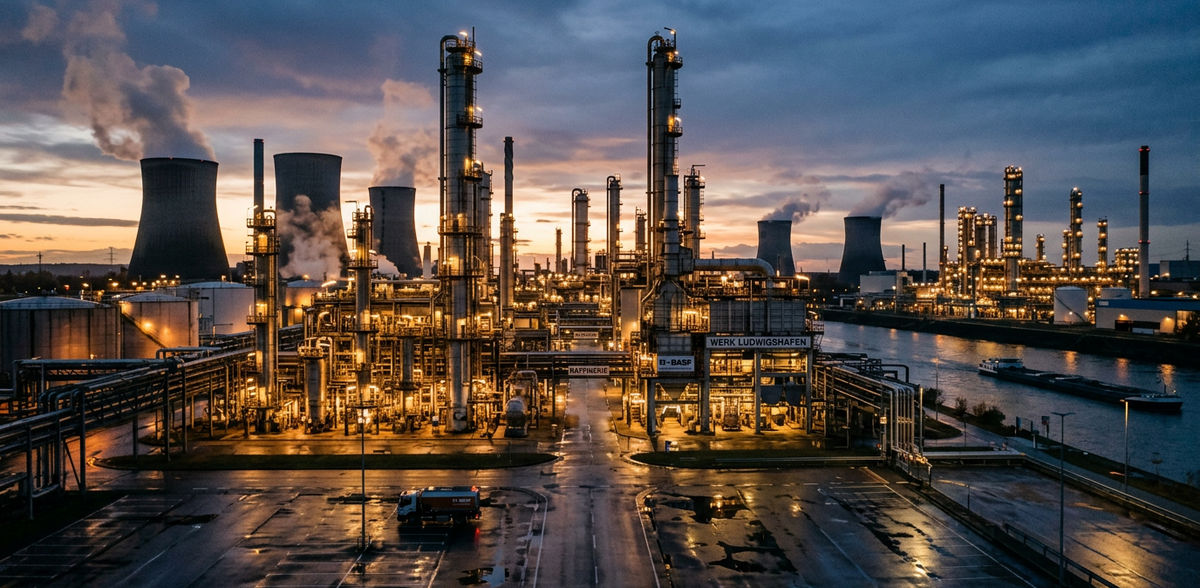
The en2x - Fuels and Energy Business Association sees the 2045 Chemicals Agenda presented by the German government today as an important signal for industrial policy. Now it is a matter of practical implementation - refineries should be more closely involved in this in future.
"It is good that the German government's initiative recognizes the great importance of refineries for Germany as a business location. After all, this is where the basic products are produced without which the chemical industry cannot operate," says en2x Managing Director Prof. Christian Küchen. Around 75 percent of the chemical industry's carbon requirements are covered by refineries from crude oil. The chemicals agenda therefore provides for the targeted strengthening of these integrated structures in order to make production resilient and future-proof. To this end, a future strategy for refineries is to be developed together with industry and trade unions. In addition, suitable framework conditions are to be created in the sales markets for refinery products. For example, Germany intends to advocate the revision of the EU Energy Tax Directive in order to be able to tax fuels and heating products according to their impact on the climate in future. In addition, de-risking instruments for the market ramp-up of advanced capital-intensive technologies and innovative products are also to be created.
"Now it is important to put these findings and intentions into practice. To this end, the competitiveness of the location must be urgently strengthened in the short term, for example through lower energy costs and less bureaucracy," says Küchen. Against this backdrop, the market interventions currently planned by the German government with its "fuel measures package" are highly counterproductive. Like other industrial sectors, the hydrocarbon industry and its refineries are suffering from the current difficult conditions in Germany, which are disadvantageous in an international comparison. As a result, value chains and jobs are at risk. Küchen: "Instead of confronting the industry with unjustified accusations of price gouging, politicians should tackle structural problems. This makes it all the more important to quickly resume constructive discussions about the future."
The next step would be for the government to coordinate all issues and regulations relating to the strategically indispensable hydrocarbon industry between the departments. "The aim must be to strengthen the refinery sites as a basis for the chemical industry, but also as important energy suppliers, and to stimulate the transformation towards the necessary climate neutrality instead of slowing it down with over-regulation," said Küchen.
The results of the national chemicals agenda were presented by the Federal Ministry of Economics and the Federal Ministry for the Environment together with the German Chemical Industry Association (VCI) and the Mining, Chemical and Energy Industrial Union (IGBCE).
Note: This article has been translated using a computer system without human intervention. LUMITOS offers these automatic translations to present a wider range of current news. Since this article has been translated with automatic translation, it is possible that it contains errors in vocabulary, syntax or grammar. The original article in German can be found here.



Other news from the department business & finance