Material harvests drinking water from air – and cools more efficiently than current systems
Produced on a pilot scale for the first time
Advertisement


A research team from the Institute of Inorganic Chemistry at Kiel University, Germany is developing porous materials specifically designed to harvest water from the air and enable energy-efficient cooling. The team has now succeeded in producing these materials on a larger scale for the first time, marking an important step towards industrial applications.
Researchers in chemistry and materials science at Kiel University are working with partners to develop new water sources for the Mediterranean region. "Regions like these are facing rising temperatures and declining rainfall. Our goal is to develop an environmentally friendly technology that converts water molecules from the air into drinking water," says Professor Norbert Stock from Kiel University's Institute of Inorganic Chemistry. "Two new studies, recently published in the Journal of Materials Chemistry A and Industrial & Engineering Chemistry Research, present how large quantities of the material can be produced and the efficiency of cooling devices can be improved.” Furthermore, a new approach is shown that enables the team to make water from the air available more efficiently and more quickly than previous systems.
A sponge-like material with a high-tech structure
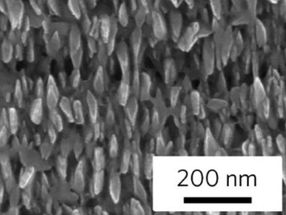
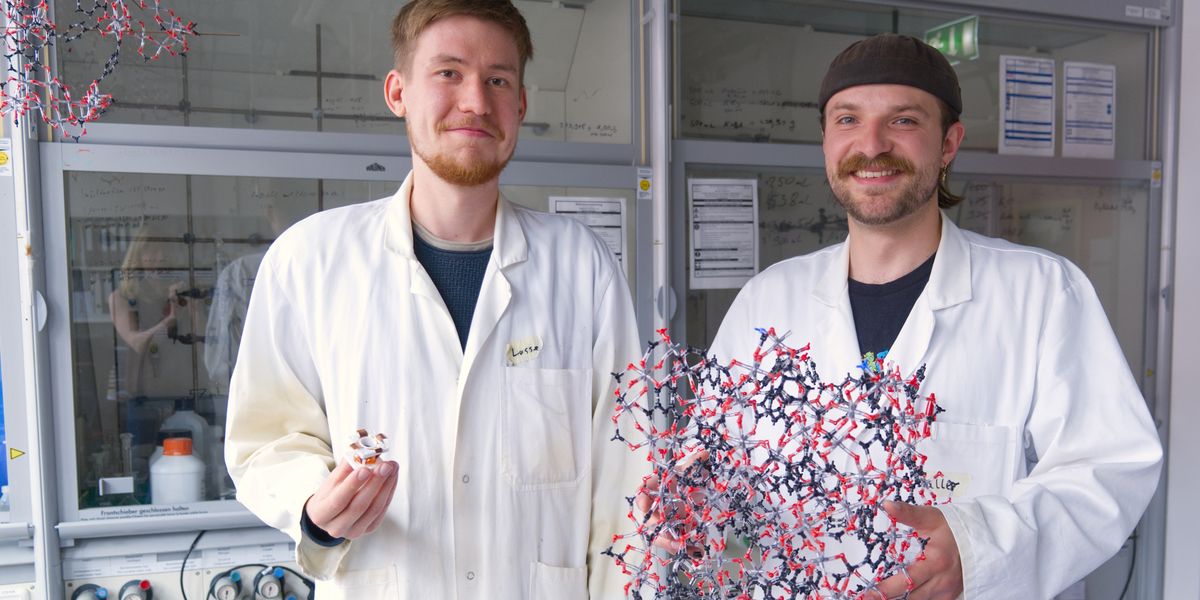
Materials belonging to the class of Metal-Organic Frameworks (MOFs) behave much like a sponge: they can adsorb large amounts of water within a short time and release it again just as quickly. This is made possible by their extremely porous structure, which contains countless interconnected microscopic cavities. The fundamental research behind these materials was awarded with the 2025 Nobel Prize in Chemistry.
In Kiel, Stock's team is optimizing the synthesis of the MOF "CAU-10-H" specifically for water adsorption and heat transformation. The material is named after the place of discovery at Kiel University (CAU), its material number, and the chemical symbol for hydrogen. CAU-10-H captures water molecules within its porous structure at room temperature and relative humidity values ≥18 % and releases them again at around 70 °C. By combining the material with conductive carbon structures, the researchers can accelerate this process even further. The resulting composite material can be heated efficiently using electricity or sunlight. As a result, it releases the adsorbed water particularly quickly and operates in short, repeatable cycles. Under dry conditions, the system continuously produces drinking water from the air and achieves a water uptake of up to 0,17 grams of water per gram of material. The cycles take only a few hours, enabling an efficient and continuous operation. Under these conditions, one kilogram of the composite material can potentially produce up to 1,8 litres of water from the air per day. "This makes the material particularly attractive for producing drinking water, even in arid regions," says first author Lasse Wegner.
At the same time, CAU-10-H also shows considerable potential for cooling applications. In adsorption cooling systems, it delivers up to three times the cooling performance of silica gel, a widely used desiccant based on silicon dioxide. In the future, such systems could make use of waste heat, for example from data centres or bakeries. This significantly reduces the energy consumption of air conditioning systems compared to the established technology and makes cooling more sustainable.
From the lab to industrial production
"We discovered CAU-10-H around 15 years ago, and since then its potential applications have been investigated around the world," says Stock, who has been conducting research on MOFs for more than two decades.
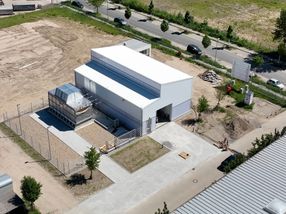
Supported by Kiel University's Validation Fund, the team has now successfully transferred production to pilot scale – the intermediate step between laboratory research and industrial manufacturing. Led by Kalle Mertin, the researchers produced around 30 kilograms of the material, approximately 60 times more than had previously been manufactured in the laboratory. At the same time, they further optimized the production process based on a techno- economic analysis to demonstrate manufacturing costs between US$12 to US$14 per kilogram are achievable.
"This brings practical applications of our materials within reach," says Stock. "We have shown that they not only work in the laboratory but can also be produced on an economically viable scale."
Original publication
Lasse Wegner, Philipp Schadte, Ravi Sharma, et al.; "Electrically conductive MOF@carbon foam composites for atmospheric water harvesting through internal Joule heating and light irradiation"; Journal of Materials Chemistry A, Volume 14, 2026
Kalle S. Mertin, Abeer Mohtar, Marta Bordonhos, et al.; "CAU-10-H: Synthesis Scale-Up at the Pilot Scale, Techno-Economic Analysis, and Application in a Full-Scale Cooling System"; Industrial & Engineering Chemistry Research, Volume 65, 2026-3-26



Other news from the department science