TU Berlin and BAM Establish Joint Institute for Safe, Digital, and Sustainable Process Engineering
Research on Safe Energy Sources and Robust Industrial Facilities

Advertisement


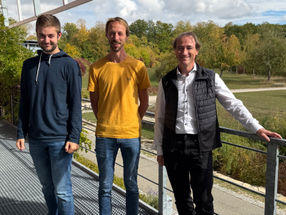
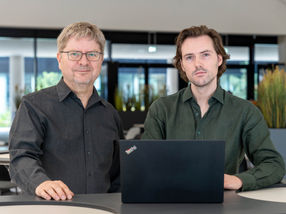
The Department of Process and Plant Safety at the Federal Institute for Materials Research and Testing (BAM) and the Division of Dynamics and Operation of Technical Systems at the Technical University of Berlin (TU Berlin) opened the Berlin Joint Institute for Plant Safety and process engineering on July 8, 2026. The joint research platform aims to make process engineering plants safer, more sustainable, and more efficient in the future—from digital models and pilot plants to full-scale trials.
Hydrogen, digitalization, and sustainable production are posing new safety challenges for the chemical and process engineering industries. New processes must be developed more quickly, resources used more efficiently, and risks assessed at an early stage. This is precisely where the Joint Institute comes in: It bridges two disciplines that have traditionally been considered separately—systems process engineering, with a focus on the design, operation, and optimization of process plants, and process and plant safety.
Research for Safe Energy Sources and Robust Industrial Facilities
Safety, sustainability, and efficiency are thus considered together from the very beginning: from the development of new processes through their experimental testing to safety assessments on an industrial scale. The collaboration centers on the safe use of new energy sources—particularly hydrogen—AI-supported methods for plant design and operation, safety assessment, sustainable chemistry, and resilient industrial infrastructure. In this way, the Joint Institute contributes to the energy transition, the digital transformation of industry, and safe, resource-efficient production.
This close integration creates a unified and end-to-end research platform: digital models can be validated through real-world safety experiments. At the same time, simulations provide a more targeted foundation for complex large-scale experiments. This allows process risks to be identified earlier, research processes to be designed more efficiently, and new findings to be transferred to industrial applications more quickly.
Safety Engineering Meets Systems Process Engineering
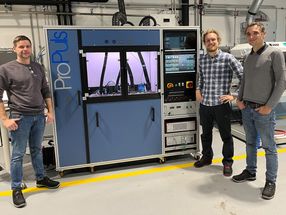
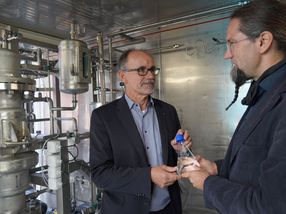
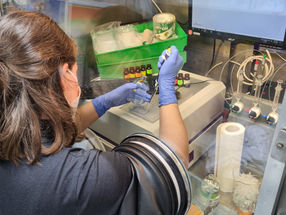
To this end, BAM’s Process and Plant Safety Department contributes its extensive expertise in process and plant safety, full-scale experiments, regulatory assessment methods, and the handling of hazardous substances. The Dynamics and Operation of Technical Plants division at TU Berlin complements these competencies with its research in the modeling, simulation, and optimization of process engineering, as well as through experiments on a pilot and miniplant scale.
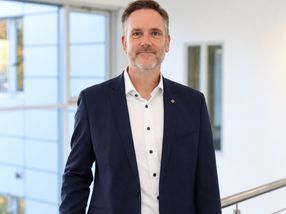
Prof. Katharina Löwe, Ph.D., Eng., habil. – Head of the Process and Plant Safety Department at BAM:
“The Berlin Joint Institute builds on the long-standing collaboration between BAM and TU Berlin. Eleven jointly supervised doctoral dissertations demonstrate how successfully we are already combining plant safety and process optimization. With the Joint Institute, we are strengthening this cooperation and raising its profile.”
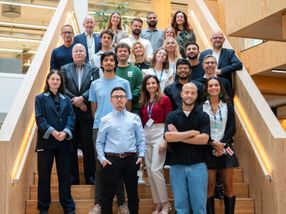
Prof. Dr.-Ing. habil. Jens-Uwe Repke – Head of the Division of Dynamics and Operation of Technical Systems and Vice President for Research and Transfer at TU Berlin: “What makes this institute so special is the breadth of levels at which collaboration takes place: from students to technicians to researchers at every career stage. In this way, we are training a new generation of experts who think about process development, process optimization, and plant safety together from the very beginning.”
Contributing to the Strengthening of Education
The shared use of infrastructure, data, and methods facilitates research and technology transfer. This benefits the chemical and process industries, the energy sector, as well as academia and policy-making in particular.
At the same time, the Joint Institute strengthens the training of the next generation of scientists: students, doctoral candidates, and postdocs gain access to complementary expertise and resources in process optimization, safety engineering, and experimental research across various scale levels. In this way, the collaboration contributes to strengthening Berlin as a center of science.
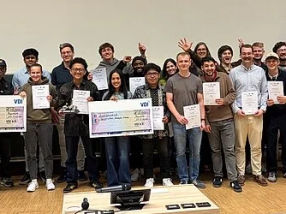
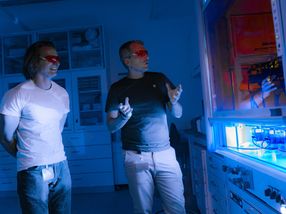
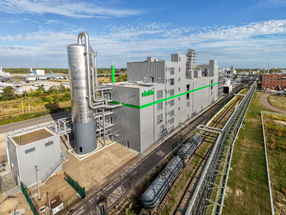
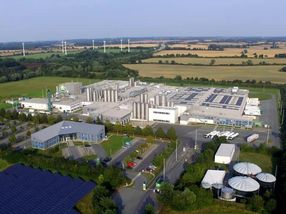
The opening of the Joint Institute took place as part of a joint scientific program at the BAM’s Technical Safety Test Site in Horstwalde (Brandenburg). In addition to the official opening, the program included technical presentations, demonstration experiments, and a poster session to facilitate scientific exchange between researchers from both institutions.
Note: This article has been translated using a computer system without human intervention. LUMITOS offers these automatic translations to present a wider range of current news. Since this article has been translated with automatic translation, it is possible that it contains errors in vocabulary, syntax or grammar. The original article in German can be found here.


Other news from the department science